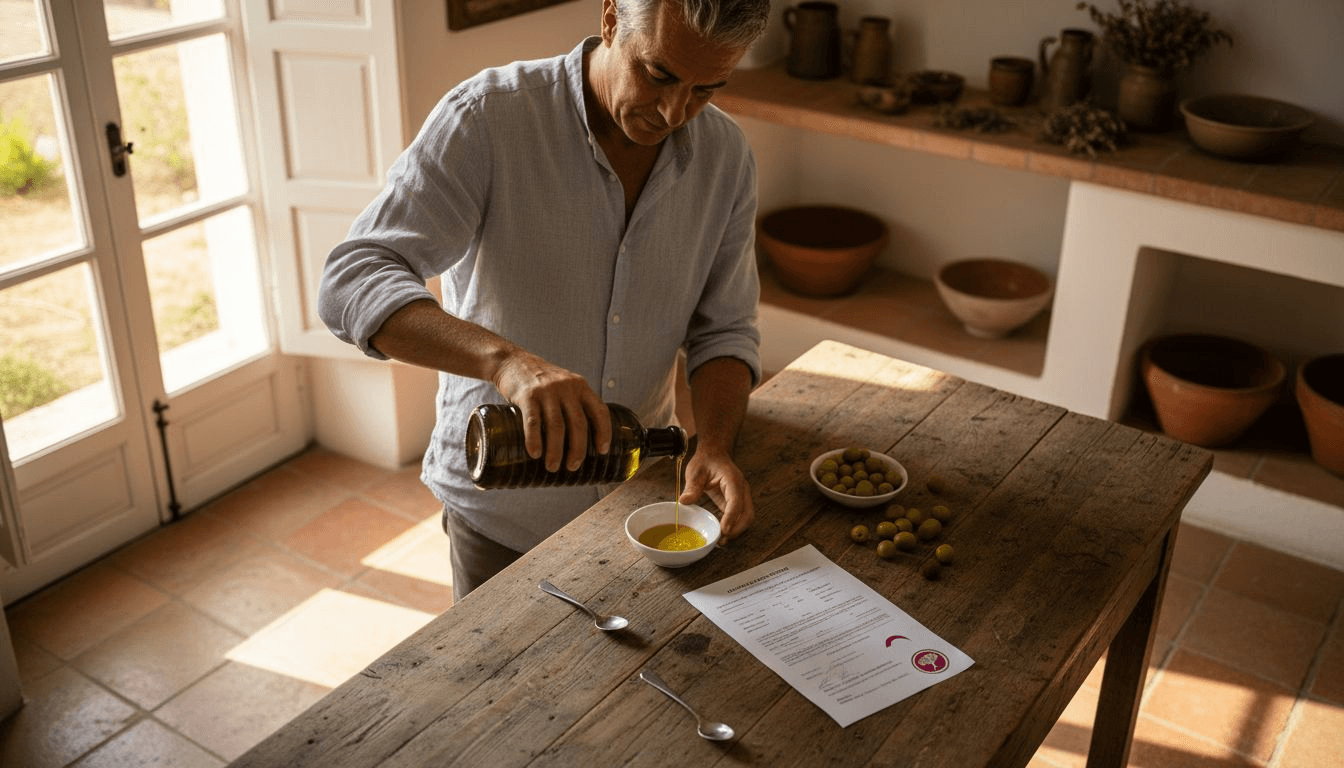
The quest for genuine high polyphenol extra virgin olive oil often leaves even seasoned food lovers uncertain where to begin. With mounting evidence linking polyphenols to antioxidant and anti-inflammatory effects, choosing the right oil means more than just flavor. This guide empowers you to spot authentic, health-driven EVOOs by focusing on specific polyphenol content and sensory markers—helping you benefit from Mediterranean traditions and proven nutritional value.
Table of Contents
- Step 1: Identify Authentic High Polyphenol Olive Oil
- Step 2: Select Oils With Premium Polyphenol Content
- Step 3: Taste And Evaluate For Peak Quality
- Step 4: Verify Polyphenol Levels And Freshness
Quick Summary
| Key Insight | Explanation |
|---|---|
| 1. Check Polyphenol Content | Look for specific levels listed, ideally 250-600 mg/kg, indicating quality and health benefits. |
| 2. Verify Harvest Date | Prefer oils harvested within the last year for optimal freshness and potency. |
| 3. Use Dark Glass Containers | Ensure oils are stored in dark glass to protect polyphenols from light degradation. |
| 4. Request Lab Analysis | Obtain lab certificates to confirm polyphenol levels and authenticity before purchasing. |
| 5. Taste for Quality | Evaluate sensory aspects like flavor and aroma to confirm the oil’s quality and health properties. |
Step 1: Identify authentic high polyphenol olive oil
Authentic high polyphenol olive oil has specific markers you can verify before purchasing. These oils deliver measurable health benefits through their antioxidant and anti-inflammatory compounds, so knowing what to look for matters.
Start by checking the polyphenol content listed on the label. Genuine high-polyphenol extra virgin olive oils display a specific polyphenol count, typically measured in mg/kg. Premium oils often showcase 200 mg/kg or higher, though some exceptional varieties reach 400-600 mg/kg. This transparency signals confidence in the product.
Look for these key indicators on the label:
- Harvest date or production year (shows freshness; recent is better)
- Specific polyphenol content displayed prominently
- Certification marks (organic, DOP, or regional designation)
- Storage information (dark glass bottles protect quality)
- Cold-pressed or first-pressed designation
The bottle itself tells a story. Authentic high-polyphenol oils come in dark glass or opaque containers because light degrades polyphenols. Clear glass is a red flag—it suggests the producer doesn’t prioritize polyphenol preservation.
Price provides another clue. Polyphenolic olive oils with superior antioxidant and anti-inflammatory properties cost more to produce and verify than standard extra virgin oils. If an oil claims high polyphenols but costs the same as ordinary EVOO, verify the claim independently.
Scan for third-party testing certifications. Reputable producers invest in laboratory analysis to back up polyphenol claims. Look for certifications from recognized testing organizations or Mediterranean regulatory bodies that validate the content you’re paying for.
Regional origin matters significantly. Mediterranean regions with established reputations—particularly Slovenian Istria—have stricter standards and longer traditions of high-polyphenol production. These regions maintain detailed production records you can trace.
Authentic high-polyphenol olive oil always displays its polyphenol content and harvest information prominently, never vaguely.
Check if the producer offers batch-specific information. Different harvest seasons produce varying polyphenol levels depending on climate and fruit ripeness. Transparent producers document these variations and can explain why one batch differs from another.
Pro tip: Request the lab analysis report before purchasing, especially for premium oils; legitimate producers readily share these documents because they prove what you’re buying.
Here is a comparison of polyphenol content and freshness factors for high-quality olive oil:
| Attribute | Optimal Condition | Red Flag Sign | Consumer Tip |
|---|---|---|---|
| Polyphenol Content | 250–600+ mg/kg listed | No mg/kg listed | Ask for lab results |
| Harvest Date | Within last year | No date shown | Prefer recent harvest |
| Bottle Material | Dark glass or opaque | Clear glass | Light protection preserves quality |
| Price | Reflects higher production | Same as regular | Check for certification |
Step 2: Select oils with premium polyphenol content
Now that you know what to look for, it’s time to narrow down your choices to oils that truly deliver premium polyphenol levels. Selecting the right oil means understanding the difference between ordinary extra virgin and therapeutically potent varieties.
Start by comparing polyphenol concentrations across multiple brands. Premium oils typically range from 250 mg/kg to over 600 mg/kg, while standard extra virgin oils often fall below 150 mg/kg. When you see these numbers clearly displayed, you’re looking at producers confident enough to quantify their quality.
Evaluate these specific factors when selecting:
- Harvest timing (early harvest oils contain higher polyphenols)
- Processing method (cold-extraction preserves more polyphenols than heat processing)
- Storage conditions (oxygen and light exposure degrade polyphenols over time)
- Producer transparency (they should readily share lab results and production details)
- Geographic origin (Mediterranean regions with strict standards consistently deliver higher quality)
Look beyond marketing language to the actual numbers. Brands using phrases like “naturally high in polyphenols” without specific mg/kg data are hiding something. Legitimate producers display these measurements prominently because they’ve invested in verification.
Compare pricing against polyphenol content. An oil with 400 mg/kg should cost more than one with 150 mg/kg. If prices seem similar, the cheaper option likely overstates its polyphenol claims or uses aggressive marketing to compensate for lower actual content.
Premium polyphenol oils always show specific polyphenol numbers, never just vague health claims.
Research the producer’s reputation within gourmet and health-conscious communities. Established producers with multi-generational expertise in olive cultivation tend to maintain higher standards. Look for awards, certifications, and customer reviews that specifically mention polyphenol content verification.
Consider selecting from regions with protected designation of origin (DOP) status, which mandates strict production standards and regular testing. These certifications mean regulatory bodies verify claims independently, protecting your investment.
Pro tip: Order sample sizes from multiple premium producers to compare taste profiles and polyphenol effects; your palate and body will tell you which oil works best for your preferences and health goals.
Step 3: Taste and evaluate for peak quality
Tasting olive oil properly reveals what numbers alone cannot show. Your sensory evaluation confirms the polyphenol content and freshness that lab reports document, giving you confidence in your purchase.
Begin by pouring a small amount into a glass. Use about one tablespoon so you have enough to evaluate. Warm the oil slightly by cupping the glass in your hands for 30 seconds to release aromatic compounds that indicate quality and potency.
Follow these tasting steps in order:
- Smell first (aroma tells you freshness and intensity)
- Observe color (vibrant green suggests early harvest and high polyphenols)
- Slurp the oil (draw it across your palate to distribute flavors)
- Notice texture (quality oils feel smooth, not greasy)
- Identify the finish (aftertaste reveals polyphenol intensity)
High-polyphenol oils produce distinctive sensory markers. The characteristic bitter and peppery notes in quality extra virgin olive oils indicate robust polyphenol content and freshness. When you taste the oil, expect a peppery sensation in the back of your throat—this is the polyphenol response, not a flaw. That slight catch or tickle confirms you’re tasting authentic, potent EVOO.
Listen to your body’s response. Strong polyphenols may cause a mild cough reflex, which actually signals therapeutic quality. First-time tasters often mistake this for something wrong with the oil. It’s the opposite—it’s proof the oil contains what you’re paying for.
Compare multiple oils side by side. Taste one, then cleanse your palate with water and bread before moving to the next. This reveals differences in polyphenol intensity and flavor complexity that individual tastings miss.
High-polyphenol oils deliver a distinctive peppery throat finish—embrace it as a sign of quality, not a defect.
Note whether the oil tastes grassy, buttery, fruity, or herbaceous. Premium oils from quality producers deliver consistent flavor profiles that match their origin stories. Inconsistency between tastings or off-flavors like rancid or musty notes suggest storage problems or lower-quality production.

Pro tip: Taste oils in the morning when your palate is fresh and sensitive; afternoon fatigue dulls your ability to detect subtle polyphenol bitterness and peppery notes that confirm quality.
This table summarizes how sensory evaluation can reveal polyphenol levels in olive oil:
| Sensory Marker | What It Indicates | How to Interpret |
|---|---|---|
| Peppery throat finish | High polyphenol content | Sign of therapeutic potency |
| Vibrant green color | Early harvest, fresh oil | More antioxidants present |
| Bitter or grassy notes | Robust polyphenols and freshness | Positive health marker, not a defect |
| Mild cough reflex | Strong polyphenol presence | Accept as proof of quality |
Step 4: Verify polyphenol levels and freshness
Verification transforms trust into certainty. You’ve identified candidates and tasted them, but now you need concrete proof that the polyphenol levels match the claims and that freshness remains intact.
Request the lab analysis certificate directly from the producer. Legitimate suppliers maintain detailed records showing exact polyphenol concentrations (mg/kg), test dates, and testing laboratory information. If a producer hesitates or refuses to provide this documentation, move on—transparency matters.
When reviewing lab results, look for these essential details:
- Polyphenol content in mg/kg (not vague percentages)
- Test date (results within 12 months of purchase are most reliable)
- Laboratory name and credentials (verify the testing organization is recognized)
- Specific polyphenol compounds identified (quality labs break down individual polyphenol types)
- Harvest date (confirms freshness relative to current date)
Check the harvest-to-bottle timeline. Fresh oils were pressed within weeks of harvest, not months. An oil harvested in October 2023 and tested in November 2023 is significantly fresher than one tested in April 2024. This timeline directly impacts polyphenol stability and nutritional value.
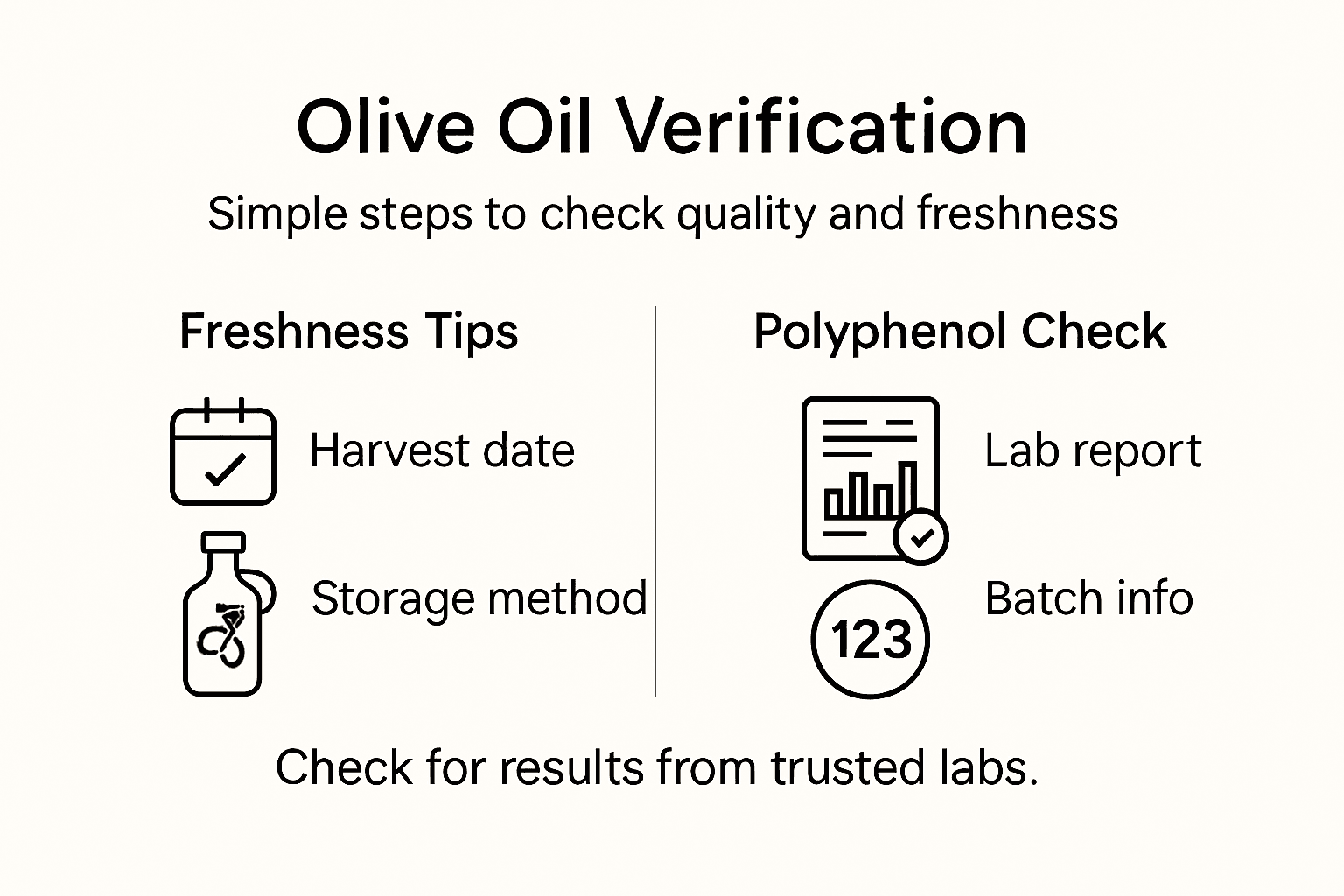
Understand that polyphenolic olive oils with superior antioxidant properties require proper handling throughout production. Exposure to heat, light, and oxygen degrades polyphenols even in premium oils. Ask producers about their storage conditions during production, packaging, and shipping. Cold storage and minimal light exposure preserve what you’re paying for.
Verify the testing methodology matches international standards. Look for references to HPLC (high-performance liquid chromatography) or similar recognized analytical methods. These standardized techniques ensure accurate measurement across different labs.
Compare the lab analysis with your sensory evaluation. If the oil tastes peppery and robust but shows modest polyphenol numbers, request retesting. If it tastes mild but claims high polyphenols, the numbers may be inflated or the oil has degraded.
Authentic high-polyphenol oils always provide recent, detailed lab analysis proving their claims.
Track the producer’s testing frequency. Do they test every batch or just occasionally? Reputable producers verify multiple batches annually because polyphenol levels vary by harvest conditions. Irregular testing suggests inconsistent quality control.
Pro tip: Save lab analysis documents for each oil you purchase; comparing results over time reveals which producers consistently deliver on polyphenol promises and which ones vary significantly between batches.
Discover Authentic High Polyphenol Olive Oil from Slovenian Istria Today
Choosing olive oil rich in polyphenols can feel overwhelming with so many products making vague claims. You deserve clarity and confidence in every bottle you buy. This guide highlights important factors like polyphenol content, harvest date, sensory evaluation, and lab verification that distinguish truly premium oils from ordinary ones. If you seek genuine antioxidant-rich extra virgin olive oil that supports your health and delights your palate, you need a trusted source with transparent quality standards.
At Terra Centuria, we specialize in offering authentic high polyphenol EVOO produced with time-honored craftsmanship in Slovenian Istria. Our oils proudly display harvest dates and laboratory polyphenol analyses so you can verify freshness and potency yourself. Enjoy the peppery finish and vibrant flavors only early-harvest, cold-pressed oils provide. Elevate your wellness routine by choosing olive oil that truly delivers therapeutic benefits with full transparency. Explore our carefully curated selection and learn more about our commitment to quality and tradition at Terra Centuria. Act now to taste the difference that expertise and sustainable farming bring to every drop.
Frequently Asked Questions
How can I identify high polyphenol olive oil before purchasing?
To identify high polyphenol olive oil, check for the polyphenol content listed on the label, aiming for a minimum of 250 mg/kg. Look for harvest dates, certification marks, and storage information to ensure quality.
What factors should I consider when selecting premium polyphenol olive oil?
When selecting premium polyphenol olive oil, compare polyphenol concentrations, harvest timing, processing methods, and producer transparency. Make sure the oil has specific polyphenol numbers displayed rather than vague health claims.
How should I taste olive oil to evaluate its quality?
Taste olive oil by pouring a small amount into a glass and warming it in your hands to release aromas. Follow the steps: smell first, observe color, slurp, notice texture, and identify the finish, which reveals polyphenol intensity and freshness.
What should I look for in lab analysis of olive oil?
In lab analysis, verify the polyphenol content in mg/kg, the test date, and the laboratory’s name and credentials. Inspect the harvest date to ensure the oil is fresh, ideally tested within 12 months of purchase.
How can I confirm the freshness of my olive oil?
Confirm the freshness of your olive oil by comparing the harvest date with your purchase date, ensuring it was pressed within weeks prior. Review the storage conditions during production to check for optimal handling that preserves polyphenols.
Why is it important to consider the producer’s testing frequency?
The producer’s testing frequency is important because consistent quality control ensures that the oil maintains high polyphenol levels across different batches. Choose producers that test every batch to guarantee ongoing quality assurance.