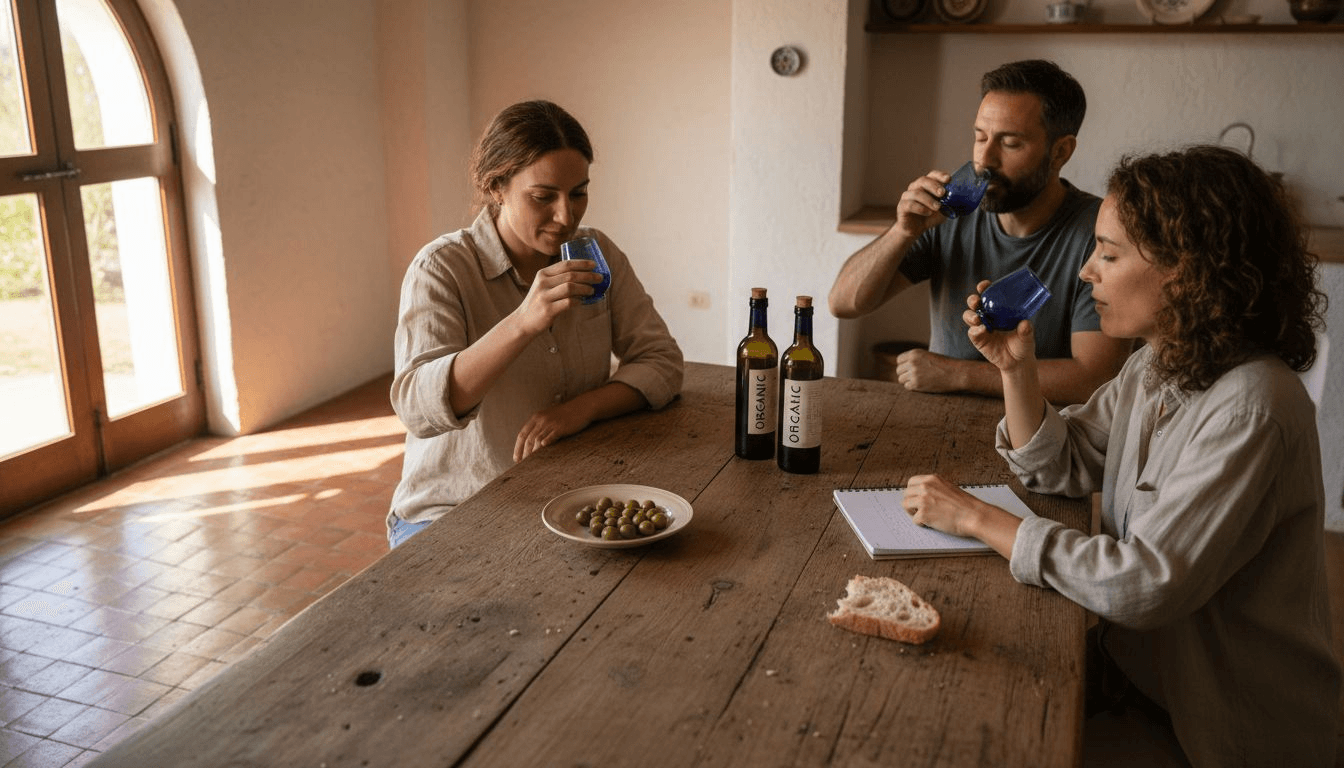
Finding truly exceptional extra virgin olive oil can feel daunting when you care about both taste and wellness. For North American food lovers who seek authentic, high-quality oils, setting up a proper tasting environment is the first step toward real confidence in what you’re using. By creating a space with neutral lighting, temperature control, and odor elimination, you empower your senses to detect the genuine qualities and antioxidant-rich character of organic olive oil.
Table of Contents
- Step 1: Prepare Your Tasting Environment Properly
- Step 2: Assess Color, Clarity, and Consistency
- Step 3: Smell and Evaluate Aroma Complexity
- Step 4: Taste and Analyze Flavor Profile
- Step 5: Verify Authenticity and Health Claims
Quick Summary
| Key Point | Explanation |
|---|---|
| 1. Create an Ideal Tasting Environment | A controlled setting enhances sensory perception, ensuring accurate olive oil evaluation. Focus on lighting, temperature, odor elimination, and noise reduction. |
| 2. Perform a Visual Inspection | Analyze color, clarity, and viscosity to gain insights into olive oil’s quality and freshness. Use a white background for accurate assessment. |
| 3. Assess Aroma Complexity | Smell olive oil to identify layered scent notes, revealing its quality and origin. Warm the glass and employ both quick and deep inhalations for thorough evaluation. |
| 4. Evaluate Flavor Profile | Taste the oil carefully to uncover its unique flavor characteristics, including fruitiness, bitterness, and pungency. This informs about its health benefits and quality. |
| 5. Verify Authenticity and Health Claims | Examine labels and chemical markers to confirm the oil’s quality. Ensure claims are substantiated to make informed purchasing decisions. |
Step 1: Prepare Your Tasting Environment Properly
Tasting high-quality olive oil requires more than just opening a bottle – you need a strategic sensory environment that allows you to perceive subtle flavor nuances. International olive oil experts recommend creating a controlled setting that eliminates potential sensory distractions and ensures an objective evaluation.
To set up your ideal olive oil tasting space, focus on four critical environmental factors:
- Neutral Lighting: Use soft, consistent illumination that doesn’t influence color perception
- Temperature Control: Maintain a stable room temperature around 68-72°F
- Odor Elimination: Choose a space free from competing scents like cooking, perfumes, or cleaning products
- Noise Reduction: Select a quiet area that allows concentrated sensory analysis
Prepare your tasting glasses by selecting neutral colored vessels specifically designed for olive oil evaluation. Quality management protocols from the International Olive Council suggest using standardized glassware that allows proper swirling and aroma release without external interference.
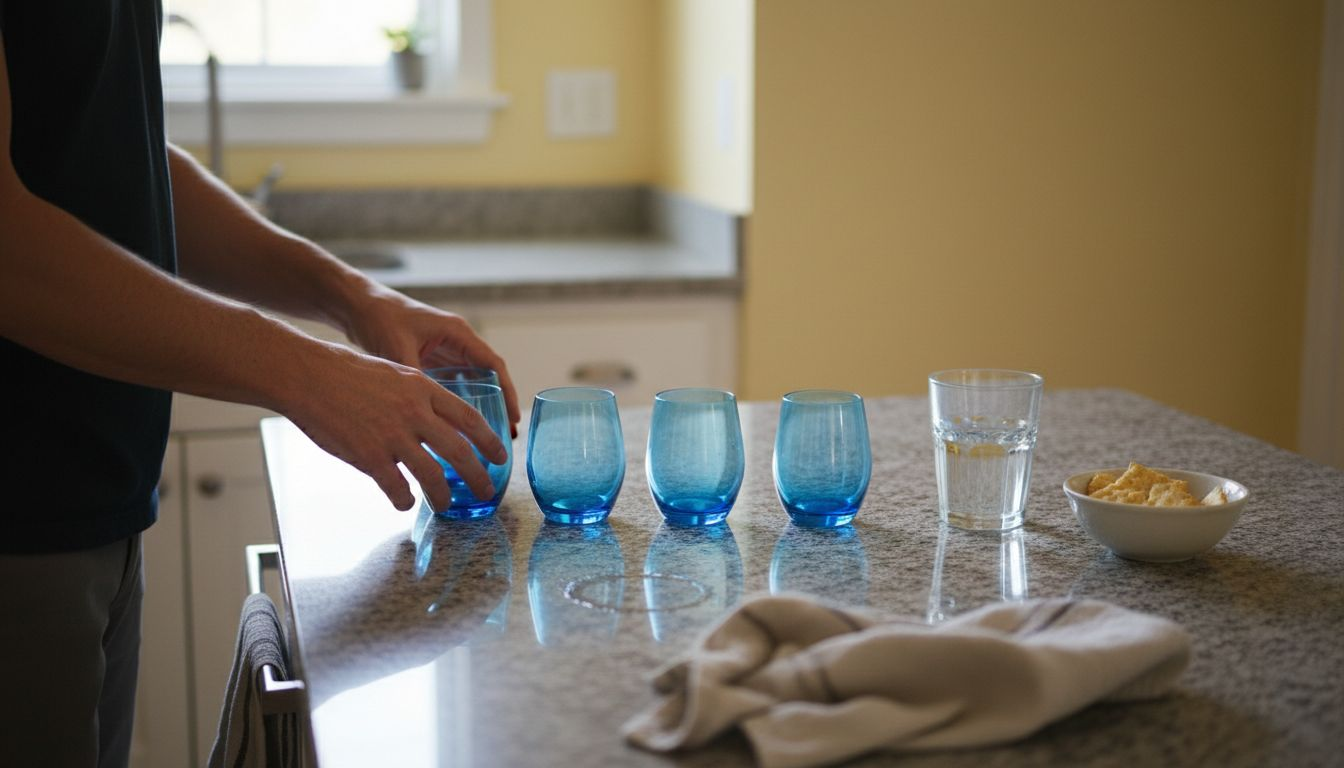
Pro tip: Keep a small glass of water and unsalted crackers nearby to cleanse your palate between different olive oil samples.
Step 2: Assess Color, Clarity, and Consistency
Evaluating olive oil is an art form that goes beyond just tasting – it starts with a comprehensive visual inspection. International olive oil standards provide specific guidelines for analyzing an oil’s physical characteristics that reveal crucial insights about its quality and freshness.
When assessing olive oil’s visual properties, focus on these key elements:
- Color Range: Fresh olive oils typically range from vibrant green to golden yellow
- Clarity: Look for transparent or slightly cloudy appearance without sediment
- Consistency: Observe the oil’s viscosity by tilting and swirling the glass
- Light Interaction: Check how light passes through the oil, indicating potential purity
Spectrophotometric analysis techniques recommend examining the oil against a white background to accurately evaluate its true color and transparency. Hold the glass at a 45-degree angle and observe how the oil moves – high-quality oils will have a smooth, consistent flow without rapid separation.
A professional taster’s secret: Color alone doesn’t guarantee quality, but it provides important initial clues about the olive oil’s origin and processing.
Pro tip: Use natural, diffused daylight for the most accurate color assessment, avoiding direct sunlight or artificial lighting that can distort perception.
Step 3: Smell and Evaluate Aroma Complexity
Sensory science reveals that smelling olive oil is far more nuanced than a simple sniff – it’s a complex process of detecting layered aromatic compounds that tell a story about the oil’s origin, freshness, and quality. Understanding how to properly evaluate these subtle scent signatures requires a systematic approach that engages all your olfactory capabilities.
To assess the aroma complexity, follow these strategic steps:
- Warm the Glass: Cup the olive oil glass in your hands to release volatile aromatic compounds
- First Sniff: Take a quick, light initial inhale to capture top-level fragrance notes
- Deep Inhalation: Perform a slow, deep breath to detect underlying aroma layers
- Identify Characteristics: Look for:
- Fruity notes (fresh grass, green apple, tomato leaf)
- Herbal undertones
- Pepper or pungent sensations
- Potential rancidity indicators
Organoleptic assessment protocols recommend training your senses to distinguish between positive and negative aromatic characteristics. Professional tasters use a systematic approach to quantify the intensity and quality of each olfactory dimension.
Professional tasters understand that aroma tells a complex narrative about the olive oil’s journey from grove to bottle.
Pro tip: Clear your olfactory palate between olive oil samples by sniffing coffee beans or taking a deep breath of fresh air.
Step 4: Taste and Analyze Flavor Profile
Sensory analysis techniques transform olive oil tasting from a simple gustatory experience into a sophisticated evaluation of complex flavor dimensions. Professional tasters approach this process with precision, understanding that each sip reveals intricate details about the oil’s origin, quality, and potential health benefits.
To conduct a comprehensive olive oil tasting, follow these systematic steps:
- Prepare Your Palate: Take a small sip (about 1 tablespoon) of room temperature olive oil
- Initial Coating: Let the oil spread across your entire tongue and mouth
- Flavor Detection: Identify key taste characteristics:
- Fruitiness: Green or ripe fruit notes
- Bitterness: Pepper-like or sharp sensations
- Pungency: Throat-catching sensation indicating high polyphenol content
- Complexity: Layered flavor interactions
- Retronasal Evaluation: Exhale through your nose to capture additional aromatic nuances
Comprehensive sensory research highlights how phenolic compounds contribute to the oil’s unique flavor profile, transforming tasting from a simple gustatory experience to a nuanced sensory investigation.
Professional tasters know that great olive oil tells a story – from the first hint of fruitiness to the final peppery finish.
Pro tip: Cleanse your palate with plain water or unsalted crackers between different olive oil tastings to reset your taste buds.
Step 5: Verify Authenticity and Health Claims
Codex Standards for olive oils establish critical guidelines for determining the true quality and legitimacy of extra virgin olive oil. Navigating these verification processes requires a strategic approach that combines visual inspection, chemical understanding, and careful label scrutiny.
To authenticate your olive oil and validate its health claims, focus on these key verification strategies:
- Label Examination: Check for:
- Protected designation origin (PDO) certifications
- Harvest date
- Cold-pressed or first-press indicators
- Polyphenol content claims
- Chemical Markers: Evaluate:
- Free fatty acid (FFA) percentage
- Peroxide value
- Ultraviolet absorption levels
- Sensory Validation: Cross-reference label claims with actual tasting experience
- Traceability: Investigate brand’s sourcing and production transparency
International Olive Council standards recommend comprehensive analytical methods to substantiate health claims and detect potential adulteration. Understanding these technical criteria empowers consumers to make informed purchasing decisions.
See how key chemical olive oil quality markers influence health and authenticity claims:
| Marker | Ideal Range | Indicates |
|---|---|---|
| Free Fatty Acids (FFA) | Below 0.8% (extra virgin) | Freshness and correct extraction |
| Peroxide Value | Under 20 meq O2/kg | Resistance to oxidation |
| Polyphenol Content | Above 300 mg/kg (healthy oils) | Antioxidant potential, pungency |
| UV Absorption (K232) | Below 2.50 | Minimal oxidation and adulteration |
Authentic extra virgin olive oil is more than a product – it’s a guarantee of quality, nutrition, and agricultural heritage.
Pro tip: Request detailed laboratory analysis reports from manufacturers to verify the precise polyphenol and oleic acid content of your olive oil.
Here’s a concise summary of olive oil sensory evaluation steps and their main objectives:
| Evaluation Step | Main Focus | Outcome for Tasters |
|---|---|---|
| Environment Setup | Control sensory variables | Consistent, objective results |
| Visual Inspection | Analyze appearance | Clues to quality and freshness |
| Aroma Assessment | Detect scent layers | Identify aromatic markers |
| Flavor Analysis | Taste complexity | Understand oil profile |
| Authenticity Check | Verify standards | Confidence in quality claims |
Elevate Your Olive Oil Experience with Terra Centuria
Selecting authentic, high-quality extra virgin olive oil requires keen sensory skills and understanding of key quality markers like polyphenol content and aroma complexity. If you struggle with identifying genuine premium EVOO or want to deepen your appreciation of organic, antioxidant-rich olive oils from Slovenian Istria, Terra Centuria is your trusted partner. Our dedication to traditional craftsmanship and natural cultivation guarantees each bottle delivers the freshness, pungency, and health benefits highlighted in the olive oil evaluation guide.
Discover the exquisite flavors and verified purity of our award-winning extra virgin olive oils while learning more about their origins and nutritional advantages. Visit Terra Centuria today to access expert insights on tasting and authenticity verification and bring home organically produced, high-polyphenolic olive oils crafted for wellness and gourmet enjoyment. Take the next step toward mastering EVOO selection and savor the genuine taste of Slovenian Istria now.
Frequently Asked Questions
How do I prepare my tasting environment for evaluating organic olive oil?
To prepare your tasting environment, ensure that the space has neutral lighting, stable room temperature (68-72°F), and is free from competing odors and noise. Follow these steps to create a distraction-free zone for accurate sensory assessment.
What visual characteristics should I look for when assessing organic olive oil?
When assessing organic olive oil, observe its color, clarity, and consistency. Look for vibrant green to golden yellow hues, a transparent or slightly cloudy appearance, and a smooth, consistent flow when swirling the oil in the glass.
How can I accurately evaluate the aroma of organic olive oil?
To evaluate the aroma, warm the glass in your hands to release aromatic compounds, then take both quick and deep inhalations. Identify various scent characteristics, such as fruity, herbal, and pungent notes, to gain insights into the oil’s quality and freshness.
What flavor elements should I analyze during an organic olive oil tasting?
During the tasting, focus on the oil’s fruitiness, bitterness, and pungency. Take a small sip and let the oil coat your palate, paying attention to layered flavors and any throat-catching sensations that indicate high quality.
How can I verify the authenticity of organic olive oil?
To verify the authenticity, examine the label for certifications like Protected Designation of Origin (PDO), check for harvest dates, and assess chemical markers such as free fatty acid percentages. This thorough inspection can help ensure that you are purchasing quality organic olive oil.
What should I do to cleanse my palate between different olive oil samples?
Cleanse your palate by drinking a small glass of water or snacking on unsalted crackers between samples. This will reset your taste buds and enhance your ability to discern distinct flavor profiles in each olive oil.