TL;DR:
- Extra virgin olive oil is processed through cold-pressing, which preserves antioxidants and polyphenols absent in refined seed oils. It contains predominantly monounsaturated fats, making it more stable and beneficial for heart health compared to polyunsaturated seed oils rich in omega-6 fatty acids. While seed oils are often used for high-heat cooking, EVOO’s antioxidants provide extra heat stability and flavor, especially in salads and dressings.
Extra virgin olive oil (EVOO) is defined by its mechanical cold-pressing process, which preserves antioxidants and polyphenols absent in refined seed oils. Comparing olive oil and seed oils reveals differences that go far deeper than flavour. The two categories diverge in fatty acid composition, processing method, heat stability, and documented health outcomes. If you are choosing between them for daily cooking or long-term wellness, the science points clearly in one direction, though the full picture is more nuanced than most headlines suggest.
What are the main compositional differences between olive oil and seed oils?
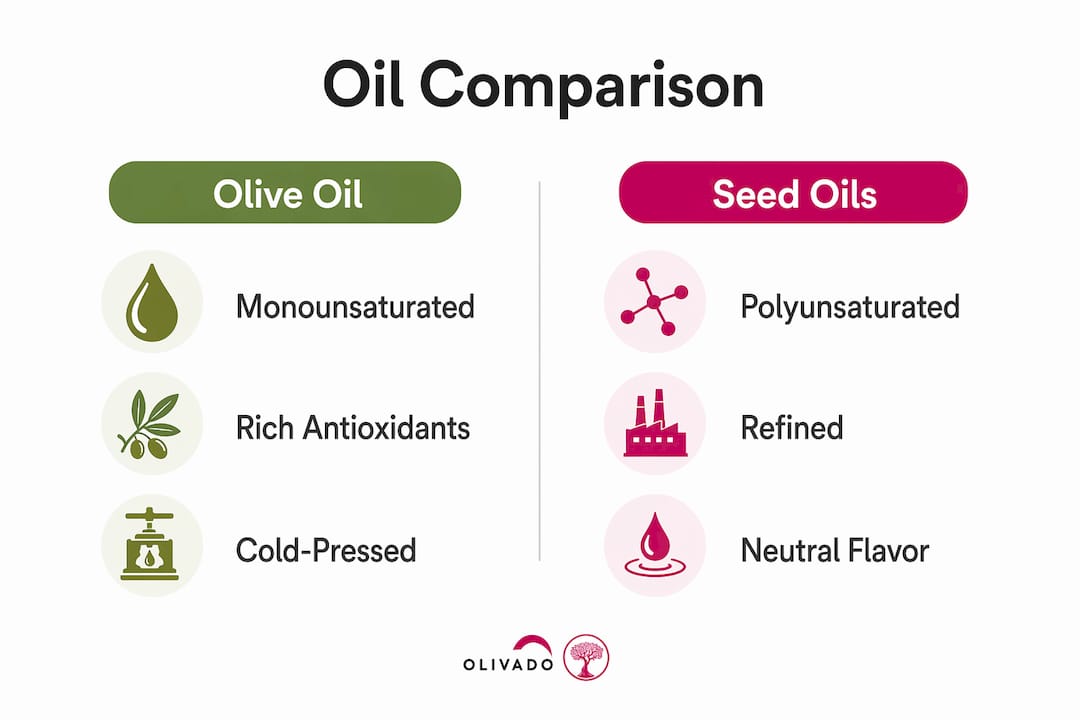
Olive oil and seed oils are built from fundamentally different types of fat. EVOO is 73% monounsaturated fat, primarily oleic acid, with roughly 14% saturated fat and 10–11% polyunsaturated fat. That fat profile makes it chemically stable and resistant to oxidation. Seed oils such as sunflower, rapeseed, soybean, and corn oil are dominated by polyunsaturated omega-6 fatty acids (PUFAs), which are far less stable under heat and light.

Processing is the second critical difference. EVOO is mechanically cold-pressed, which retains polyphenols such as oleocanthal and oleuropein. These compounds provide measurable anti-inflammatory and antioxidant effects. Seed oils, by contrast, undergo solvent extraction, bleaching, and deodorising at high temperatures. That industrial process strips out any naturally occurring nutrients and can generate oxidation by-products before the oil even reaches your kitchen.
One tablespoon of EVOO delivers approximately 119–120 calories from 13.5–14g of fat. Calorie content across most cooking oils is broadly similar, so the meaningful distinction lies in fat quality, not quantity.
| Property | Extra Virgin Olive Oil | Typical Seed Oil |
|---|---|---|
| Primary fat type | Monounsaturated (73%) | Polyunsaturated (omega-6) |
| Processing method | Cold-pressed, mechanical | Solvent extraction, refining |
| Polyphenol content | High (oleocanthal, oleuropein) | Negligible after refining |
| Smoke point | ~190°C | 220–230°C (refined) |
| Oxidation stability | High | Low to moderate |
Pro Tip: When buying olive oil, look for a harvest date on the label rather than a best-before date. Polyphenol content declines with age, so fresher oil delivers more of the antioxidant benefit.
How do olive oil and seed oils compare for heart health?
The cardiovascular evidence for olive oil is among the strongest in nutritional science. Replacing a small daily amount of saturated fat with olive oil is associated with a 5–7% reduction in heart disease risk, according to a 24-year longitudinal study. That figure represents a meaningful shift in population-level risk from a single dietary swap.
Seed oils also carry cardiovascular credentials, but through a different mechanism. Replacing saturated fats with PUFA-rich seed oils lowers LDL cholesterol, which is a validated risk marker for cardiovascular disease. The distinction is that seed oils achieve this through fat substitution, whereas EVOO adds active protective compounds on top of a favourable fat profile.
The antioxidant gap between the two categories matters most here. Cold-pressed EVOO retains polyphenols that actively combat oxidative stress and inflammation. Refined seed oils contain none of these compounds. Oxidative stress is a key driver of arterial damage, so the absence of antioxidants in seed oils is a genuine nutritional gap, not a minor detail.
“The Mediterranean diet’s benefits arise from the overall dietary pattern, including olive oil, not olive oil alone.” — Harvard Health
That context matters. Olive oil works best as part of a Mediterranean-style approach that includes fruits, vegetables, legumes, and nuts. Treating EVOO as a standalone supplement misses the point of why populations that consume it consistently show lower rates of cardiovascular disease.
What are the practical culinary differences?
Smoke point is the most commonly cited cooking consideration, and it is also the most misunderstood. EVOO has a smoke point of around 190°C, while refined seed oils reach 220–230°C. On paper, that makes seed oils look superior for high-heat cooking. The reality is more complicated.
EVOO’s polyphenols provide added protection from oxidation during cooking, making it more heat stable than its smoke point alone suggests. Seed oils may tolerate higher temperatures without visibly smoking, but they degrade chemically at lower temperatures than their smoke points imply, producing lipid peroxides and aldehydes. The smoke point is not the same as the stability point.
Here is how the two oils map to practical kitchen use:
- Salad dressings and finishing: EVOO is the clear choice. Its flavour, polyphenols, and raw nutritional value are fully preserved with no heat applied.
- Sautéing and medium-heat cooking: EVOO performs well up to around 180°C. Most home cooking, including pan frying vegetables and fish, stays within this range.
- High-heat roasting and deep frying: Avocado oil or refined coconut oil are more appropriate than either EVOO or standard seed oils. Saturated fats remain the most stable option for very high heat.
- Baking: Mild seed oils such as rapeseed work well where a neutral flavour is needed. EVOO can substitute in recipes where a fruity note complements the dish.
- Marinades: EVOO carries fat-soluble flavour compounds into meat and vegetables more effectively than neutral seed oils.
Flavour is a practical consideration that nutrition articles often ignore. EVOO from Slovenian Istria, for example, carries grassy, peppery, and bitter notes that actively improve a dish. Refined seed oils are deliberately flavourless, which makes them versatile but culinarily inert.
Are concerns about seed oils’ safety justified?
The seed oil debate has become one of the more polarised topics in nutrition, and much of the alarm is overstated. Seed oils are often unfairly demonised; the primary health risk in most Western diets comes from ultra-processed foods high in sugar, sodium, and refined carbohydrates, not from seed oils consumed as part of a whole-food diet.
That said, the concerns are not entirely without basis. PUFAs in seed oils degrade quickly under heat, producing lipid peroxides and aldehydes that carry cardiovascular risk. The omega-6 to omega-3 ratio in industrially processed seed oils can also shift unfavourably during storage, raising questions about inflammatory potential. These are real biochemical effects, but they are dose and context dependent.
The most honest framing is this:
- Seed oils consumed cold or at low heat, as part of a varied whole-food diet, carry minimal documented risk.
- Seed oils used repeatedly for deep frying, or consumed primarily through ultra-processed snack foods, present a genuinely different risk profile.
- Certain aldehydes produced when cooking with refined seed oils at high heat are linked to cardiovascular damage. EVOO’s antioxidants actively reduce this lipid peroxidation.
- The major difference between EVOO and seed oils is processing. That processing strips seed oils of protective compounds and introduces instability that EVOO simply does not have.
Pro Tip: If you use seed oils at home, store them in a cool, dark cupboard and avoid reheating them repeatedly. Oxidation accelerates with light, heat, and repeated use.
Key takeaways
Extra virgin olive oil outperforms refined seed oils on fat quality, antioxidant content, and cardiovascular evidence, though seed oils remain a reasonable choice when used correctly and in context.
| Point | Details |
|---|---|
| Fat composition matters most | EVOO’s 73% monounsaturated fat is more stable and protective than the PUFAs dominant in seed oils. |
| Processing determines nutritional value | Cold-pressing preserves polyphenols; industrial refining destroys them and can introduce harmful by-products. |
| Smoke point is not the whole story | EVOO’s antioxidants provide heat stability beyond what its 190°C smoke point suggests. |
| Seed oils are not inherently toxic | The real risk comes from ultra-processed foods and repeated high-heat use, not moderate whole-food consumption. |
| Dietary context is decisive | Olive oil’s cardiovascular benefits are strongest as part of a Mediterranean-style whole-food diet. |
Why i reach for olive oil every time
I have spent years reading the nutrition science on cooking oils, and the honest conclusion is that the seed oil debate is often fought on the wrong ground. The question is not whether seed oils are poison. They are not. The question is whether they offer anything that a good EVOO cannot do better, and the answer is almost always no.
What strikes me most is the processing argument. The industrial refining of seed oils is not a minor technical detail. It is the reason a bottle of sunflower oil has a two-year shelf life and no discernible flavour. That stability comes at the cost of every beneficial compound the original seed contained. EVOO, by contrast, is essentially pressed fruit juice. What you see on the label is what was in the olive.
I also think the culinary case for olive oil is underrated in health discussions. A high-quality EVOO from a single estate does not just protect your arteries. It makes food taste better. That matters for long-term dietary habits in a way that a neutral, flavourless oil simply cannot match. Seed oils make compliance easy. Olive oil makes compliance enjoyable.
My practical advice: use a quality EVOO as your default cooking and finishing oil for anything up to medium heat. Reserve seed oils for specific baking applications where a neutral flavour is genuinely needed. And treat any oil used for deep frying as a separate category entirely, because repeated high-heat use changes the risk profile of every oil, not just seed oils.
— Mak
Discover terracenturia’s high polyphenol EVOO
If this comparison has you reconsidering what is in your kitchen, Terracenturia offers a direct answer. Produced in Slovenian Istria using organic, cold-pressed methods, Terracenturia’s premium polyphenol EVOO delivers 1,371 mg/kg of polyphenols, placing it well above standard commercial olive oils. That concentration translates directly into the antioxidant and anti-inflammatory benefits described throughout this article. Terracenturia also publishes full transparency on its organic selection process, so you know exactly what you are buying. For health-conscious cooks who want the nutritional value of olive oil without compromise, this is where quality and evidence meet.
FAQ
What makes olive oil healthier than seed oils?
Olive oil is richer in monounsaturated fats and natural polyphenols that seed oils lack after industrial refining. These compounds reduce oxidative stress and support cardiovascular health in ways that PUFA-dominant seed oils cannot replicate.
Can i cook with extra virgin olive oil at high heat?
EVOO is suitable for most home cooking up to around 190°C. Its polyphenols provide additional oxidation protection, making it more heat stable than its smoke point alone suggests. For very high-heat cooking above 200°C, avocado oil or refined coconut oil are better choices.
Are seed oils actually bad for you?
Seed oils are not inherently harmful when consumed as part of a whole-food diet and used correctly. The documented risks arise primarily from repeated high-heat use and from consuming seed oils through ultra-processed foods, not from moderate use in home cooking.
Which oil is best for salad dressings?
Extra virgin olive oil is the best choice for dressings and cold applications. No heat is applied, so the full polyphenol content and flavour are preserved, delivering both nutritional value and taste that refined seed oils cannot match.
Does the mediterranean diet use seed oils?
The traditional Mediterranean diet is built around olive oil, not seed oils. Harvard Health confirms that olive oil’s benefits are maximised within a broader dietary pattern that includes vegetables, legumes, fish, and nuts rather than as an isolated supplement.