TL;DR:
- Polyphenols in extra virgin olive oil are natural compounds that provide health benefits and distinctive flavors. High-polyphenol EVOOs, often early-harvest and cold-pressed, deliver measurable cardiovascular and anti-inflammatory advantages. Consumers should verify polyphenol content through lab reports rather than relying solely on taste or origin.
Polyphenols in extra virgin olive oil are natural plant compounds responsible for both the oil’s characteristic bitter, peppery taste and its scientifically validated health benefits. These active biophenols include hydroxytyrosol, oleuropein, oleocanthal, and tyrosol, each contributing distinct biological activity. The European Food Safety Authority (EFSA) has formally recognised hydroxytyrosol and its derivatives for protecting blood lipids from oxidative damage. Understanding the polyphenols meaning in EVOO is the difference between buying a functional food and buying flavoured fat.
What polyphenols in EVOO are and why they matter
Polyphenols are a broad family of plant-derived phenolic compounds. In extra virgin olive oil, the most significant members are hydroxytyrosol, oleuropein, and oleocanthal, alongside tyrosol and several secoiridoid derivatives. These compounds transfer from the olive fruit into the oil during cold pressing. Thousands of polyphenol types exist across the plant kingdom, but EVOO contains a specific subset with unusually high bioactivity.
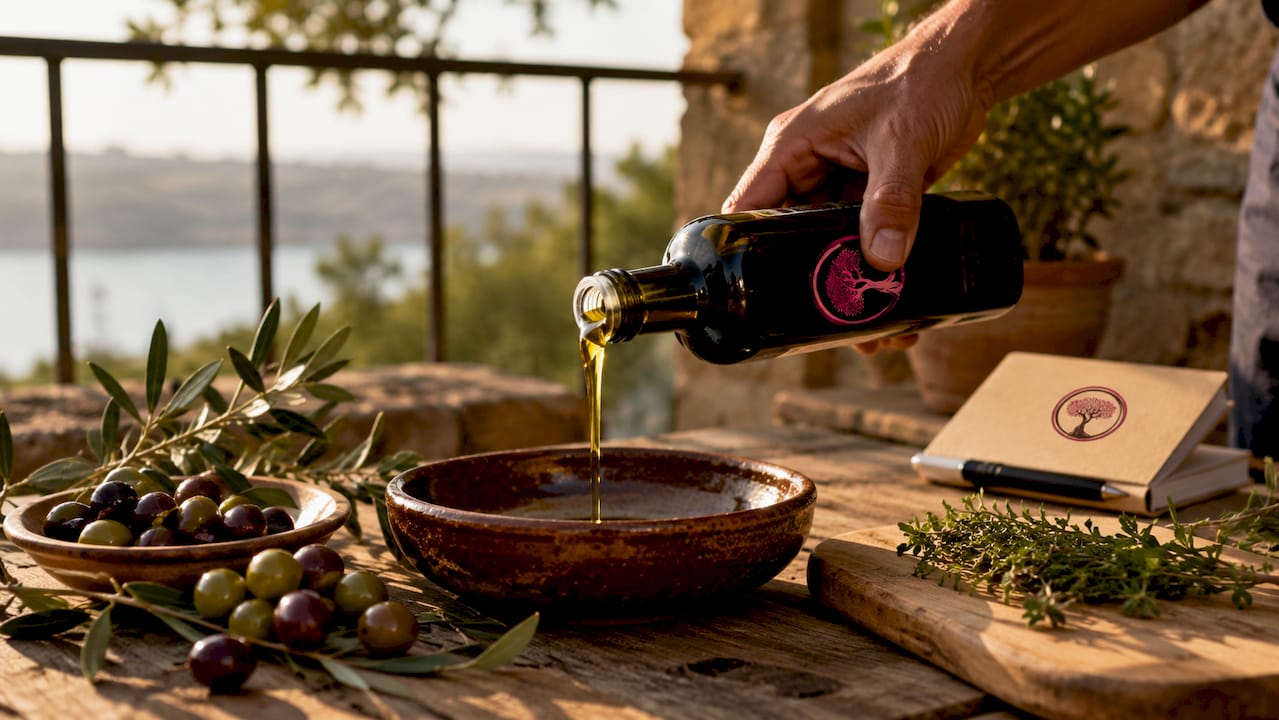
The sensory impact is direct and unmistakable. Oleocanthal produces the throat catch you feel seconds after swallowing a quality oil. Oleuropein drives the bitter note on the back of the tongue. Bitterness and pungency are therefore not flaws in a well-made EVOO. They are the clearest signal that polyphenols are present in meaningful quantities.
Some specialists prefer the term “active biophenols” over the broader label “polyphenols” because it more precisely identifies the compounds behind EFSA-authorised health claims. Both terms appear in the literature, and you will encounter both on quality-focused product pages. The distinction matters when reading labels or evaluating clinical research.
Key polyphenols found in EVOO
- Hydroxytyrosol: The primary bioactive marker for EFSA’s health claim; highly bioavailable and tracked via urinary metabolites.
- Oleuropein: Responsible for bitterness; degrades as olives ripen, so early harvest oils contain more.
- Oleocanthal: Produces the peppery throat sting; studied for anti-inflammatory properties comparable to ibuprofen.
- Tyrosol: A milder phenol present in most EVOOs; less potent than hydroxytyrosol but still antioxidant-active.
Pro Tip: If your EVOO produces a noticeable throat sting, that is oleocanthal at work. A single cough after swallowing is a reliable sensory indicator of a polyphenol-rich oil, though lab measurement remains the only way to confirm exact content.
What health benefits do EVOO polyphenols offer?
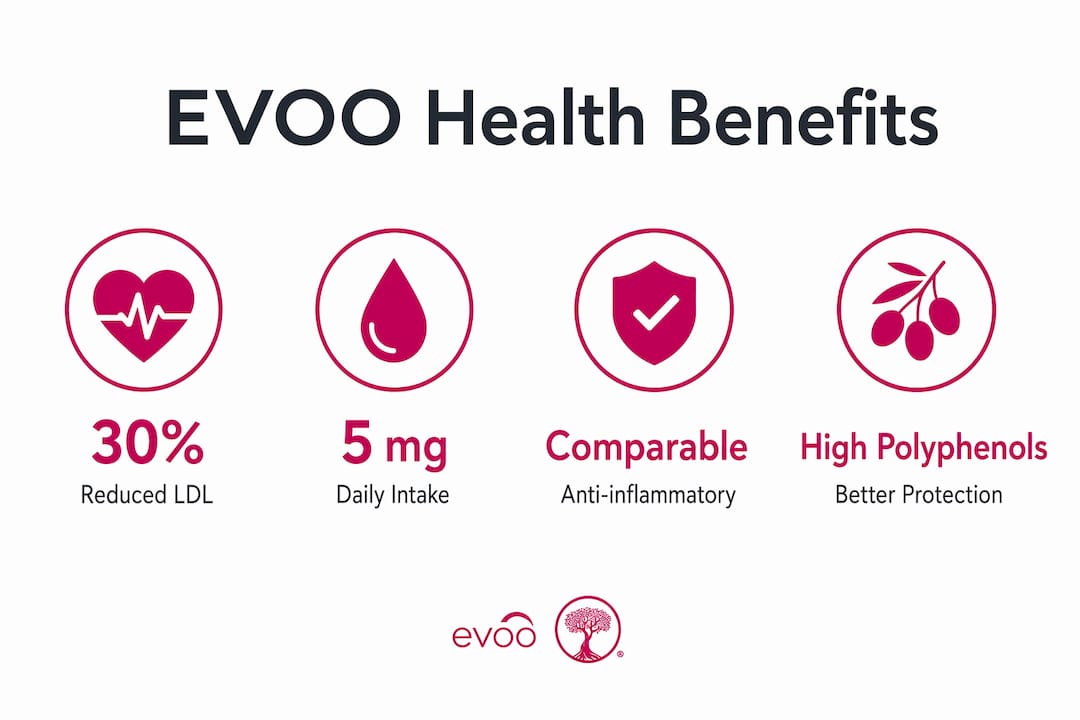
The cardiovascular evidence is the strongest. Clinical trials show that polyphenol-rich EVOO reduces oxidised LDL cholesterol and improves lipid profiles within weeks of regular consumption. Oxidised LDL is a key driver of arterial plaque formation, so reducing it directly lowers cardiovascular risk. This is not a marginal effect observed only in laboratory conditions.
EFSA’s approved health claim requires a daily intake of 5 mg of hydroxytyrosol and its derivatives, achievable through approximately 20 g of a sufficiently rich EVOO. That is roughly two tablespoons. The claim is specific to blood lipid oxidative protection, not a general antioxidant assertion, which makes it more credible and harder to earn.
Oleocanthal adds a separate dimension. Anti-inflammatory effects comparable to ibuprofen have been observed in laboratory studies, with the compound inhibiting the same COX-1 and COX-2 enzymes targeted by non-steroidal anti-inflammatory drugs. The dose required for a clinical effect is higher than a typical daily serving, but consistent consumption over time is the relevant frame for dietary compounds.
Bioavailability is more complex than absorption charts suggest. Hydroxytyrosol metabolites appear in urine within hours of consumption, confirming the compound is absorbed and processed. However, the body transforms polyphenols rapidly, so researchers track metabolites rather than the parent compounds. This means the biological effect depends on your individual metabolism as much as the oil’s polyphenol content.
| Compound | Primary Effect | Evidence Level |
|---|---|---|
| Hydroxytyrosol | Protects blood lipids from oxidation | EFSA-approved health claim |
| Oleocanthal | Anti-inflammatory activity | Lab studies, COX inhibition |
| Oleuropein | Antioxidant, antimicrobial | In vitro and animal studies |
| Tyrosol | Mild antioxidant support | Observational data |
“The EFSA health claim for hydroxytyrosol is one of the few nutrition-related claims to survive rigorous scientific scrutiny in the European Union. That alone sets high-polyphenol EVOO apart from most functional food claims on the market.”
How do production factors influence polyphenol levels?
Polyphenol content is not fixed at the variety level. It is shaped by every decision made between the grove and the bottle. Understanding these factors helps you read a label with genuine discernment rather than marketing faith.
- Harvest timing. Olives harvested early, while still green or turning colour, contain significantly higher polyphenol concentrations than fully ripe black olives. Polyphenols degrade as the fruit matures. Early harvest is the single most reliable indicator of a high-polyphenol oil.
- Extraction method. Cold pressing preserves polyphenols because heat accelerates oxidation and compound breakdown. Oils extracted above 27°C lose a measurable proportion of their phenolic content during processing.
- Olive cultivar and terroir. Varieties such as Coratina, Koroneiki, and the Istrian Buga cultivar naturally produce higher polyphenol concentrations than milder varieties like Arbequina. Soil composition, altitude, and climate all influence the final phenolic profile.
- Packaging and storage. Light and oxygen are the primary enemies of polyphenols after bottling. High-polyphenol EVOO should be bottled in dark glass or opaque containers and consumed within 6–9 months of harvest.
- Processing speed. Olives oxidise quickly after picking. Mills that process fruit within 24 hours of harvest consistently produce oils with higher polyphenol retention than those with longer delays.
Pro Tip: Check the harvest date on the label, not just the best-before date. A best-before date of 2027 tells you nothing about polyphenol content. A harvest date of autumn 2025 tells you the oil is still within its optimal window.
How to choose and verify a high-polyphenol EVOO
Not every bottle labelled “extra virgin” delivers meaningful polyphenol content. Not all EVOOs marketed as premium contain the phenolic levels required for the EFSA health claim. The label alone is insufficient. You need to know what to look for beyond the designation.
The threshold that separates functional oils from standard EVOO sits at around 250–500 mg/kg total polyphenols. Oils certified as high-phenolic typically exceed 500 mg/kg, and some early-harvest, single-variety oils reach well above 1,000 mg/kg. Terracenturia’s EVOO from Slovenian Istria, for example, is independently verified at 1,371 mg/kg, placing it firmly in the highest tier available commercially.
| Feature | Standard EVOO | High-Polyphenol EVOO |
|---|---|---|
| Polyphenol content | Below 250 mg/kg | 500 mg/kg and above |
| Harvest timing | Mixed or late harvest | Early harvest, green olives |
| Extraction | Cold or warm pressed | Cold pressed only |
| Packaging | Clear or tinted glass | Dark glass or opaque |
| Taste profile | Mild, buttery | Bitter, peppery, pungent |
| Shelf life guidance | 18–24 months from pressing | Best within 6–9 months |
Sensory cues remain a useful first filter. A pronounced bitterness and a throat sting that lingers for several seconds both point to a polyphenol-rich oil. However, sensory signals alone cannot confirm polyphenol levels because different phenolic compounds influence taste in different ways. Two oils with identical bitterness scores can differ substantially in hydroxytyrosol content.
For culinary use, high-polyphenol EVOOs work best as finishing oils. Drizzle over salads, grilled vegetables, legume dishes, or sourdough. Heat degrades polyphenols, so reserve your best oil for raw or low-heat applications. A standard EVOO is perfectly adequate for roasting or sautéing.
Key takeaways
High-polyphenol EVOO delivers measurable cardiovascular and antioxidant benefits that standard olive oil cannot match, provided you choose an early-harvest, cold-pressed oil with verified phenolic content above 500 mg/kg.
| Point | Details |
|---|---|
| Polyphenols defined | Hydroxytyrosol, oleocanthal, and oleuropein are the primary active compounds in EVOO. |
| EFSA health claim | 5 mg daily hydroxytyrosol via approximately 20 g EVOO qualifies for EU blood lipid protection claim. |
| Sensory signals | Bitterness and throat sting indicate polyphenols but cannot replace lab measurement for verification. |
| Production matters | Early harvest, cold pressing, and dark glass packaging preserve the highest polyphenol levels. |
| Consumption guidance | Use high-polyphenol EVOO raw or as a finishing oil to protect its active compounds from heat. |
Why i think most people are buying the wrong olive oil
I have spent years reading the research on EVOO polyphenols and tasting oils across a wide range of phenolic profiles. The pattern I keep returning to is this: most health-conscious consumers are buying olive oil based on origin stories and attractive packaging rather than the one metric that actually determines functional value, which is polyphenol content.
The marketing around Mediterranean diet benefits has created a halo effect. People assume any EVOO from Greece, Italy, or Spain delivers the cardiovascular benefits cited in clinical literature. It does not. The trials that produced those results used oils with polyphenol concentrations far above what most supermarket bottles contain.
The other misconception I encounter regularly is that bitterness is a quality defect. Decades of consumer preference research pushed producers towards milder, fruitier oils. That commercial pressure directly reduced the polyphenol content of widely available EVOOs. The oils that taste the most “pleasant” to an untrained palate are often the least functional from a health standpoint.
My recommendation is straightforward. Treat polyphenol content as a specification, not a marketing claim. Ask for the lab report. Look for the harvest date. Choose oils that make your throat catch. The EVOO health benefits the research supports are real, but they are conditional on the quality of the oil you actually consume.
— Mak
Experience high-polyphenol EVOO from slovenian istria
Terracenturia produces certified organic EVOO from Slovenian Istria with an independently verified polyphenol content of 1,371 mg/kg. Every bottle is early-harvest, cold-pressed, and bottled in dark glass to preserve the full phenolic profile from grove to table. The oil meets and exceeds the EFSA threshold for the hydroxytyrosol health claim. If you want to experience what genuinely high-polyphenol olive oil tastes and performs like, this is the benchmark. Terracenturia also publishes detailed quality documentation so you can verify every claim before you buy.
FAQ
What does polyphenols meaning in EVOO refer to?
Polyphenols in EVOO are natural plant phenolic compounds, primarily hydroxytyrosol, oleuropein, oleocanthal, and tyrosol, that transfer from olives into the oil during cold pressing and provide antioxidant and anti-inflammatory activity.
How much EVOO do i need for the EFSA health benefit?
Approximately 20 g of EVOO daily, roughly two tablespoons, provides the 5 mg of hydroxytyrosol and derivatives required to qualify for the EFSA-approved blood lipid protection claim.
Can i tell if an EVOO is high in polyphenols by tasting it?
A bitter taste and a peppery throat sting are reliable indicators, but sensory cues cannot confirm exact polyphenol levels. Two oils with similar taste profiles can differ significantly in hydroxytyrosol content, so lab-verified data is the only definitive measure.
Does cooking destroy polyphenols in EVOO?
Heat degrades polyphenols, so high-polyphenol EVOO is best used raw or as a finishing oil. For roasting or frying, a standard EVOO is adequate and preserves your premium oil for applications where its active compounds remain intact.
What polyphenol content qualifies as high-phenolic EVOO?
Oils above 500 mg/kg total polyphenols are generally classified as high-phenolic. Oils exceeding 250 mg/kg meet the minimum threshold for the EFSA hydroxytyrosol health claim when consumed at the recommended daily amount.