TL;DR:
- Extra virgin olive oilExpires when oxidation causes fats to turn rancid, losing flavor and health benefits. Proper storage and checking harvest dates help maintain freshness, but signs of spoilage include off odors and dull appearance. Consuming degraded EVOO reduces its nutritional value and can cause cellular damage over time.
Extra virgin olive oil expires when oxidation turns its fats rancid, stripping away both flavour and the polyphenols responsible for its health benefits. Understanding EVOO expiration explained properly means knowing that the process is chemical, not microbial. No bacteria cause the spoilage. Instead, exposure to air, light, and heat gradually degrades the oil until it tastes flat, waxy, or stale. For anyone investing in quality EVOO, knowing the olive oil shelf life timeline and the warning signs of rancidity is the difference between a bottle that heals and one that harms.
How long does extra virgin olive oil last?
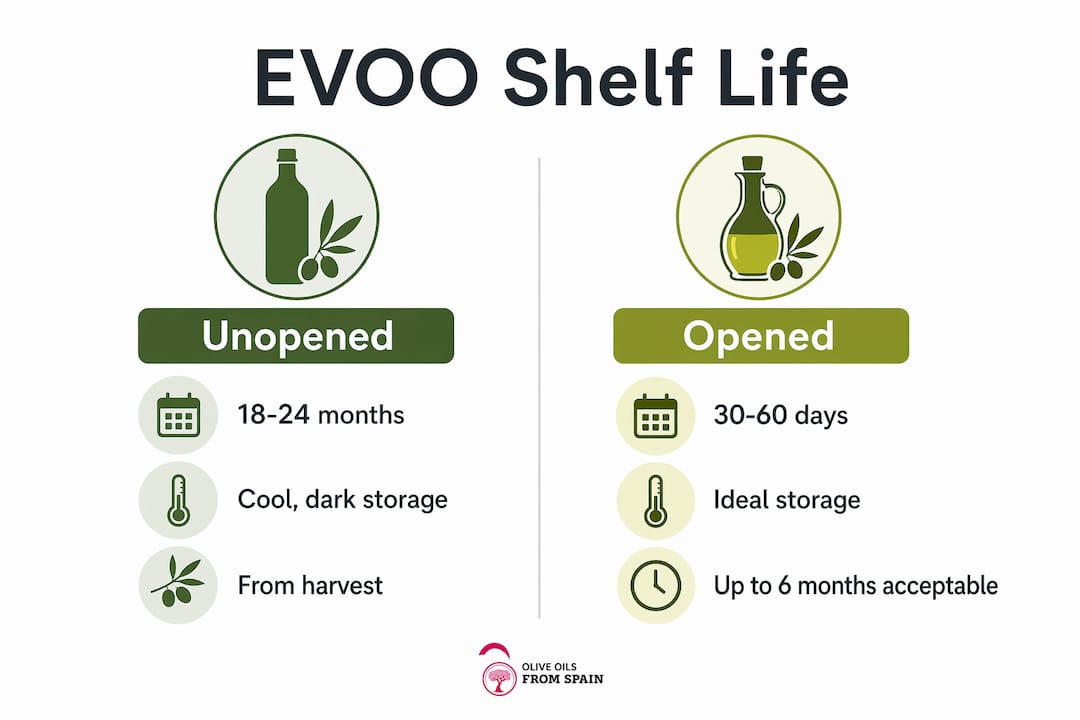
Unopened EVOO lasts 18–24 months from the harvest date when stored correctly. That figure assumes a cool, dark environment and an intact seal. The moment you open the bottle, the clock accelerates.

Once opened, peak quality lasts 30–60 days. With careful storage, the oil remains acceptable for up to 3–6 months, but its sensory and nutritional profile will have declined noticeably by then. This is not a minor quibble about flavour preference. The polyphenols that make EVOO worth buying degrade alongside the taste.
EVOO behaves differently from refined olive oil. Higher polyphenol content gives EVOO its distinctive peppery bite and antioxidant value, but it also makes the oil more reactive to oxidation than refined alternatives. Refined oils are stripped of these compounds, which makes them more shelf-stable but nutritionally inferior. Choosing EVOO is a trade-off that rewards attentive storage.
The best-before date printed on a bottle is not the same as the harvest date. Producers typically set best-before dates 18–24 months after bottling, not after harvest. An oil bottled six months after harvest could already be a year old when you buy it. Always look for the harvest date, not just the best-before stamp.
| Condition | Shelf life |
|---|---|
| Unopened, stored correctly | 18–24 months from harvest |
| Opened, ideal storage | Peak quality 30–60 days |
| Opened, acceptable quality | Up to 3–6 months |
| Past best-before date | Safe but quality degraded |
Pro Tip: Check the harvest date on the label before buying. If the bottle shows only a best-before date with no harvest date, the oil could already be well past its prime when it reaches your kitchen.
What causes EVOO to go off and how do you spot it?
Oxidation is the primary cause of EVOO spoilage. When oxygen, light, or heat interact with the oil’s unsaturated fatty acids, they trigger a chain reaction that produces aldehydes and ketones. These compounds are responsible for the unpleasant sensory changes you notice in a rancid bottle. Light, heat, and air exposure are the three main accelerants of this process.
The health concern goes beyond flavour. Oxidised fats form free radicals that can cause cellular damage with regular consumption over time. A single splash of rancid oil in a salad dressing is unlikely to cause harm, but using degraded oil daily defeats the purpose of choosing EVOO for its health properties.
Recognising rancidity by smell and taste is the most reliable test you can do at home. Sensory indicators of rancidity are the best practical check for EVOO quality, even before you look at any dates on the label.
Signs of rancid EVOO include:
- A smell reminiscent of old crayons, wax, or stale peanuts
- A flat, greasy mouthfeel with no peppery finish
- A harsh, bitter aftertaste that lingers unpleasantly
- A dull, yellowish colour rather than the usual golden-green hue
- No aroma at all, where a fresh bottle should smell grassy or fruity
“Rancid olive oil smells like crayons, glue, or stale nuts, with a waxy or harsh aftertaste that signals spoilage.” KimEcopak
One common misconception is that expired EVOO is dangerous in the way that spoiled meat or dairy is dangerous. It is not. After the best-before date, EVOO is generally safe to consume but better suited to cooking at high heat, where the flavour loss matters less, rather than raw applications like dressings or dipping.
Pro Tip: Before drizzling EVOO over food, pour a small amount into your palm and smell it. Fresh oil smells grassy, fruity, or faintly peppery. If it smells of nothing or reminds you of a wax crayon, open a new bottle.
How to store EVOO properly to extend its freshness
Correct storage is the single most effective way to protect your EVOO investment. The three enemies are light, heat, and oxygen. Remove any one of them and you slow oxidation meaningfully. Remove all three and your oil will stay at peak quality for as long as the timeline allows.
Here is the order of priority for proper EVOO storage:
- Choose a cool, dark location. A kitchen cupboard away from the hob is ideal. Avoid windowsills, countertops near the cooker, or any spot that receives direct sunlight.
- Use dark glass bottles. Dark glass and cool storage slow oxidation significantly. Clear bottles offer no protection from light. If your EVOO came in a clear bottle, transfer it to a dark glass container or store it inside a cupboard.
- Seal the bottle tightly after every use. Oxygen exposure is cumulative. Every second the bottle sits open, oxidation accelerates. Replace the cap immediately after pouring.
- Avoid bulk buying unless you consume oil quickly. Buying large bottles leads to rancidity if consumption is slow. A 750 ml bottle used over four months will degrade noticeably compared to a 250 ml bottle finished in six weeks.
- Consider splitting bulk purchases. If you buy a large tin for economy, decant a small amount into a dark glass bottle for daily use and keep the tin sealed. This limits oxygen exposure to the main supply.
Refrigeration is a topic that divides opinion. Cold temperatures do slow oxidation, but EVOO solidifies in the fridge and may turn cloudy. This cloudiness is harmless and reverses at room temperature, but the repeated warming and cooling cycles can introduce condensation into the bottle. In very warm climates where kitchen temperatures exceed 25°C regularly, refrigeration is a reasonable compromise. For most British kitchens, a cool cupboard is sufficient.
For a deeper look at preserving EVOO freshness, Terracenturia’s dedicated guide covers bottling, decanting, and seasonal storage considerations in detail.
Pro Tip: Write the date you opened the bottle on a small piece of tape and stick it to the label. After 60 days, taste the oil critically. If the peppery finish has gone, use it for cooking rather than raw.
How to choose fresh, high-quality EVOO from the start
The best storage routine cannot rescue an oil that was already old when you bought it. Choosing fresh EVOO from the outset is the most reliable way to avoid early expiration. Several markers separate genuinely fresh oil from a well-packaged mediocre one.
The harvest date is the most important number on the label. The harvest date is the most reliable freshness indicator, more relevant than best-before dates, which producers can set at their discretion. An oil harvested within the past 12 months is fresh. One harvested 20 months ago and still sitting on a shelf is already in decline, regardless of what the best-before date says.
Key freshness indicators to look for when buying EVOO:
- Harvest date clearly printed on the label. Avoid any bottle that shows only a best-before date.
- Acidity below 0.8%. The EU standard for extra virgin classification requires acidity at or below 0.8%. Lower acidity generally indicates better quality fruit and faster processing after harvest.
- PDO or PGI certification. Protected Designation of Origin and Protected Geographical Indication labels guarantee the oil comes from a specific region with defined production standards, which typically means better traceability and fresher supply chains.
- Early-harvest designation. Oils pressed from olives harvested before full ripeness contain higher polyphenol levels and a more pronounced flavour profile. They also tend to have better natural resistance to oxidation.
- Producer transparency. Brands that publish harvest dates, polyphenol counts, and acidity levels on their labels or websites are more likely to prioritise freshness throughout their supply chain.
| Quality marker | What to look for | Red flag |
|---|---|---|
| Harvest date | Within past 12 months | No harvest date on label |
| Acidity level | Below 0.8% | Above 0.8% or unlisted |
| Certification | PDO, PGI, or organic | No certification at all |
| Harvest timing | Early-harvest noted | No harvest timing stated |
| Polyphenol content | Listed or available from producer | No polyphenol data available |
Terracenturia’s 2026 buyer’s guide walks through each of these markers with practical examples, including what to look for on labels from Slovenian Istria producers. For those who want to go further, the organic EVOO evaluation guide covers how to assess polyphenol content and verify producer claims before you buy.
Key takeaways
EVOO expires through oxidation, not microbial spoilage, and the harvest date is the single most reliable indicator of whether a bottle is worth buying.
| Point | Details |
|---|---|
| Shelf life unopened | EVOO lasts 18–24 months from harvest when stored in cool, dark conditions. |
| Shelf life once opened | Peak quality lasts 30–60 days; acceptable quality up to 3–6 months with proper storage. |
| Spoilage signs | Rancid oil smells of crayons or stale nuts and loses its peppery finish entirely. |
| Storage priority | Keep EVOO in dark glass, away from heat and light, and seal tightly after every use. |
| Buying fresh | Always check the harvest date; avoid bottles with no harvest date or acidity information. |
Why most people are getting EVOO shelf life wrong
Most consumers treat EVOO like any other cooking oil. They buy the largest bottle available, store it next to the hob for convenience, and use it over six months or more without a second thought. I understand the logic. It feels economical. But it is almost certainly the reason their food does not taste as good as they expect.
The uncomfortable truth is that a premium EVOO bought in good faith can be functionally rancid within weeks if stored carelessly. The polyphenols that justify the price, and the health claims, are among the first compounds to degrade. By the time the oil smells noticeably off, much of its nutritional value has already gone.
What I find most overlooked is the gap between safety and quality. People ask whether expired EVOO will make them ill. The honest answer is probably not, at least not acutely. But consuming oxidised fats regularly is not a neutral act. The free radicals produced by rancid oil work against the very antioxidant benefits you were trying to gain. You end up with an oil that costs more than refined alternatives and delivers less than either.
My practical advice is simple. Buy smaller bottles more frequently. Prioritise the harvest date over the best-before date every single time. Taste your oil before you use it, not just when you first open it. And if the peppery, grassy character has gone flat, use the remainder for high-heat cooking and replace it. The cost of a fresh bottle is far lower than the cost of using degraded oil on food you care about.
— Mak
Why Terracenturia EVOO stays fresh longer
Freshness is not accidental. Terracenturia produces high-polyphenol organic EVOO from Slovenian Istria, with polyphenol levels reaching 1,371 mg/kg. Every bottle carries a clear harvest date, and the oil is pressed and bottled to minimise the time between grove and consumer. Terracenturia publishes acidity levels and polyphenol data openly, so you can verify freshness before you buy rather than after you open. For health-conscious consumers who want EVOO that still delivers its full antioxidant profile when it reaches the table, exploring the Terracenturia range is a logical next step.
FAQ
How long does EVOO last once opened?
Opened EVOO stays at peak quality for 30–60 days and remains acceptable for up to 3–6 months with proper storage in a cool, dark place.
Is it safe to use EVOO past its best-before date?
Past its best-before date, EVOO is generally safe but its flavour and nutritional quality have declined. Use it for cooking rather than raw applications.
What does rancid EVOO smell like?
Rancid EVOO smells of old crayons, stale nuts, or waxy glue, and it loses the fresh, peppery aroma that characterises quality oil. If the smell is flat or unpleasant, the oil has oxidised.
Does refrigerating EVOO extend its shelf life?
Refrigeration slows oxidation and can extend shelf life, but it causes the oil to solidify and turn cloudy temporarily. For most kitchens, a cool, dark cupboard is sufficient and avoids the condensation risk that comes with repeated temperature changes.
What is the most reliable freshness indicator on an EVOO label?
The harvest date is the most reliable indicator of EVOO freshness. Consumers should prioritise the harvest date over best-before dates, which producers set at their own discretion and which can be misleading.