TL;DR:
- Pairing olive oil involves matching its flavor profile and intensity with specific foods to enhance harmony rather than create conflict. The flavor of extra virgin olive oil varies from fruitiness, bitterness, to pungency, which should guide appropriate food pairings based on dish delicacy or robustness. Proper storage and usage techniques, such as reserving high-quality oils for finishing and tasting systematically, maximize flavor and culinary impact.
Pairing olive oil is the practice of matching an oil’s flavour character and intensity with specific foods to create harmony rather than competition on the palate. A quality extra virgin olive oil brings three distinct sensory dimensions: fruitiness, bitterness, and pungency. These are not defects to mask but features to deploy. Understanding how to pair olive oil transforms it from a background cooking fat into the most expressive seasoning in your kitchen. The difference between drizzling any oil and choosing the right one is the difference between a competent dish and a memorable one.
What are the key olive oil flavour profiles?
Extra virgin olive oil builds its taste on fruitiness, bitterness, and pungency, and each of these varies significantly by olive variety and harvest timing. Early-harvest oils tend to be greener, more bitter, and more peppery. Late-harvest oils lean richer, rounder, and softer. Knowing where your oil sits on this spectrum is the first step in any pairing decision.
Four varieties illustrate the range clearly. Arbequina, grown widely in Spain and California, is mild, buttery, and almond-like, making it the gentlest option for delicate foods. Koroneiki from Greece is fresh, grassy, and lightly bitter, with a clean finish that suits raw preparations. Picual, Spain’s most planted variety, is bold, peppery, and slightly bitter with an almost tomato-leaf quality. Taggiasca from Liguria is sweet, nutty, and low in bitterness, often described as the most approachable oil for those new to tasting.
| Variety | Flavour character | Best pairing direction |
|---|---|---|
| Arbequina | Mild, buttery, almond | Delicate salads, white fish, mild cheeses |
| Koroneiki | Grassy, fresh, lightly bitter | Raw vegetables, yoghurt, lemon-dressed dishes |
| Picual | Bold, peppery, tomato-leaf | Grilled meats, roasted aubergine, aged cheeses |
| Taggiasca | Sweet, nutty, low bitterness | Pasta, focaccia, mild soups |
The practical implication is straightforward. If your dish is delicate, a bold Picual will overpower it. If your dish is rich and heavily seasoned, an Arbequina will disappear. Matching intensity to intensity is the governing principle, much like the logic behind wine pairing principles that balance robustness with delicacy.
How to pair olive oil with different food types
The most reliable pairing rule is this: light oils for light foods, robust oils for bold foods. This sounds obvious, but most home cooks own one bottle and use it for everything, which wastes the nuance of a good oil entirely.
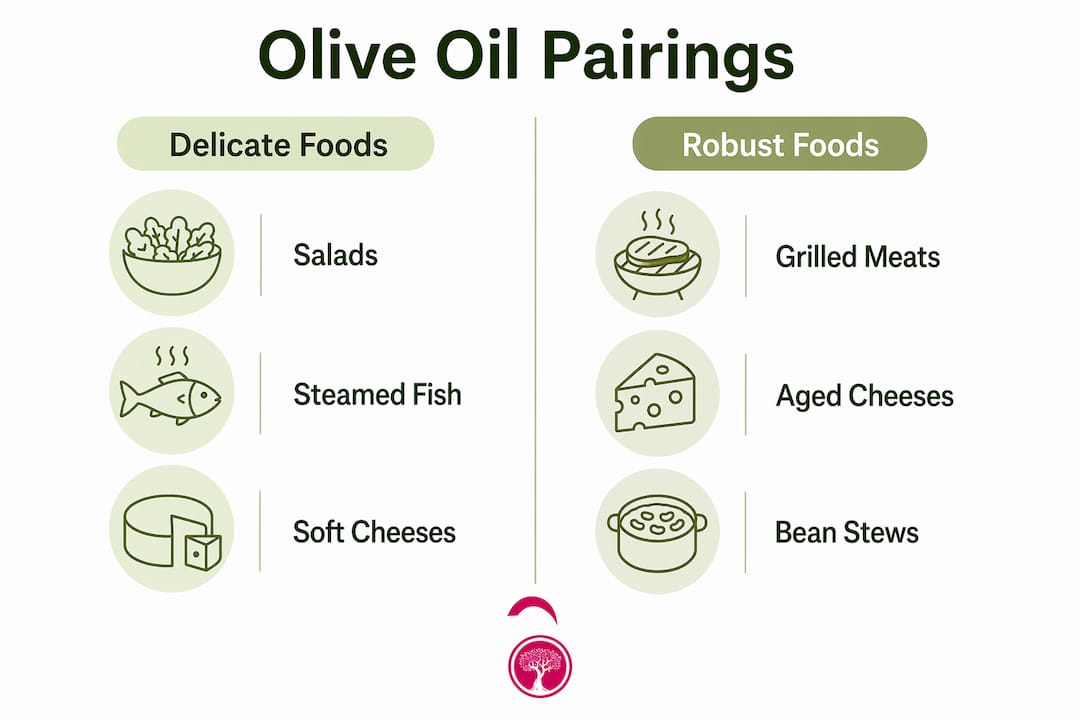
For delicate foods such as fresh salads, steamed fish, burrata, and mild goat’s cheese, choose a mild oil like Arbequina or Taggiasca. These oils add richness without competing with subtle flavours. A few drops of Taggiasca over a plate of burrata with sea salt is a complete dish. For medium-intensity foods such as roasted courgettes, grilled asparagus, lentil soups, and egg dishes, a Koroneiki or a medium-fruity Slovenian Istrian EVOO works well. The oil adds structure without dominating.
For bold foods such as grilled lamb, charred aubergine, aged Manchego or Pecorino, and hearty bean stews, reach for a robust oil like Picual or a high-polyphenol EVOO with strong peppery notes. These oils hold their own against powerful flavours and add a satisfying bitter finish that cuts through fat.
Olive oil and cheese combinations deserve particular attention. Fresh mozzarella calls for a mild, fruity oil. Aged Parmesan or Pecorino pairs beautifully with a peppery, bitter oil because the sharpness of the cheese and the bitterness of the oil reinforce each other. Pairing olive oil with vinegar follows the same logic: a bold oil with aged balsamic creates depth, while a mild oil with a light white wine vinegar keeps things bright and clean.
Pro Tip: When building a salad dressing, taste the oil and vinegar together before adding them to the bowl. A 3:1 ratio of oil to vinegar is a starting point, but the right balance depends entirely on the intensity of the oil you are using.
Cooking versus finishing: when to use each oil
Separating olive oils by culinary role is one of the most practical upgrades a home cook can make. A mild or medium oil handles cooking duties. A structured, aromatic finishing oil goes on after the heat is off. This single habit preserves the aromatic compounds that make a quality EVOO worth buying.
Heat degrades the volatile aromatic compounds in olive oil quickly. The grassy, peppery, fruity notes that define a great EVOO are largely gone by the time the pan reaches sautéing temperature. This does not mean you should not cook with olive oil. It means you should not cook with your best bottle. Use a reliable mid-range EVOO for cooking and reserve the expressive ones for finishing.
Here is a practical sequence for applying finishing oil effectively:
- Remove the dish from heat completely before adding finishing oil.
- Allow the food to rest for thirty seconds so the surface temperature drops slightly.
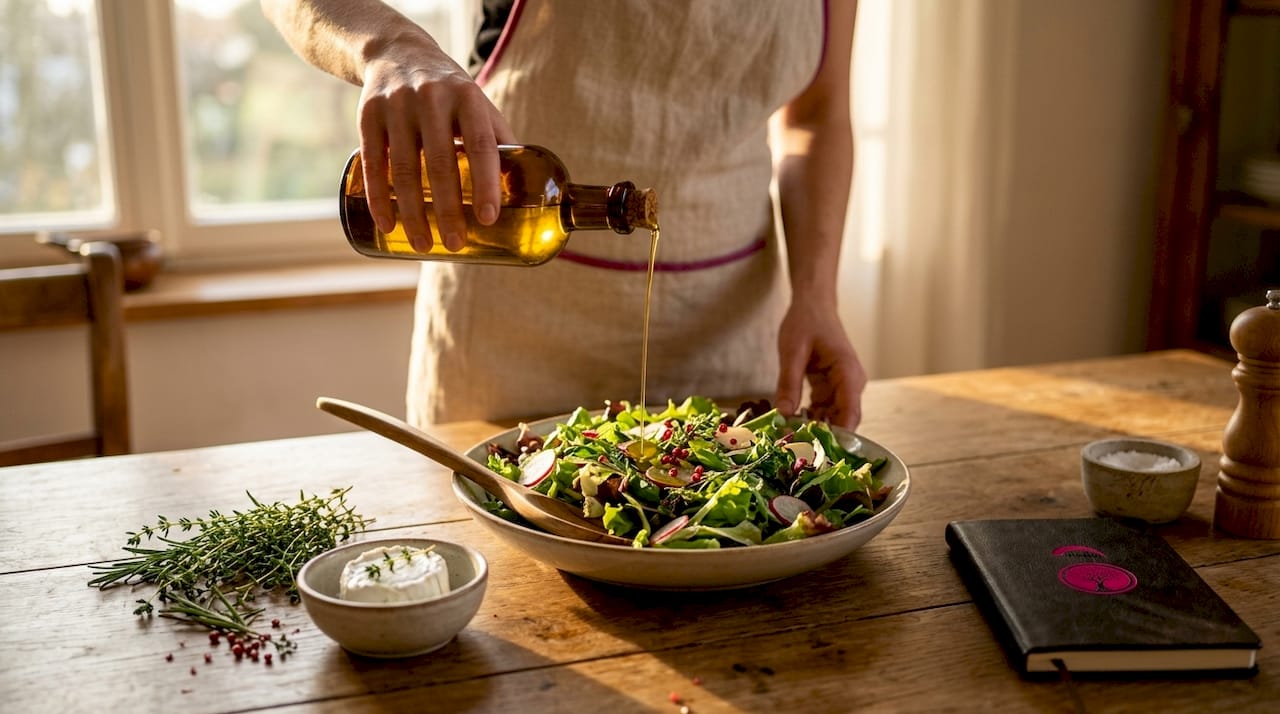
- Drizzle the oil in a thin, controlled stream rather than pouring it.
- Add a small pinch of flaky salt immediately after the oil to help it adhere and amplify flavour.
- Serve within two minutes. Finishing oil applied to hot food loses its delicate notes quickly, so timing matters.
Pro Tip: Keep two bottles on your worktop: one mid-range EVOO for cooking and one premium finishing oil stored away from the hob. The finishing bottle should live in a cupboard, not beside the stove.
A step-by-step approach to tasting and refining your pairings
Controlled tastings with mild, medium, and robust oils paired with neutral foods are the fastest way to build genuine pairing intuition. You do not need a professional tasting kit. You need three oils, a few simple foods, and a notebook.
Follow this sequence:
- Select three oils representing mild, medium, and robust intensity. Arbequina, a mid-range Koroneiki, and a high-polyphenol Picual or Slovenian Istrian EVOO make an ideal set.
- Prepare neutral tasting bases: plain white bread, a slice of ripe tomato, and a spear of lightly blanched asparagus. These foods are chosen because they reveal the oil rather than masking it.
- Taste each oil alone first. Sip a small amount, hold it briefly, and note the fruitiness on entry, the bitterness mid-palate, and the peppery finish at the back of the throat.
- Pair each oil with each food in turn. Note where the oil lifts the food, where it competes, and where it disappears.
- Record your observations in a tasting journal. A simple table works well.
| Oil | Bread | Tomato | Asparagus |
|---|---|---|---|
| Mild (Arbequina) | Buttery, pleasant | Softens acidity | Disappears slightly |
| Medium (Koroneiki) | Fresh, grassy lift | Enhances sweetness | Bright, clean match |
| Robust (Picual) | Peppery, bold | Competes slightly | Strong, interesting contrast |
This matrix becomes your personal reference. Over time, you can add more oils and more foods, building a reliable guide to pairing olive oil with food that reflects your own palate rather than someone else’s rules.
What are the most common olive oil pairing mistakes?
The single most damaging habit is using one oil for every purpose. A robust finishing oil used to fry onions wastes its aromatic complexity entirely. A mild Arbequina drizzled over a plate of grilled lamb simply vanishes. Matching the wrong intensity to the wrong dish is the most common error, and it is entirely avoidable once you understand olive oil flavour profiles.
Storage errors are the second major problem. Light, heat, and oxygen degrade olive oil quality faster than most people realise. Leaving a bottle beside the hob is one of the worst things you can do. The combination of ambient heat and light exposure accelerates oxidation, turning a vibrant oil flat and stale within weeks. Storing oil near the stove causes more flavour loss than refrigeration ever would, and a cool, dark cupboard is all you need to protect your investment.
“Think of olive oil as a seasoning ingredient rather than just a cooking medium. That shift in perspective changes everything about how you use it.” — adapted from culinary pairing guidance
A third mistake is overheating a finishing oil. Adding a premium EVOO to a screaming hot pan destroys the very compounds that justify its price. If you want the flavour of a great oil in a cooked dish, add it off the heat. For keeping EVOO fresh and aromatic, cap the bottle tightly after every use and buy in sizes you will finish within six to eight weeks of opening.
Key takeaways
Pairing olive oil effectively requires matching oil intensity to food intensity, separating cooking oils from finishing oils, and storing bottles away from light and heat to preserve flavour.
| Point | Details |
|---|---|
| Match intensity to intensity | Use mild oils for delicate foods and robust oils for bold, heavily seasoned dishes. |
| Separate cooking and finishing oils | Cook with a mid-range EVOO and reserve aromatic, structured oils for finishing after heat. |
| Apply finishing oil off the heat | Drizzle premium oil after removing food from heat to preserve its aromatic character. |
| Taste systematically to build skill | Use bread, tomato, and asparagus as neutral bases to map how each oil behaves with food. |
| Store correctly to protect quality | Keep bottles in a cool, dark cupboard and cap tightly after use to slow oxidation. |
Why I stopped treating olive oil as an afterthought
I spent years reaching for whichever bottle was closest, and the results were fine. Fine is the enemy of good. The shift happened when I started keeping two bottles in the kitchen: one workhorse EVOO for cooking and one structured, high-polyphenol oil from Slovenian Istria for finishing. The difference on a simple plate of grilled vegetables was immediate and, frankly, embarrassing. I had been leaving flavour on the table for years.
What I find most underrated in olive oil pairing is the cheese angle. A bold, peppery EVOO drizzled over aged Pecorino with a few walnuts is one of the most satisfying things you can put on a board, and almost nobody does it. Most people save the good oil for bread. That is a fine use, but it barely scratches the surface of what a quality oil can do.
My honest advice: buy one quality finishing oil and use it deliberately. Taste it on its own before you use it. Notice the fruitiness, the bitterness, the pepper hit at the back of the throat. Once you know what the oil tastes like, you will instinctively know what it will do to your food. That instinct is what separates a cook who uses olive oil from one who truly understands it.
— Mak
Discover the right oils for your kitchen from Terracenturia
Terracenturia produces high-polyphenol extra virgin olive oil from Slovenian Istria, one of Europe’s most distinctive olive-growing regions. The oils are certified organic, harvested early for maximum polyphenol content, and crafted to deliver the fruitiness, bitterness, and pungency that make pairing genuinely rewarding. Whether you are looking for a structured finishing oil to drizzle over grilled meats and aged cheeses, or a medium-intensity EVOO for salads and vegetables, Terracenturia’s range gives you oils worth tasting and pairing with intention. Explore the full selection of premium organic EVOO and find the oil that fits your kitchen.
FAQ
What does “pairing olive oil” actually mean?
Pairing olive oil means selecting an oil whose flavour intensity and character complement a specific food or dish rather than overpowering or disappearing into it. The principle mirrors wine pairing: match the weight and character of the oil to the weight and character of the food.
Which olive oil is best for salads?
Mild varieties such as Arbequina or Taggiasca suit delicate salads because their low bitterness and soft fruitiness enhance rather than compete with fresh ingredients. A medium Koroneiki works well for more robust salads with grilled vegetables or pulses.
Can you use extra virgin olive oil for cooking?
Yes, but heat destroys the aromatic compounds that define a quality EVOO. Use a mid-range EVOO for cooking and reserve your best, most expressive oil as a finishing oil applied after the heat is off.
How should I store olive oil to protect its flavour?
Keep olive oil in a cool, dark cupboard away from the hob, and cap the bottle tightly after every use. Light, heat, and oxygen are the primary causes of flavour degradation, and proximity to the stove accelerates oxidation significantly.
What foods pair best with a robust, peppery olive oil?
Grilled meats, roasted aubergine, aged cheeses such as Pecorino or Manchego, and hearty legume dishes all pair well with a bold, high-polyphenol EVOO. The oil’s bitterness and pepper cut through richness and add a satisfying finish.