TL;DR:
- Olive oil grading combines chemical analysis and sensory evaluation to assess quality, with extra virgin being the highest standard. Only extra virgin olive oil guarantees unrefined production and the absence of flavor defects, ensuring health benefits and flavor. Proper storage, recent harvest dates, and reliable certification seals are crucial for maintaining oil quality and authenticity.
Olive oil grading is the classification system by which olive oil quality is assessed according to production method, chemical composition, and sensory characteristics. The five main grades are extra virgin, virgin, refined, blended (also called “pure” or “olive oil”), and pomace. Knowing these distinctions is the difference between buying a genuinely health-promoting oil and paying a premium price for a refined product with little nutritional value. The International Olive Council (IOC) sets the global reference standards, while bodies such as the USDA and the North American Olive Oil Association (NAOOA) apply and enforce them at a national level.
Olive oil grading explained: grades, chemistry, and the senses
Extra virgin olive oil (EVOO) sits at the top of the classification hierarchy. The USDA defines EVOO by strict chemical limits: free acidity at or below 0.8%, peroxide value at or below 20 meq/kg, and specific UV absorption thresholds. These numbers are not arbitrary. They reflect how little oxidation and degradation has occurred since the olives were pressed, which directly predicts the oil’s flavour intensity and antioxidant content.
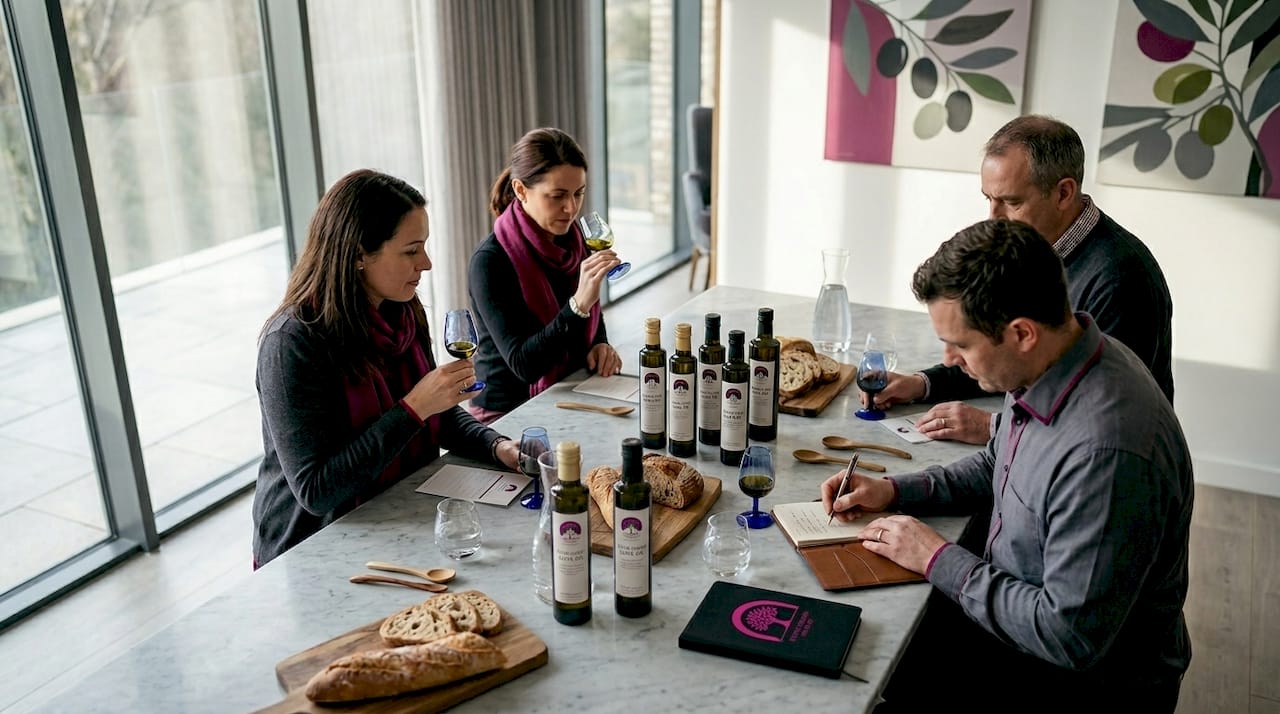
Sensory assessment is equally binding. A certified panel must detect no flavour defects and must confirm the presence of fruitiness, bitterness, and pungency. An oil that passes the chemistry but fails the taste panel cannot legally carry the extra virgin label. This dual requirement is what makes EVOO genuinely distinct from every grade below it.
Virgin olive oil shares the same mechanical extraction process but allows a free acidity of up to 2% and permits minor sensory defects. It is a legitimate, unrefined product, though less prized for flavour and polyphenol content. Below virgin, the grades change character entirely.
Refined olive oil is chemically treated to neutralise defects, resulting in a free fatty acid content below 0.3% but virtually no antioxidants or distinctive flavour. The refining process strips the oil of the very compounds that make olive oil nutritionally interesting. What remains is a neutral cooking fat with a high smoke point and little else to recommend it from a health perspective.
“Pure olive oil” or simply “olive oil” on a label indicates a blend of refined and virgin oils. The refined component dominates, and the virgin fraction is added primarily to restore some colour and flavour. “Light olive oil” is a marketing term for a highly refined blend with a mild taste, not a reduced-calorie product. Pomace oil is extracted from the olive paste left after pressing, using chemical solvents. It is the lowest grade and is used mainly in food manufacturing rather than at the table.
| Grade | Free acidity | Production method | Sensory requirement |
|---|---|---|---|
| Extra virgin | ≤0.8% | Cold mechanical extraction | No defects; fruitiness required |
| Virgin | ≤2.0% | Cold mechanical extraction | Minor defects permitted |
| Refined | ≤0.3% | Chemical/heat refining | No sensory standard |
| Olive oil (blend) | ≤1.0% | Refined + virgin blend | No sensory standard |
| Pomace | ≤1.0% | Solvent extraction from paste | No sensory standard |
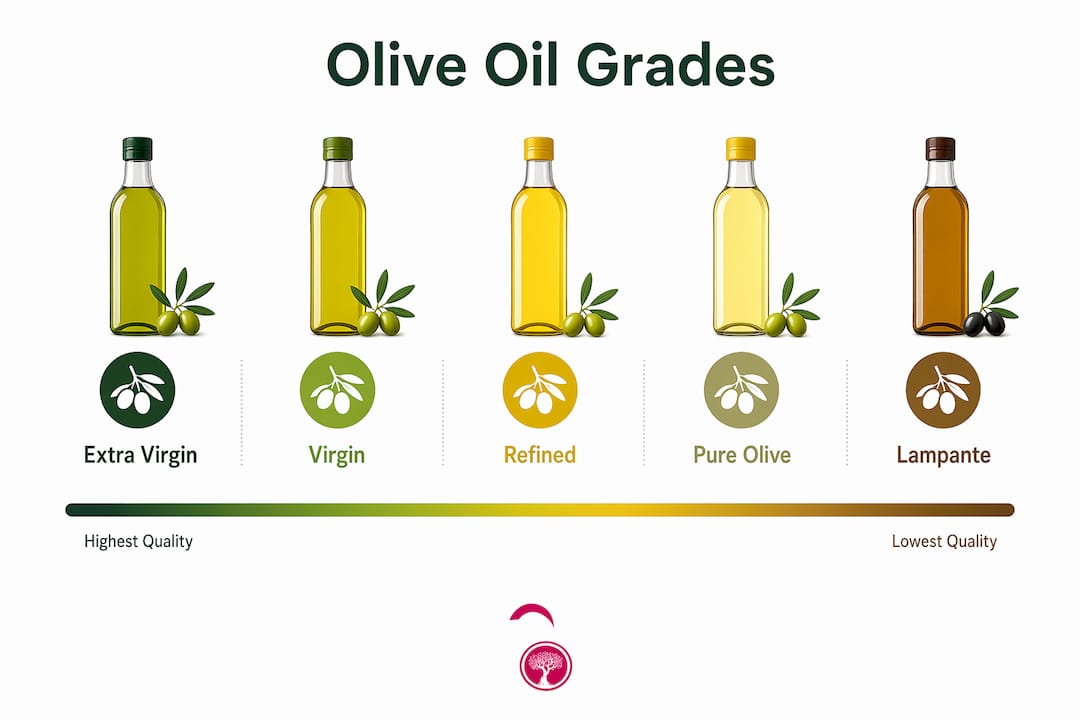
Pro Tip: When reading a label, ignore the word “pure” entirely. It signals a blended, refined product, not a higher quality one. The only grade worth seeking for health and flavour is extra virgin.
How do certification standards shape olive oil quality?
The IOC framework is the global baseline, but national bodies add meaningful layers of enforcement. The USDA operates a voluntary grading and inspection service that producers can opt into, providing third-party chemical verification of grade claims. Voluntary participation still matters because it creates a paper trail and deters fraudulent labelling.
The NAOOA goes further. Its certification programme now lowers the free fatty acid limit to 0.5% and shortens the freshness window to 18 months, both stricter than the IOC baseline. The NAOOA seal covers 49% of US branded olive oil, which means nearly half the market is held to a higher standard than the law requires. That is a significant consumer protection gain.
Certification programmes are also evolving in their focus. Rather than simply confirming authenticity, they are now pushing for peak freshness through tighter chemical criteria at the point of sale. This shift acknowledges that an oil can be genuinely extra virgin at bottling and still arrive at the consumer in degraded condition due to poor supply chain handling.
Third-party testing also addresses adulteration. In 190 samples tested under NAOOA’s programme, no adulteration was found, which is a strong signal that certified supply chains are functioning well. The Olive Oil Commission of California applies similarly rigorous standards to domestic producers, reinforcing consumer trust at a regional level.
When buying, look for these certification signals on the label:
- The NAOOA quality seal on North American products
- IOC compliance statements from European producers
- Harvest date (not just best-by date) as a freshness indicator
- Single-origin or estate labelling, which makes traceability easier
- Third-party lab test results, increasingly published by premium producers online
What do misleading olive oil labels actually mean?
“Cold-pressed” is the most misunderstood term in olive oil retail. Cold-pressed describes an extraction method, not a grade. All genuine extra virgin oil is cold-pressed by definition, but the reverse is not true. An oil labelled cold-pressed may still fail the chemical or sensory criteria for extra virgin status. The label tells you how it was made, not whether it passed quality testing.
The term “first cold press” is similarly outdated. Modern centrifugal extraction systems do not use presses at all, so the phrase is technically meaningless on most contemporary bottles. It persists because it sounds artisanal and commands a price premium.
Here is a practical sequence for reading any olive oil label honestly:
- Check the grade first. Only “extra virgin” guarantees both unrefined production and sensory quality.
- Find the harvest date. A best-by date set two years from bottling tells you nothing about when the olives were actually picked.
- Look for a certification seal. NAOOA, IOC, or a recognised regional body adds independent verification.
- Ignore descriptors like “pure,” “light,” “natural,” or “cold-pressed” unless they accompany an extra virgin grade claim.
- Check the origin. Single-country or single-estate oils are easier to verify than multi-origin blends.
Sensory defects are the clearest sign that an oil has been mislabelled. Rancidity smells like old wax crayons or stale nuts. Mustiness or fermentation notes indicate poor olive storage before pressing. If your “extra virgin” oil tastes flat and greasy with no bitterness or peppery finish, it almost certainly does not meet the grade. A genuine EVOO should make you cough slightly at the back of the throat. That pungency is the polyphenols at work.
Pro Tip: Pour a small amount into a glass, warm it in your palm for 30 seconds, and smell it before tasting. Genuine extra virgin oil smells of fresh green grass, ripe tomatoes, or almonds. Any musty, rancid, or vinegary note is a defect.
How does storage affect the quality you actually experience?
Olive oil is a perishable product. Experts consistently compare it to fresh fruit juice in terms of how quickly it degrades once exposed to air, light, and heat. This comparison reframes how most people think about the bottle sitting next to their hob. Grade at bottling is a starting point, not a guarantee of what you taste six months later.
Light is the most damaging factor. Ultraviolet exposure accelerates oxidation, which raises peroxide values and destroys polyphenols. This is why quality producers bottle in dark glass or opaque containers. A clear glass bottle on a sunlit kitchen shelf can degrade a premium EVOO within weeks.
Heat is the second major threat. Storing oil above a hob or near an oven exposes it to repeated temperature spikes that break down fatty acids and volatile aromatic compounds. The flavour flattens, the health benefits diminish, and the oil moves closer to rancidity with every heat cycle.
Oxidation markers such as peroxide value and UV absorbance can rise significantly post-bottling, meaning an oil that met extra virgin standards at the time of testing may no longer meet them by the time it reaches your kitchen. Grade is a snapshot, not a permanent state.
“Olive oil should be treated like a fine wine, not a pantry staple. Buy smaller bottles, use them within 60 days of opening, and store them properly.”
Refrigeration is not the answer. Storing oil in cold conditions can cause wax crystallisation, which affects the texture and appearance without improving quality. The correct approach is a cool, dark cupboard away from any heat source, with the cap closed tightly after every use. For guidance on keeping EVOO fresh after purchase, the principles are straightforward but rarely followed consistently.
Key takeaways
Olive oil grading is a dual system of chemical measurement and sensory evaluation, and only extra virgin status guarantees both unrefined production and the absence of flavour defects.
| Point | Details |
|---|---|
| Extra virgin is the only unrefined grade | EVOO requires free acidity ≤0.8% and must pass a certified sensory panel with no defects. |
| “Cold-pressed” is not a grade | The term describes extraction method only; it does not confirm extra virgin status without chemical and sensory testing. |
| Certification adds real protection | NAOOA-certified oils meet stricter standards than the law requires, covering 49% of US branded olive oil. |
| Storage determines what you taste | Light, heat, and oxygen degrade quality post-bottling; grade at the time of pressing does not protect poorly stored oil. |
| Harvest date beats best-by date | A harvest date tells you actual freshness; a best-by date only tells you the legal shelf life from bottling. |
Why grading knowledge is the most underused tool in your kitchen
I have tasted oils labelled extra virgin that were clearly rancid, and I have tasted unlabelled estate oils from Slovenian Istria that were extraordinary. The grade on the bottle is the beginning of the conversation, not the end of it. What I have found, after years of working with premium EVOO producers, is that most consumers are making purchasing decisions based on price and packaging rather than the criteria that actually predict quality.
The certification gap is real. An oil can be legally labelled extra virgin in some markets while failing the IOC’s sensory panel. That is not a technicality. It means the oil you are paying a premium for may have detectable defects that a trained taster would reject outright. The EVOO vs regular olive oil distinction matters enormously once you understand what the chemistry actually represents.
What I find most telling is the storage conversation. Producers who genuinely care about quality will tell you to buy smaller bottles and use them quickly. Producers who do not care will sell you a litre bottle with a two-year shelf life and say nothing. The freshness window for an opened bottle of quality EVOO is roughly 60 days. Most households take four to six months to finish a standard bottle. That arithmetic explains a lot of disappointing olive oil experiences.
My practical advice is this: prioritise harvest date over grade claims, seek certification seals over marketing language, and treat your olive oil like a perishable ingredient rather than a condiment. The extra virgin standards that genuinely matter are the ones backed by independent testing, not the ones printed in attractive fonts on the label.
— Mak
Discover Terracenturia’s certified high-polyphenol EVOO
Terracenturia produces organic extra virgin olive oil from Slovenian Istria with a polyphenol content of 1,371 mg/kg, far above the 250 mg/kg threshold associated with the EU health claim for olive oil polyphenols. Every batch is tested against IOC chemical and sensory standards, with harvest dates published transparently. The oils are bottled in dark glass and dispatched with freshness as a priority, not an afterthought. If you want to apply everything covered in this article to a real purchasing decision, Terracenturia’s organic selection process details exactly how each oil is evaluated before it reaches you.
FAQ
What is the highest grade of olive oil?
Extra virgin olive oil is the highest grade, defined by free acidity at or below 0.8%, strict chemical limits on oxidation markers, and a mandatory sensory panel confirming no defects and the presence of fruitiness.
What does “pure olive oil” mean on a label?
“Pure olive oil” is a blend of refined and virgin olive oils. The refined component dominates, and the label does not indicate superior quality. It is a lower grade than extra virgin or virgin.
Is cold-pressed olive oil the same as extra virgin?
Cold-pressed describes the extraction method, not the grade. All extra virgin oil is cold-pressed, but a cold-pressed label alone does not confirm extra virgin status without supporting chemical and sensory certification.
How long does extra virgin olive oil last once opened?
An opened bottle of quality EVOO is best used within 60 days. Exposure to light, heat, and oxygen raises oxidation markers and degrades both flavour and polyphenol content regardless of the grade stated on the label.
What is the NAOOA seal and why does it matter?
The NAOOA (North American Olive Oil Association) seal indicates the oil has been independently tested to standards stricter than the legal minimum, including a free fatty acid limit of 0.5% and an 18-month freshness window. It covers 49% of US branded olive oil.