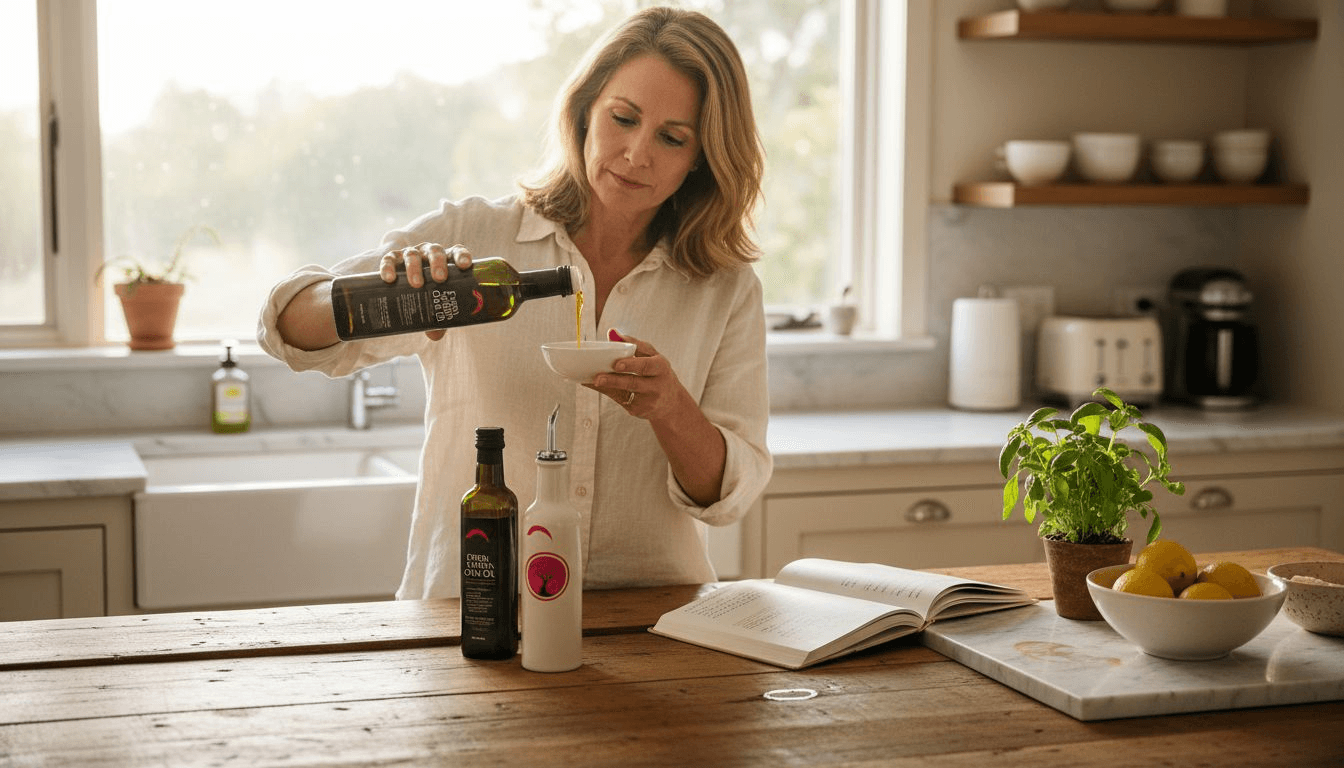
Finding olive oil that truly supports your wellness can feel confusing. Not every bottle delivers the same health impact, and labels rarely tell the full story. You want more than just great taste—you want real benefits for your heart, metabolism, and immune system, but how do you know which oil to choose or how to use it effectively?
Research shows that extra virgin olive oil rich in polyphenols offers stronger protection against inflammation, cardiovascular risk factors, and metabolic diseases compared to regular oils. The right olive oil can improve cholesterol profiles, regulate blood sugar, and defend your cells from oxidative stress.
This list reveals actionable steps to help you pick quality products, understand their unique advantages, and get the most out of every bottle. Get ready to uncover practical strategies that make your olive oil routine both delicious and truly beneficial for your health.
Table of Contents
- 1. Choose High Polyphenolic Extra Virgin Olive Oil
- 2. Understand the Benefits of Antioxidants in Olive Oil
- 3. Use Olive Oil Daily for Heart Health
- 4. Enhance Recipes with Olive Oil Flavor and Nutrition
- 5. Store Olive Oil Correctly to Preserve Quality
- 6. Identify Authentic Organic Slovenian Olive Oil
Quick Summary
| Takeaway | Explanation |
|---|---|
| 1. Choose high polyphenolic olive oil | Select oils rich in polyphenols for maximum health benefits, which improve heart and endothelial function. |
| 2. Store olive oil correctly | Keep olive oil in a cool, dark place in airtight containers to preserve its beneficial compounds and flavor. |
| 3. Use olive oil daily for heart health | Consistency is key; integrating two tablespoons daily can significantly improve cardiovascular health markers. |
| 4. Verify authenticity of Slovenian oils | Look for EU organic certification and PDO status to ensure you’re purchasing genuine Slovenian olive oil. |
| 5. Enhance recipes with olive oil | Use premium olive oil in cooking to maximize both flavor and nutritional value in your meals. |
1. Choose High Polyphenolic Extra Virgin Olive Oil
The type of olive oil you choose matters far more than you might think. Not all extra virgin olive oils deliver the same health benefits, and the difference comes down to polyphenol content—a powerful compound that acts like your body’s defense system.
Polyphenols are natural antioxidants found in olives, but their concentration varies dramatically depending on harvest timing, growing conditions, and processing methods. Early harvest oils tend to be richer in these compounds than oils from later harvests. When you select a high polyphenolic extra virgin olive oil, you’re choosing a product engineered by nature for maximum wellness impact.
Recent research confirms this matters for your health. High-polyphenolic EVOO produces superior effects on endothelial function, cholesterol profiles, and heart health compared with regular olive oils. Studies show these oils can improve inflammation markers, support healthy blood sugar levels, and strengthen your cardiovascular system.
Here’s what distinguishes premium high-polyphenolic oils:
- Early harvest timing captures olives at peak polyphenol concentration
- Cold-pressed processing preserves delicate antioxidants that heat can destroy
- Slovenian Istrian varieties naturally produce oils with exceptional polyphenol density
- Organic cultivation eliminates synthetic pesticides that interfere with the plant’s natural defense compounds
- Third-party testing confirms actual polyphenol content—typically measured in milligrams per kilogram
High polyphenolic extra virgin olive oil isn’t just a gourmet choice—it’s a functional food that directly supports your body’s antioxidant defense system.
When shopping, look for oils tested above 300 mg/kg of polyphenols. Many premium producers now display polyphenol counts on their labels or provide testing certificates. This transparency lets you verify you’re getting what you’re paying for.
The taste profile also reveals quality. Authentic high-polyphenolic oils typically feature a grassy, peppery, or herbaceous flavor—that slight throat catch you might notice is actually the polyphenols at work. Don’t mistake this for an unpleasant taste; it’s the signature of a potent, unrefined product.
Pairing these oils with your daily routine is straightforward. Use them in salad dressings, drizzle over finished dishes, or incorporate them into Mediterranean-style meals where they shine both nutritionally and culinarily. The key is consuming them raw or at low temperatures to preserve their beneficial compounds.
Pro tip: Store your high-polyphenolic olive oil in a dark glass bottle away from direct sunlight and heat, since polyphenols degrade when exposed to light and warm temperatures—keep it in a cool kitchen cabinet rather than on an open shelf to maximize its wellness benefits.
2. Understand the Benefits of Antioxidants in Olive Oil
Your body is under constant attack from invisible enemies called free radicals. These unstable molecules damage your cells, accelerate aging, and contribute to chronic diseases. This is where antioxidants become your nutritional bodyguard, and olive oil contains some of the most powerful ones nature offers.
Antioxidants work by neutralizing free radicals before they can harm your cells. Think of them as tiny shields protecting your cellular machinery from oxidative damage. When you consume high-quality olive oil, you’re delivering these protective compounds directly into your system.
Olive oil’s most impressive antioxidant is oleocanthal, a phenolic compound with remarkable anti-inflammatory and protective properties. Oleocanthal demonstrates significant anti-inflammatory potential similar to anti-inflammatory medications, but without the side effects.
Beyond oleocanthal, olive oil contains dozens of bioactive compounds working together synergistically. This means each antioxidant enhances the others, creating a health impact greater than any single compound alone. The Mediterranean diet’s legendary health benefits stem largely from this antioxidant powerhouse at its core.
Here’s what these antioxidants actually do for you:
- Reduce oxidative stress that damages DNA and accelerates aging
- Lower inflammation linked to heart disease, arthritis, and metabolic disorders
- Protect cardiovascular health by supporting healthy cholesterol and blood vessel function
- Support immune function through cellular protection mechanisms
- May reduce cancer risk according to emerging research on polyphenol compounds
- Improve metabolic health by supporting healthy blood sugar and insulin function
The antioxidants in premium olive oil don’t just taste good—they directly combat the cellular damage that drives most chronic diseases.
What makes this particularly relevant to you is that most people consume insufficient antioxidants daily. A single tablespoon of high-polyphenolic olive oil delivers hundreds of milligrams of these protective compounds. This means incorporating olive oil into your meals becomes a practical, delicious way to boost your antioxidant intake.
The key is choosing the right olive oil. Refined oils lose most antioxidants during processing, while extra virgin oils pressed cold retain their full complement of bioactive compounds. Slovenian Istrian varieties naturally concentrate these compounds more densely than many other regions.
Pro tip: Consume your olive oil with meals containing fat-soluble vitamins and other foods rich in carotenoids or flavonoids, as these nutrients work synergistically with olive oil’s antioxidants to maximize absorption and protective effects in your body.
3. Use Olive Oil Daily for Heart Health
Your heart is the most important muscle in your body, yet many people neglect one of the simplest ways to protect it. Daily olive oil consumption is one of the most powerful dietary choices you can make for cardiovascular wellness, backed by decades of scientific evidence.
Heart disease remains a leading cause of death worldwide, but the good news is that diet plays a crucial role in prevention. When you incorporate olive oil into your daily routine, you’re addressing multiple cardiovascular risk factors simultaneously. This isn’t about adding something exotic to your diet—it’s about making a practical, delicious change with profound health impacts.
EVOO consumption reduces cardiovascular risk factors like high blood pressure, harmful cholesterol, and inflammation. The monounsaturated fats and polyphenols work together to improve how your blood vessels function and respond to stress. Over time, this translates to measurable improvements in your heart health metrics.
Here’s what happens when you make olive oil a daily habit:
- Blood pressure improves through vascular relaxation and reduced inflammation
- Cholesterol profiles normalize with better HDL and lower LDL levels
- Inflammation decreases throughout your cardiovascular system
- Endothelial function strengthens making blood vessels more flexible and responsive
- Blood clotting improves reducing thrombosis risk
- Overall mortality risk drops according to Mediterranean diet studies
Daily olive oil consumption directly addresses the root causes of heart disease—inflammation, oxidative stress, and vascular dysfunction.
The practical beauty of this approach is simplicity. You don’t need supplements, medications, or complicated protocols. A modest amount of quality olive oil consumed consistently delivers measurable cardiovascular benefits. Research shows that regular intake supports heart health across all age groups and risk profiles.
Implementing this is straightforward. Start with two tablespoons daily, incorporated into meals you already enjoy. Drizzle it over salads, use it in Mediterranean cooking, or consume it with whole grains and vegetables. The key is consistency—daily consumption over weeks and months produces the cardiovascular benefits.
Quality matters significantly here. Refined oils lose much of their cardiovascular benefit, while extra virgin oils retain their full spectrum of protective compounds. Premium oils from cooler climates like Slovenia naturally concentrate these heart-protective compounds more densely than oils from warmer regions.
Pro tip: Pair your daily olive oil intake with other heart-healthy foods like vegetables, legumes, whole grains, and fish to create a synergistic effect that amplifies cardiovascular benefits beyond what any single food can achieve.
4. Enhance Recipes with Olive Oil Flavor and Nutrition
Great cooking isn’t just about technique—it’s about choosing ingredients that deliver both exceptional flavor and genuine nutritional value. Premium olive oil accomplishes both simultaneously, transforming ordinary recipes into dishes that nourish your body and delight your palate.
When you use quality olive oil in your kitchen, you’re not simply adding fat. You’re introducing a complex ingredient with hundreds of aromatic compounds and health-promoting polyphenols. Each bottle carries the essence of the harvest, the terroir, and centuries of Mediterranean culinary tradition.
The flavor profile of olive oil varies dramatically based on harvest timing and olive variety. Early harvest oils deliver grassy, peppery, herbaceous notes that brighten salads and finished dishes. Mid-harvest oils offer balanced fruity and nutty flavors perfect for cooking and dipping. Understanding these differences lets you match oils to specific applications for maximum impact.
EVOO phenolic compounds modulate inflammatory pathways while simultaneously enriching your dishes with complexity. This means your recipes become functional foods that taste incredible. You’re not compromising flavor for nutrition—you’re getting both in one ingredient.
Here are practical ways to elevate your cooking:
- Drizzle finishing oils over soups, pasta, and grain bowls just before serving to preserve aromatic compounds
- Use in vinaigrettes where raw oil showcases its flavor and nutritional compounds
- Pair with Mediterranean vegetables like tomatoes, eggplant, and zucchini that enhance the oil’s complexity
- Incorporate into dips and spreads that highlight the oil’s fruity or peppery notes
- Use in marinades for fish and poultry to add both flavor and antioxidant protection
- Blend into hummus and bean dips for creamy texture and nutritional density
Premium olive oil transforms ordinary meals into wellness experiences where flavor and function merge seamlessly.
The Mediterranean diet’s legendary success stems partly from how olive oil serves as the foundation for nearly every dish. It’s not used sparingly as a finishing touch—it’s woven throughout meals, from breakfast through dinner. This consistent presence delivers cumulative health benefits while building layers of flavor.
Slovenian Istrian oils deserve special attention for their unique flavor profile. These oils express their specific terroir through peppery finishes, herbaceous notes, and balanced fruitiness. Using them as finishing oils or in raw applications allows their character to shine distinctly in your recipes.
Pro tip: Store your premium olive oil in a cool, dark place and use it within six months of opening to preserve the delicate flavor compounds and polyphenols that make it worth your investment in both culinary and health terms.
5. Store Olive Oil Correctly to Preserve Quality
You’ve invested in premium olive oil for its exceptional health benefits and flavor. Now comes the critical part that most people overlook: storage. How you store your bottle determines whether those polyphenols remain potent or gradually disappear.
Olive oil is a living product that continues changing after bottling. Light, heat, and oxygen are its enemies, degrading the very compounds that make it valuable for your wellness. Understanding proper storage transforms your investment into months of maximum nutritional and culinary benefit.
Polyphenols are incredibly fragile. These antioxidants break down when exposed to ultraviolet light, warm temperatures, and prolonged air contact. Proper storage conditions prevent polyphenol oxidation and maintain the oil’s health-promoting properties. This isn’t about following arbitrary rules—it’s about preserving the compounds you’re consuming for health reasons.
The ideal storage environment has three critical factors:
- Cool temperatures between 50-70 degrees Fahrenheit (ideally around 60 degrees)
- Complete darkness using tinted glass or dark ceramic bottles
- Airtight sealing to minimize oxygen exposure
Where you store matters significantly. Avoid these common mistakes that destroy olive oil quality:
- Kitchen counters near windows exposed to sunlight
- Cabinets above stoves where heat accumulates
- Open shelving where air circulates freely
- Clear glass bottles that don’t block ultraviolet light
- Warm pantries in hot climates
Proper storage isn’t a luxury—it’s the essential final step that preserves every beneficial compound in your premium olive oil.
The pantry or kitchen cabinet works well if it stays cool and dark. A cool basement corner is ideal. Some people even use wine coolers to maintain optimal temperature. The investment in proper storage conditions protects your initial investment in quality oil.
Once opened, your olive oil enters a race against time. Consume it within three to six months for maximum polyphenol content and flavor complexity. Mark your bottle’s opening date so you remember when to finish it. Buying smaller bottles more frequently often makes more sense than storing large quantities that gradually deteriorate.
Temperature fluctuations are particularly damaging. Storing oil where temperatures swing from cool mornings to warm afternoons creates stress on the compounds inside. A consistently cool environment preserves quality far better than a warm location, even if that warm location stays constant.
Pro tip: Purchase olive oil in smaller bottles that you’ll use within three months, store them in a cool dark cabinet away from heat sources, and always reseal bottles tightly after use to minimize oxygen exposure and maximize the lifespan of your oil’s valuable polyphenols.
6. Identify Authentic Organic Slovenian Olive Oil
The global olive oil market is flooded with mislabeled, adulterated, and counterfeit products. When you’re paying premium prices for authentic organic Slovenian oil, you deserve confidence that you’re getting exactly what the label promises. Learning to identify genuine products protects both your health and your investment.
Slovenian Istrian olive oil occupies a unique place in the world of premium oils. The region’s cool climate, limestone soil, and specific olive varieties create conditions that naturally produce exceptionally high polyphenol concentrations. But this reputation also makes Slovenian oils targets for fraud and imitation.
Authenticity starts with certifications and documentation. Legitimate organic Slovenian producers carry European Union organic certification and Protected Designation of Origin status. These credentials aren’t marketing claims—they’re verified by independent regulatory bodies with rigorous standards. Any bottle lacking these certifications should raise immediate questions about its authenticity.
Here’s what genuine organic Slovenian olive oil displays:
- EU organic certification clearly marked on the label
- Protected Designation of Origin (PDO) or Protected Geographical Indication (PGI) status
- Harvest date or “best by” date indicating freshness
- Polyphenol content measured in mg/kg (typically above 300)
- Cold-pressed or first-pressed designation
- Dark glass bottles that protect against light damage
- Producer information with traceable contact details
Price matters too, though it’s not the only indicator. Authentic premium Slovenian organic olive oil costs more than mass-market alternatives. If a bottle claiming to be organic Slovenian PDO costs suspiciously little, it probably isn’t what the label suggests. Bargain pricing often indicates blended oils or products from different regions.
Authentic Slovenian olive oil combines verifiable certifications, transparent origin information, and measurable quality markers that you can verify yourself.
The bottle itself communicates quality. Dark glass protects the oil from light degradation and signals that the producer understands proper storage. Clear glass or plastic bottles suggest lower quality or improper handling priorities. Look also for essential quality markers that indicate genuine premium production standards.
Taste and aroma provide additional clues. Authentic Slovenian oils deliver distinctive peppery, grassy, or herbaceous notes reflecting their terroir. Bland or overly buttery flavors suggest lower quality or blended oils. The slight throat catch from polyphenols isn’t unpleasant—it’s the signature of genuine high-polyphenolic oil.
Requestable documentation strengthens your confidence. Reputable producers provide tasting notes, harvest information, and polyphenol analysis certificates. Don’t hesitate to ask for these details before purchasing. Transparent producers welcome these questions and respond promptly with documentation.
Pro tip: Purchase directly from established Slovenian producers or verified retailers, request polyphenol test certificates and EU organic documentation before buying, and compare labels carefully to ensure PDO designation and cold-pressed processing rather than relying solely on price or packaging aesthetics.
Below is a comprehensive table summarizing the key insights and recommendations provided in the article regarding the use of high-polyphenolic extra virgin olive oil for health and culinary purposes.
| Aspect | Details | Highlights |
|---|---|---|
| Benefits of High Polyphenolic EVOO | Rich in antioxidants like polyphenols and oleocanthal, supports heart health, reduces inflammation, and combats oxidative stress. | Verified research strongly supports these health claims. |
| Characteristics | Early harvest timing, cold-pressed processing, organic cultivation, third-party testing, high transparency in labeling. | Premium oils often specify polyphenol content (>300 mg/kg). |
| Storage Recommendations | Use tinted bottles in cool, dark places; optimal temperature is 50-70°F. Reseal tightly after use. | Proper storage preserves polyphenol potency. |
| Culinary Uses | Ideal for raw applications like drizzling or dressings; enhances Mediterranean dishes. | Offers unique peppery and grassy flavor notes. |
| Identifying Authentic Oil | Look for EU organic certification, PDO status, and detailed producer information. | Taste and transparency verify authenticity. |
This table provides a clear overview of the article’s main points to guide informed decisions about selecting and using high-quality olive oil.
Unlock the Full Power of Olive Oil for Your Wellness and Gourmet Lifestyle
Choosing the right extra virgin olive oil with high polyphenol content is the key to transforming everyday meals into a source of lasting health and vibrant flavor. If you want to defeat oxidative stress, support your heart, and enjoy the authentic peppery, herbaceous taste that signals powerful antioxidants working for you, understanding proper storage and authenticity cannot be overlooked. Many face the challenge of navigating countless oils on the market without clear information on quality, freshness, or polyphenol levels.
Discover premium organic Slovenian Istrian olive oils that meet these exact standards through natural cultivation, cold-pressed craftsmanship, and transparent polyphenol testing. At Terra Centuria, we specialize in offering high polyphenolic extra virgin olive oils that deliver both wellness benefits and exquisite taste straight from the European Protected Designation of Origin region. Explore how our carefully selected oils can enrich your heart health, enhance your recipes, and maintain antioxidant potency through proper storage guidance.
Experience the difference that authentic, antioxidant-rich olive oil makes in your daily routine. Visit Terra Centuria now to choose oils verified for quality and freshness. Learn more about selecting, storing, and savoring your olive oil with confidence at Terra Centuria. Take the next step toward wellness with every delicious drop you consume.
Frequently Asked Questions
What are the health benefits of choosing high polyphenolic extra virgin olive oil?
High polyphenolic extra virgin olive oil is rich in antioxidants that can improve heart health, reduce inflammation, and support healthy blood sugar levels. To maximize these benefits, select oils with at least 300 mg/kg of polyphenols and use them daily in your meals.
How can I incorporate olive oil into my daily diet for heart health?
Incorporate olive oil into your daily diet by using it in salad dressings, drizzling it over vegetables, or adding it to grain bowls. Aim for two tablespoons each day for optimal cardiovascular benefits.
What’s the best way to store olive oil to preserve its quality?
Store olive oil in a cool, dark place in an airtight container to protect it from light, heat, and air exposure. Aim to use the oil within three to six months after opening to maintain its flavor and health benefits.
How can I identify authentic organic Slovenian olive oil?
Look for certifications like EU organic certification and Protected Designation of Origin status on the label to ensure authenticity. Additionally, check for dark glass bottles and polyphenol content listed in milligrams per kilogram for quality assurance.
What role do antioxidants in olive oil play in overall wellness?
Antioxidants in olive oil, such as oleocanthal, help neutralize free radicals and reduce oxidative stress, which can lead to chronic diseases. Consume a tablespoon of high-quality olive oil daily to boost your antioxidant intake effectively.
How can I enhance the flavor of my recipes using olive oil?
Enhance the flavor of your dishes by using premium olive oil as a finishing oil on soups or salads before serving. Experiment with different olive oil varieties to find the flavor profiles that best complement your meals.