TL;DR:
- Organic olive cultivation is a comprehensive farming system focused on ecological balance, soil health, and biodiversity, beyond just avoiding synthetic pesticides. It involves practices like cover cropping, composting, natural pest control, and promoting crop diversity to support environmental sustainability and produce high-quality oils. Certification requires adherence to strict EU regulations, including a conversion period, inspections, and detailed record-keeping, ensuring authentic organic standards.
Most people assume organic olive cultivation simply means skipping the pesticide spray. That assumption misses the point by a wide margin. What is organic olive cultivation, at its core? It is a whole-farm system built on ecological balance, soil health, and biodiversity, governed by strict EU regulation and demanding far more than product substitution. For agricultural enthusiasts and small-scale farmers, understanding this distinction is what separates a genuinely sustainable grove from one that merely looks the part. This guide covers the principles, practices, certification requirements, and practical steps you need to grow olives organically with confidence.
Table of Contents
- Key takeaways
- What organic olive cultivation actually means
- Organic vs conventional olive growing
- Sustainability and ecological benefits
- Certification: what the process actually involves
- Practical tips for growing olives organically
- What organic farming taught me about patience
- Discover Terracenturia’s organic olive oils
- FAQ
Key takeaways
| Point | Details |
|---|---|
| Organic farming is systemic | It is a whole-farm approach to soil, biodiversity, and ecology, not just a switch to natural sprays. |
| Yield trade-offs are real | Organic groves often produce lower yields short-term, but deliver oils with higher polyphenol content and quality. |
| Certification takes time | EU certification requires a conversion period, inspections, and thorough documentation before the organic logo applies. |
| Biodiversity is a measurable benefit | Organic olive groves support up to 40% greater plant species richness compared to conventional systems. |
| Greenwashing is a genuine risk | Authentic organic practice requires integrity beyond labelling; know the standards before making any claims. |
What organic olive cultivation actually means
The most precise starting point comes from IFOAM, which defines organic agriculture as a system that sustains the health of soils, ecosystems, and people through ecological processes and biodiversity. That definition matters because it frames organic not as a restriction list but as a positive, functioning system.
In practical terms, organic olive farming prohibits synthetic pesticides, chemical fertilisers, and all genetically modified organisms under Regulation (EU) 848/2018. But compliance with those prohibitions is only the starting point. What distinguishes a genuinely organic grove is what you put in place of those inputs.
Key practices include:
- Cover cropping: Sowing legumes and native plants between olive rows to fix atmospheric nitrogen, suppress weeds, and protect soil from erosion.
- Composting and organic fertilisation: Returning organic matter to the soil through compost, green manures, and animal-based amendments to build long-term fertility.
- Natural pest management: Using biological controls, pheromone traps, and habitat planting to keep pest populations in check without chemical intervention.
- Reduced tillage: Minimising soil disturbance to protect microbial life and moisture retention.
- Crop diversity: Intercropping and companion planting to reduce monoculture vulnerability and attract beneficial insects.
One of the most persistent challenges in organic olive farming is the olive fruit fly (Bactrocera oleae). Rather than insecticides, organic growers use sticky colour traps and OLIPE traps to monitor populations and time any permitted interventions precisely. This approach requires observation and patience, which leads directly to the deeper truth about organic farming as a mindset as much as a method.
Pro Tip: Start monitoring for olive fruit fly from early summer, before populations establish. Early detection with traps gives you a meaningful window to act before crop damage becomes significant.
Organic vs conventional olive growing
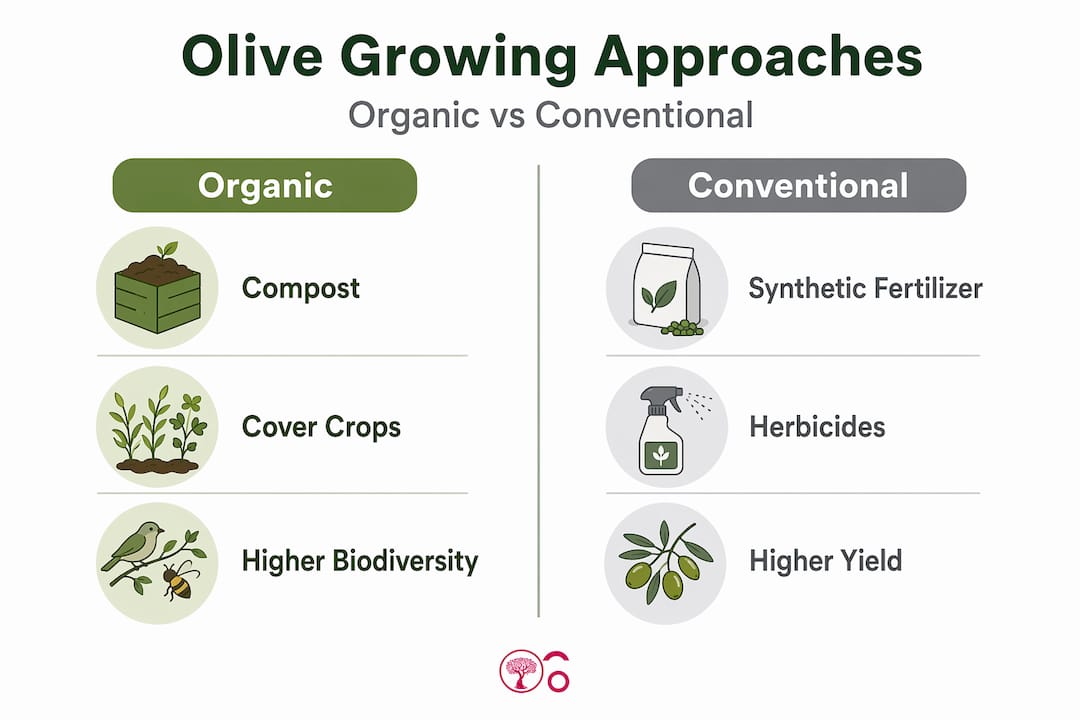
Understanding organic olive cultivation is clearer when you compare it directly with conventional approaches. The differences extend well beyond input choices.
| Feature | Organic cultivation | Conventional cultivation |
|---|---|---|
| Fertilisation | Compost, green manures, legume cover crops | Synthetic NPK fertilisers |
| Pest control | Monitoring traps, biological controls, permitted natural substances | Synthetic insecticides and fungicides |
| Weed management | Cover crops, mulching, mechanical weeding | Herbicides |
| Soil health | Actively built through organic matter | Often degraded over time |
| Yield | Typically lower, especially during transition | Generally higher short-term |
| Oil quality | Higher polyphenol content, stronger aromatic profile | More variable; depends heavily on input management |
| Environmental impact | Lower chemical load; supports biodiversity | Higher chemical footprint; biodiversity loss risk |
| Certification | Required; conversion period applies | Not applicable |
Organic olive farming produces lower yields but yields oils with greater consistency and higher polyphenol content. That trade-off is significant for small-scale farmers, where quality and premium positioning often matter more than volume.
The quality argument has substance. Limited-production, early-harvest olives yield oils with noticeably higher antioxidant content and more authentic sensory profiles. Organic systems, by their nature, tend to favour this type of careful, low-intervention production.
One risk worth naming plainly is greenwashing. Organic advocates consistently warn that the commercial appeal of organic branding creates incentives to present minimal changes as systemic transformation. For growers and buyers alike, understanding the gap between certified practice and marketing language is not optional. You can explore what distinguishes genuine organic oil from conventional production on the Terracenturia resource page.
Pro Tip: When evaluating any organic olive oil, look for the EU organic leaf logo alongside the producer’s certification body name. That combination confirms third-party verification, not just a label claim.
Sustainability and ecological benefits
The ecological case for organic olive cultivation is well-evidenced and worth understanding in detail, particularly if you are making long-term decisions about grove management.
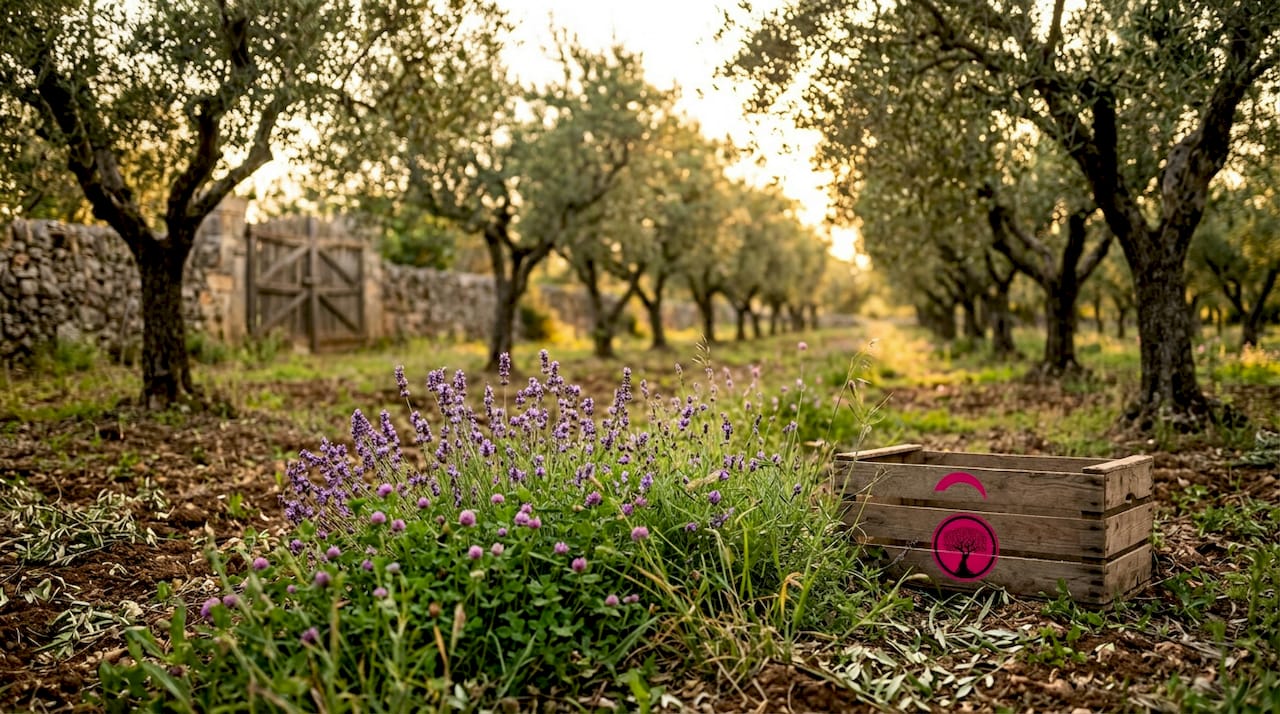
Organic olive groves support approximately 40% greater plant species richness than their conventional counterparts, according to IUCN observations. That difference is not cosmetic. Greater plant diversity supports pollinator populations, reduces pest pressure through natural predator habitat, and builds resilience against climate variability.
Sustainable practices such as cover cropping are endorsed by the IUCN Species Survival Commission as critical for reducing the environmental footprint of olive oil production. When you sow a legume cover crop between your olive rows, you are not just feeding the soil. You are creating habitat, reducing runoff, and building the biological infrastructure the grove depends on across decades.
The ecological benefits of organic olive farming include:
- Soil restoration: Continuous organic matter input rebuilds soil structure and microbial life, reversing compaction and improving water retention over time.
- Water efficiency: Healthier soils with higher organic matter hold moisture more effectively, reducing irrigation dependency during dry periods.
- Carbon sequestration: Biodiverse groves with ground cover and undisturbed soil store significantly more carbon than bare-soil conventional systems.
- Climate resilience: Species-diverse groves are less vulnerable to single-pest outbreaks or weather extremes than simplified monocultures.
Polyculture systems that integrate olive trees with other crops or agroforestry structures also improve economic resilience for small-scale farmers. When one crop underperforms, the system as a whole remains productive.
Certification: what the process actually involves
Certification is where organic farming principles meet legal accountability. For small-scale growers, understanding the process early prevents costly delays later.
The EU framework under Regulation (EU) 848/2018 sets the legal standard for organic production and labelling across member states. To carry the EU organic leaf logo, your olive grove and oil must meet the following requirements:
- Conversion period: You must farm organically for a minimum of two years before your first certified harvest. This period allows time to demonstrate consistent practice without synthetic inputs.
- Application to a certification body: You register with an accredited inspection body approved by your national authority. They manage your inspection schedule and documentation.
- Annual inspection: At least one physical inspection per year confirms that your practices, inputs, and records comply with the regulation.
- Record-keeping: You maintain detailed logs of all inputs, treatments, yields, and sales. These records form the basis of every inspection.
- Certified input verification: Any amendments, sprays, or biological products you use must themselves be certified for use in organic systems and appear on approved substance lists.
The certification and inspection process provides the consumer guarantee that organic labelling carries. For growers, it is also a valuable discipline: the documentation habit alone often reveals inefficiencies and opportunities that informal farming never surfaces.
You can find a detailed breakdown of certification steps and benefits on the Terracenturia site, including what to expect at each inspection stage.
Practical tips for growing olives organically
Whether you are starting from scratch or transitioning an existing grove, the practical side of organic olive care rewards careful planning more than expensive inputs.
- Choose appropriate varieties: Some olive varieties tolerate organic systems better than others. Varieties with natural disease resistance and regional adaptation require fewer interventions from the start.
- Build soil before you plant: If you have the opportunity to establish a grove on bare land, invest a full season in building organic matter with green manures before your trees go in.
- Use cover crops and legumes strategically: Legumes fix atmospheric nitrogen and improve soil fertility naturally. Manage them by mowing rather than tilling to preserve soil structure.
- Monitor rather than react: Set up sticky and OLIPE traps for olive fruit fly from early summer. Regular scouting gives you data to act on rather than guesswork.
- Time your harvest carefully: Earlier harvests, when olives reach veraison rather than full ripeness, produce oils with higher polyphenol content and better shelf life.
- Handle post-harvest quickly: Once harvested, olives should be pressed within 24 hours to minimise oxidation and preserve flavour and antioxidant compounds.
- Avoid common pitfalls: Do not use copper-based fungicides beyond approved limits, even though they are permitted in organic systems. Over-reliance on any single input, even a natural one, creates problems.
Pro Tip: Keep a grove diary from day one. Record flowering dates, pest sightings, weather patterns, and soil treatments. After two or three seasons, you will have site-specific data that no textbook can provide.
The selection and evaluation process for premium organic oil is directly shaped by these practices. What happens in the grove determines what ends up in the bottle.
What organic farming taught me about patience
I have spent enough time around organic olive groves to know that the hardest adjustment is not technical. It is psychological. When you transition away from conventional inputs, the instinct is to find a natural equivalent and apply it in the same way. That rarely works. The whole point is that transitioning to organic farming demands observation and adaptation rather than substitution.
What I have found genuinely rewarding is the feedback loop you build when you stop masking problems with inputs. A pest outbreak tells you something about habitat balance. A bare patch in your cover crop tells you something about soil compaction. The grove becomes readable in a way that a chemically managed system never is.
I also want to be direct about greenwashing, because I see it everywhere. A certification logo is necessary but not sufficient. The growers I respect most are those who can walk you through their soil data, explain their cover crop choices, and show you five years of trap monitoring records. Certification confirms you met a standard at a point in time. Authentic practice is what happens every day between inspections.
For anyone starting out, my advice is simple. Do not optimise for yield in your first three years. Optimise for observation. Learn your land, your pest cycles, and your soil’s response to organic matter input. The traditional artisanal approach to olive cultivation embeds exactly this kind of knowledge, and it is worth understanding before you assume modern organic certification captures the whole picture.
— Mak
Discover Terracenturia’s organic olive oils
If this guide has sharpened your understanding of what genuine organic olive cultivation involves, the next logical step is tasting the result. At Terracenturia, the high polyphenol extra virgin olive oil produced in Slovenian Istria reflects precisely the practices described here: certified organic farming, early-harvest pressing, and full traceability from grove to bottle. With a polyphenol content of 1,371 mg/kg, it sits well above the EU health claim threshold and represents what authentic organic cultivation can achieve at its best. Explore the range and the supporting educational content to deepen both your knowledge and your appreciation of what ends up in the bottle.
FAQ
What is organic olive cultivation in simple terms?
Organic olive cultivation is a farming system that grows olive trees using ecological methods, avoiding synthetic pesticides, chemical fertilisers, and GMOs. It relies on soil health, biodiversity, and natural pest management to produce quality olives and oil.
How long does it take to certify an organic olive grove?
Under EU Regulation (EU) 848/2018, growers must complete a minimum two-year conversion period before their first certified harvest. Annual inspections and detailed record-keeping are required throughout.
Do organic olives produce less oil than conventional ones?
Yes, organic olive farming typically produces lower yields than conventional systems, especially during the transition period. However, the resulting oils tend to have higher polyphenol content and more consistent quality.
What is the biggest challenge in organic olive farming?
Managing the olive fruit fly without synthetic insecticides is widely regarded as one of the most demanding aspects of organic olive care. Sticky colour traps and OLIPE traps are the primary monitoring and management tools used.
Why does organic farming improve biodiversity in olive groves?
Organic groves avoid synthetic chemicals that harm insects and soil life, and they actively use cover crops and intercropping to create habitat. Studies show organic olive groves support around 40% more plant species richness than conventional systems.