TL;DR:
- Wellness-oriented olive oil, or high-phenolic EVOO, contains polyphenols above 250 mg/kg, which are linked to antioxidant and anti-inflammatory benefits. These oils are produced through early harvesting, cold pressing, and minimal processing to preserve bioactive compounds like oleocanthal and hydroxytyrosol, offering measurable health advantages. Consumers should verify polyphenol content with independent lab analysis and prefer oils with clear harvest dates to ensure maximum potency and health benefits.
Wellness-oriented olive oil is extra virgin olive oil (EVOO) defined by a high polyphenol content that delivers verified antioxidant and anti-inflammatory benefits beyond standard olive oil. The industry term for this category is high-phenolic EVOO. The European Food Safety Authority (EFSA) authorises health claims only for oils with polyphenols at or above 250 mg/kg, making that threshold the regulatory dividing line between functional food and ordinary cooking oil. Key bioactive compounds include oleocanthal and hydroxytyrosol, both of which drive the oil’s protective properties. Health-conscious consumers and culinary enthusiasts are increasingly seeking these oils precisely because the science behind them is unusually solid.
What is wellness-oriented olive oil and why does polyphenol content define it?
Wellness-oriented olive oil earns its name through chemistry, not marketing. Most supermarket extra virgin olive oils contain 50–150 mg/kg of polyphenols, which falls well below the EFSA threshold for health claims. True high-phenolic oils test at 500+ mg/kg, and ultra-high-phenolic oils reach 1,000+ mg/kg. That gap is not trivial. It is the difference between an oil that tastes pleasant and one that actively supports your health.
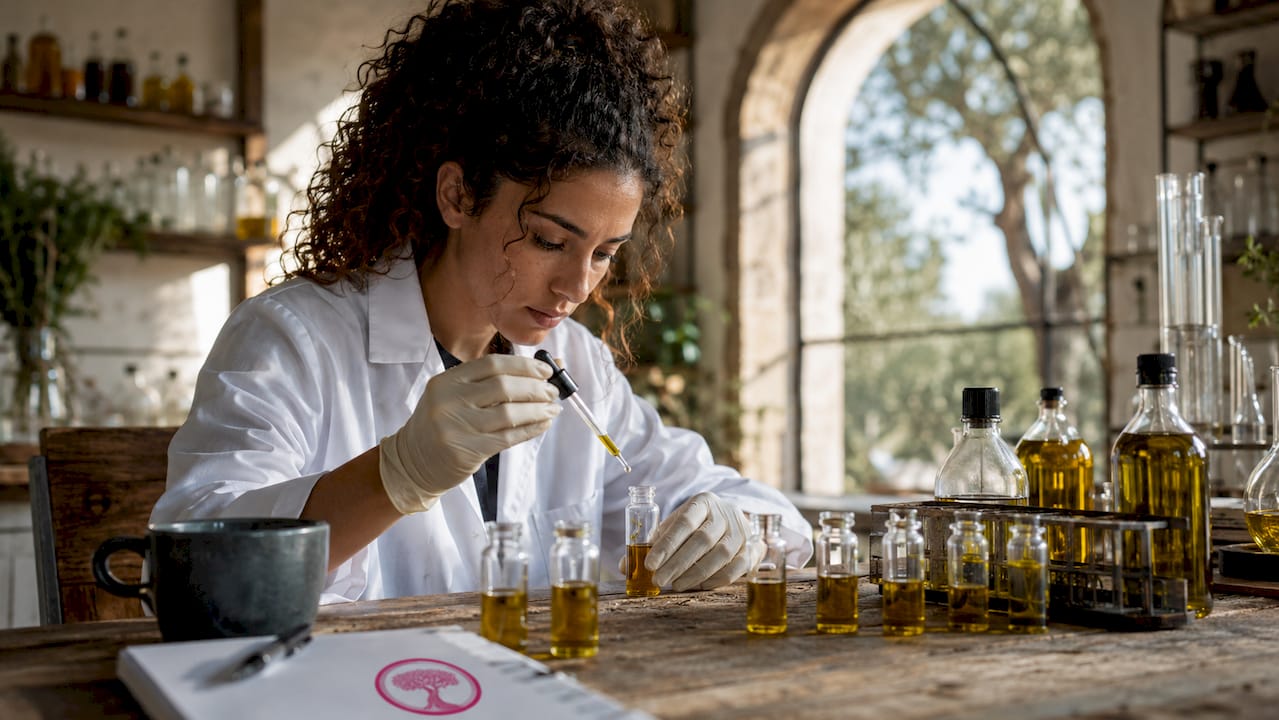
The two polyphenols that matter most are oleocanthal and hydroxytyrosol. Oleocanthal produces the characteristic throat-catch sensation and has antioxidant and anti-inflammatory properties comparable to ibuprofen, confirmed in peer-reviewed research. Hydroxytyrosol is one of the most potent natural antioxidants identified in food science. Together, they protect cells from oxidative damage and reduce chronic inflammation.
The term “wellness-oriented” is a descriptive, consumer-facing phrase. When you see it on a label or in editorial content, it signals the same thing as “high-phenolic EVOO” in scientific literature. Both phrases point to the same measurable quality standard. Understanding that equivalence helps you cut through vague marketing language and focus on what actually matters: the polyphenol count.
What does the science say about the health benefits?
The health benefits of high-phenolic EVOO are among the best-documented in nutritional science. Regular consumption of around 30ml daily of polyphenol-rich EVOO, as part of a Mediterranean diet, is linked to a 30% reduction in cardiovascular events and an 18% reduction in coronary heart disease risk. Those figures come from the 2013 PREDIMED trial, one of the largest dietary intervention studies ever conducted.
The mechanisms behind these outcomes are well understood:
- Antioxidant protection: Hydroxytyrosol neutralises free radicals that damage LDL cholesterol, reducing arterial plaque formation.
- Anti-inflammatory action: Oleocanthal inhibits the same enzymes targeted by non-steroidal anti-inflammatory drugs, without the gastrointestinal side effects.
- Blood lipid management: EFSA’s authorised claim specifically covers the protection of blood lipids from oxidative stress, which is a direct cardiovascular benefit.
- Cellular defence: Polyphenols support DNA repair mechanisms and reduce markers of systemic inflammation linked to metabolic disease.
Dosage matters. The 30ml daily figure is a consistent recommendation across major studies, roughly equivalent to two tablespoons. Consuming less may reduce the measurable benefit. Consuming significantly more does not appear to multiply the effect proportionally.
The British Heart Foundation and Harvard Health both emphasise that olive oil works best within a balanced Mediterranean diet rather than as a standalone remedy. Treating any single food as a cure-all misrepresents the science and sets unrealistic expectations.
The nutritional value of olive oil at the high-phenolic level is genuinely distinct from standard EVOO. The polyphenol content is the active variable. An oil without it is still a healthy fat, but it lacks the functional properties that justify the wellness designation.
How is wellness-oriented olive oil produced?
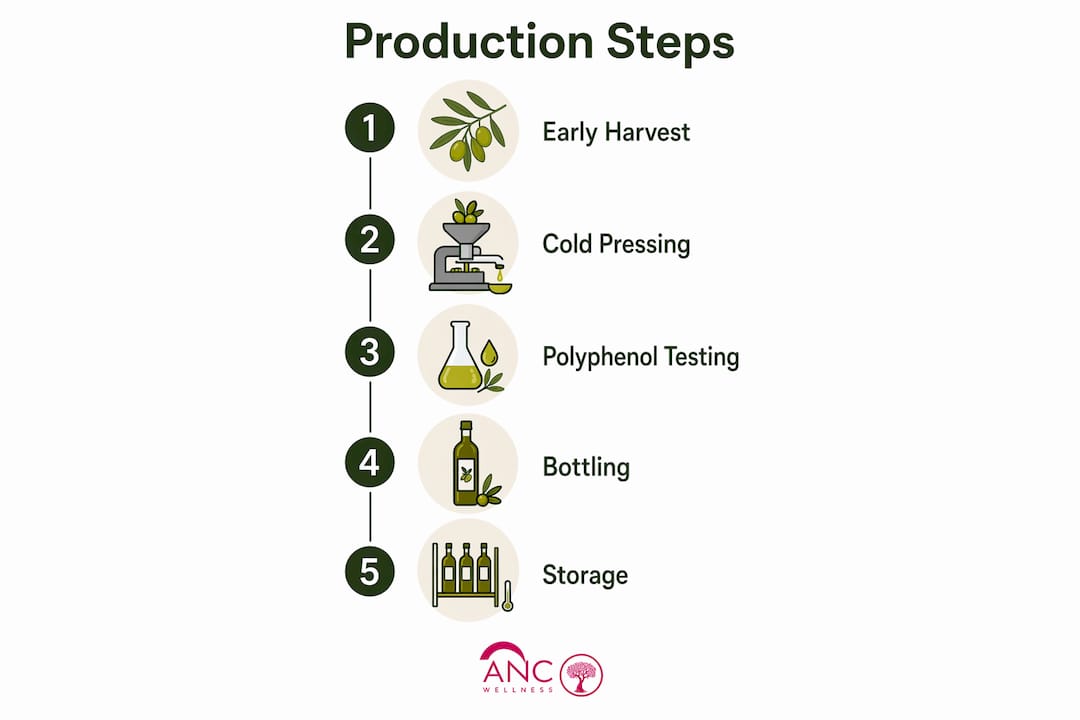
Production method is the primary determinant of polyphenol content. Three factors above all others define whether an oil qualifies as genuinely high-phenolic.
- Early harvest timing. Olives are picked when still green and unripe, typically in september or october depending on the region. Polyphenol concentration peaks before full ripeness. Waiting for black, fully ripe olives produces higher oil yield but dramatically lower phenolic content.
- Cold pressing without heat or chemicals. Heat, oxygen, and light degrade key polyphenols during extraction. Cold pressing keeps temperatures below 27°C throughout the process, preserving oleocanthal and hydroxytyrosol in their active forms.
- Minimal processing and immediate bottling. Every additional step between pressing and bottling introduces oxidation risk. Authentic producers move from press to dark glass bottle as quickly as possible.
These requirements explain why authentic wellness-oriented oils rarely reach mass markets. Early harvesting reduces yield per tree. Cold pressing requires precise equipment. Dark glass packaging costs more than standard clear bottles. The economics are incompatible with conventional supermarket supply chains, which prioritise volume and shelf stability over bioactive potency.
The distinction from standard EVOO is real and measurable. Standard EVOO must meet minimum quality thresholds set by the International Olive Council, but those thresholds do not require high polyphenol levels. An oil can be legally labelled extra virgin and still contain fewer than 100 mg/kg of polyphenols. The organic olive oil selection process for high-phenolic production adds layers of quality control that go far beyond the legal minimum.
Pro Tip: Look for oils that state the harvest date, not just a best-before date. A harvest date tells you exactly how fresh the oil is, which directly affects its polyphenol potency.
How do you recognise genuine wellness-oriented olive oil by taste and label?
Sensory characteristics are reliable indicators of polyphenol content. High-phenolic EVOO has a distinctive flavour profile that many first-time buyers misinterpret.
| Sensory characteristic | High-phenolic EVOO | Low-polyphenol EVOO |
|---|---|---|
| Throat sensation | Peppery catch or burn | Smooth, no irritation |
| Bitterness | Pronounced, clean | Mild or absent |
| Aroma | Grassy, green, herbaceous | Buttery, mild, neutral |
| Aftertaste | Lingering, complex | Short, fades quickly |
The peppery throat-catch is caused by oleocanthal and is a direct biomarker of antioxidant activity. Many consumers initially mistake it for rancidity or poor quality. The opposite is true. A stronger throat-catch indicates higher oleocanthal concentration and greater anti-inflammatory potency.
Buttery, mild oils feel pleasant but signal low polyphenol content. They may be perfectly good cooking fats, but they do not carry the functional benefits of high-phenolic EVOO. The flavour difference is not a matter of preference. It is a chemical signal.
On the label, sophisticated consumers look for total polyphenol content in mg/kg, verified by independent laboratory analysis. Terms like “premium,” “pure,” or “artisan” carry no regulatory definition and no polyphenol guarantee. A lab-verified figure is the only objective confirmation of wellness properties. If a label does not state a polyphenol count, treat the wellness claims with scepticism.
Pro Tip: Ask producers directly for their Certificate of Analysis. Any reputable high-phenolic producer will have one. If they cannot provide it, the polyphenol claims are unverified.
How should you use and store wellness-oriented olive oil?
Storage and usage habits determine how much of the oil’s polyphenol content you actually consume. Getting these right matters as much as choosing the right oil.
High-phenolic oils degrade rapidly and are best consumed within 6–9 months of production. Light, heat, and oxygen are the three enemies of polyphenol retention. The practical rules follow directly from that:
- Store in a dark, cool place. A kitchen cupboard away from the hob is ideal. Never store on a windowsill or next to the cooker.
- Choose dark glass bottles. Dark glass blocks UV light, which degrades oleocanthal and hydroxytyrosol faster than almost any other factor.
- Keep the bottle sealed. Oxygen exposure begins the moment you open the bottle. Reseal immediately after each use.
- Buy in smaller quantities. A 500ml bottle used within two months retains more polyphenols than a 1-litre bottle sitting open for six months.
For culinary use, high-phenolic EVOO performs best as a finishing oil rather than a high-heat cooking medium. Drizzle it over grilled vegetables, stir it into soups just before serving, or use it as a dressing base. The polyphenol benefits are best preserved when the oil is not subjected to sustained heat above 180°C.
Creative uses that suit its bold flavour profile include pairing with aged cheeses, using as a dip with good bread, or whisking into vinaigrettes with lemon and herbs. The bitterness and pepper complement strong flavours rather than competing with them. A small pour over vanilla ice cream is a classic Italian technique that works precisely because the contrast is so unexpected.
Consumption timing is flexible. The 30ml daily recommendation can be split across meals or taken in a single serving. Many people find it easiest to use as a breakfast drizzle over eggs or yoghurt, where the flavour integrates naturally.
Key takeaways
Wellness-oriented olive oil is defined by a polyphenol count above 250 mg/kg, verified by independent lab testing, and produced through early harvest and cold pressing to preserve bioactive compounds like oleocanthal and hydroxytyrosol.
| Point | Details |
|---|---|
| Polyphenol threshold matters | Only oils with 250+ mg/kg polyphenols qualify for EFSA-authorised health claims. |
| Taste is a quality signal | A peppery throat-catch indicates oleocanthal and genuine antioxidant potency. |
| Production method is decisive | Early harvest and cold pressing preserve the bioactives that standard EVOO lacks. |
| Storage affects potency | Consume within 6–9 months of harvest; store in dark glass away from heat and light. |
| Labels need lab data | Demand a polyphenol mg/kg figure from independent testing, not marketing language. |
Why I think most people are buying the wrong olive oil entirely
The market for premium olive oil has grown considerably, but consumer understanding has not kept pace. Most people buying “extra virgin” at a supermarket believe they are getting the health benefits they have read about. They are not. An oil sitting under fluorescent lights in a clear bottle, harvested a year ago, with 80 mg/kg of polyphenols, delivers almost none of the functional benefits documented in clinical research.
What frustrates me most is the labelling gap. Producers are not required to state polyphenol content, so most do not. The result is a market where genuinely therapeutic oils and nutritionally ordinary ones sit side by side at similar price points, with no clear signal to the consumer. The only reliable way around this is to demand lab data, full stop.
I have also noticed that people expect high-phenolic EVOO to taste like the mild, golden oil they grew up with. The first encounter with a proper high-phenolic oil, that sharp throat-catch and clean bitterness, often produces confusion or disappointment. That reaction is worth pushing through. The flavour is an acquired one, and once you understand what it signals, it becomes genuinely satisfying rather than off-putting.
My practical advice is this: treat wellness-oriented olive oil the way you treat a good wine. Buy from producers who can show you their harvest date and their Certificate of Analysis. Use it raw. Consume it within a few months of opening. And do not expect it to compensate for a poor diet. It works best as part of a pattern of eating, not as a supplement bolted onto an otherwise unhealthy routine.
— Mak
Terracenturia’s high-phenolic EVOO: verified quality from Slovenian Istria
Terracenturia produces certified high-phenolic organic EVOO from Slovenian Istria, with a documented polyphenol content of 1,371 mg/kg. That figure places it firmly in the ultra-high-phenolic category, well above the EFSA threshold and far beyond what standard supermarket oils deliver. The oil is cold pressed from early-harvested green olives, bottled in dark glass, and supported by independent laboratory analysis. Terracenturia’s organic selection process prioritises bioactive retention at every stage, from grove to bottle. For consumers who want a wellness-oriented olive oil backed by verifiable data rather than vague claims, Terracenturia’s range is a direct answer to that need.
FAQ
What is the minimum polyphenol level for a wellness claim?
The EFSA sets the threshold at 250 mg/kg. Only oils meeting or exceeding this level are permitted to carry authorised health claims relating to the protection of blood lipids from oxidative stress.
Is the peppery taste in olive oil a sign of quality?
Yes. The peppery throat-catch is caused by oleocanthal, a polyphenol with confirmed anti-inflammatory properties. A stronger sensation indicates higher oleocanthal concentration and greater bioactive potency.
How much high-phenolic olive oil should I consume daily?
Research, including the PREDIMED trial, points to approximately 30ml per day as the effective dose for cardiovascular benefit when consumed as part of a Mediterranean diet.
How long does wellness-oriented olive oil stay potent?
High-phenolic EVOO is best consumed within 6–9 months of production. After that, polyphenol levels decline significantly, reducing the oil’s functional properties regardless of how it is stored.
How do I verify that an olive oil is genuinely high-phenolic?
Request the producer’s Certificate of Analysis showing total polyphenol content in mg/kg from an independent laboratory. Marketing terms like “premium” or “artisan” carry no regulatory definition and do not confirm polyphenol levels.