TL;DR:
- Handpicked olives preserve polyphenols and volatile aroma compounds better than mechanical harvesting by minimizing bruising and damage. This selectivity results in higher-quality olive oil with superior flavor, antioxidant content, and shelf stability. The labor-intensive process justifies the higher price, especially for premium, high-polyphenol EVOOs.
Handpicked olives are defined by a single principle: each fruit is selected by hand at peak ripeness, with minimal bruising, to preserve the polyphenols and volatile aromatic compounds that determine olive oil quality. This matters because mechanical harvesting cannot replicate that selectivity. The result is a measurable difference in flavour, antioxidant content, and shelf stability. For anyone serious about extra virgin olive oil (EVOO), understanding why handpicked olives outperform machine-harvested fruit is the first step towards buying with genuine knowledge.
Why handpicked olives preserve fruit integrity and oil quality
The core reason handpicking produces better oil is physiological. When an olive is bruised, even slightly, it activates polyphenol oxidase, an enzyme that breaks down the very compounds responsible for olive oil’s health value and flavour. Mechanical stress from over-the-row machines lowers polyphenol content and raises free fatty acidity and peroxide values, both of which degrade oil quality. Handpicking avoids this cascade entirely.
The volatile aromatic compounds at stake include C5 and C6 aldehydes, alcohols, and esters. These are the molecules behind the fresh, grassy, slightly peppery notes that distinguish a premium EVOO from a flat, generic oil. Mechanical damage alters the lipoxygenase pathway, producing inferior aroma profiles that no amount of careful milling can reverse. Once those compounds are lost at harvest, they are gone.
Timing compounds the effect. Olives harvested by hand are typically gathered in smaller batches, which makes it easier to move them to the mill quickly. Prompt processing within 24 hours of harvest preserves oil quality regardless of harvesting method, but bruised fruit degrades far faster. Handpicking therefore gives producers a wider window and a more forgiving margin.
Pro Tip: If you visit an olive grove during harvest, watch how the fruit is handled after picking. Olives dropped into hard containers or left in the sun for hours will lose quality even if hand-harvested. Gentle handling and shade storage between picking and milling are as important as the picking method itself.
- Bruising activates polyphenol oxidase, accelerating oxidation
- Free fatty acidity rises with mechanical stress, reducing oil grade
- Volatile aroma compounds are lost irreversibly once cell walls are damaged
- Smaller handpicked batches reach the mill faster, limiting degradation
Handpicked olives vs machine harvesting: what actually differs?
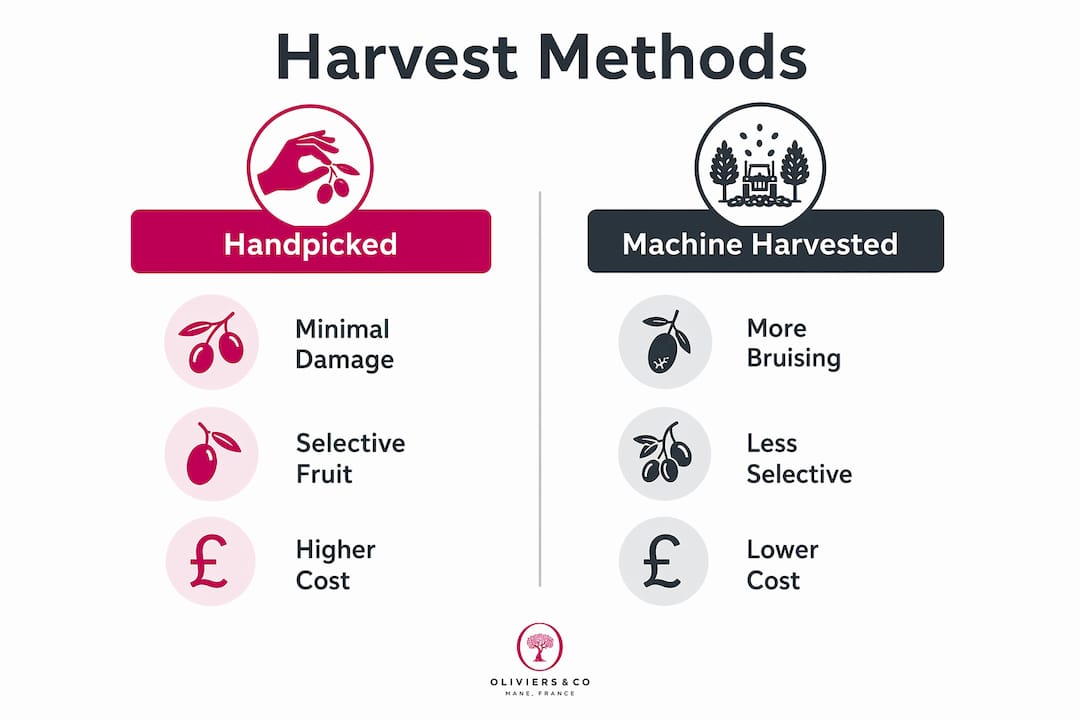
The most immediate difference is cost. Manual harvesting accounts for 50 to 60% of total olive production costs, which is why the premium price of handpicked oils is not a marketing invention. It reflects genuine labour investment. Mechanical harvesting was adopted primarily to offset labour shortages and rising costs, not because it improves quality over handpicking.
The second difference is selectivity. Hand harvesters avoid under-ripe, over-ripe, or damaged fruit that machines cannot discriminate. A mechanical harvester strips everything from the branch indiscriminately. That mix of fruit at different ripeness stages and varying levels of damage produces an inconsistent chemical composition in the resulting oil. Handpicking allows producers to target a precise ripeness window, which is especially critical for high-polyphenol oils where early-harvest timing is deliberate.
| Factor | Handpicked olives | Machine-harvested olives |
|---|---|---|
| Bruising and cell damage | Minimal | Significant |
| Polyphenol retention | High | Reduced |
| Selectivity by ripeness | Precise | None |
| Production cost | 50 to 60% of total costs | Lower labour cost |
| Aroma compound preservation | Excellent | Compromised |
| Suitable for premium EVOO | Yes | Limited |
Mechanical harvesting is not inherently disqualifying for decent oil. Producers who use gentle vibration methods and process fruit within hours can still achieve acceptable quality. However, for artisanal and high-polyphenol oils, the selectivity and gentleness of hand harvesting remain unmatched. The artisanal methods used in traditional production reflect decades of accumulated knowledge about exactly when and how to pick each variety.
Why handpicked olives are linked to higher nutritional value
Polyphenols are the primary reason health-conscious consumers seek premium EVOO. These antioxidant compounds, including oleocanthal, oleuropein, and hydroxytyrosol, are associated with anti-inflammatory effects, cardiovascular protection, and oxidative stress reduction. The European Food Safety Authority (EFSA) has formally recognised that olive oil polyphenols contribute to the protection of blood lipids from oxidative stress. That recognition applies specifically to oils with sufficient polyphenol concentration, which handpicking helps secure.
Bruising is the enemy of polyphenol retention. When olive cell walls are damaged, enzymatic activity begins converting polyphenols into less bioactive compounds. Harvesting method is the first critical step to securing polyphenol value, with minimal damage and rapid processing working together. Handpicking addresses the damage side of that equation directly.
“Early harvest timing, gentle handling, and cold extraction crucially optimise health benefits.” The entire production chain matters, but it starts at the moment of picking.
The specific health benefits associated with handpicked, high-polyphenol olive oils include:
- Reduced LDL oxidation, a key factor in cardiovascular disease risk
- Anti-inflammatory activity linked to oleocanthal, which shares a mechanism with ibuprofen
- Protection against oxidative DNA damage
- Support for healthy blood pressure through endothelial function
- Improved gut microbiome diversity in studies using high-polyphenol EVOO
For a detailed breakdown of what polyphenol levels to look for and how to verify them, the high polyphenol olive oil guide from Terracenturia covers testing standards and label interpretation in practical terms.
How does handpicking enhance the flavour of olive oil?
The flavour difference between handpicked and machine-harvested oil is not subtle to a trained palate. Handpicking retains volatile aldehydes, alcohols, and esters responsible for the fresh green and fruity aroma of high-quality EVOO. These compounds are produced through the lipoxygenase pathway, which is triggered correctly only when olives are processed from intact, undamaged fruit. Bruised olives produce a different set of volatile compounds, resulting in flat, fermented, or rancid notes.
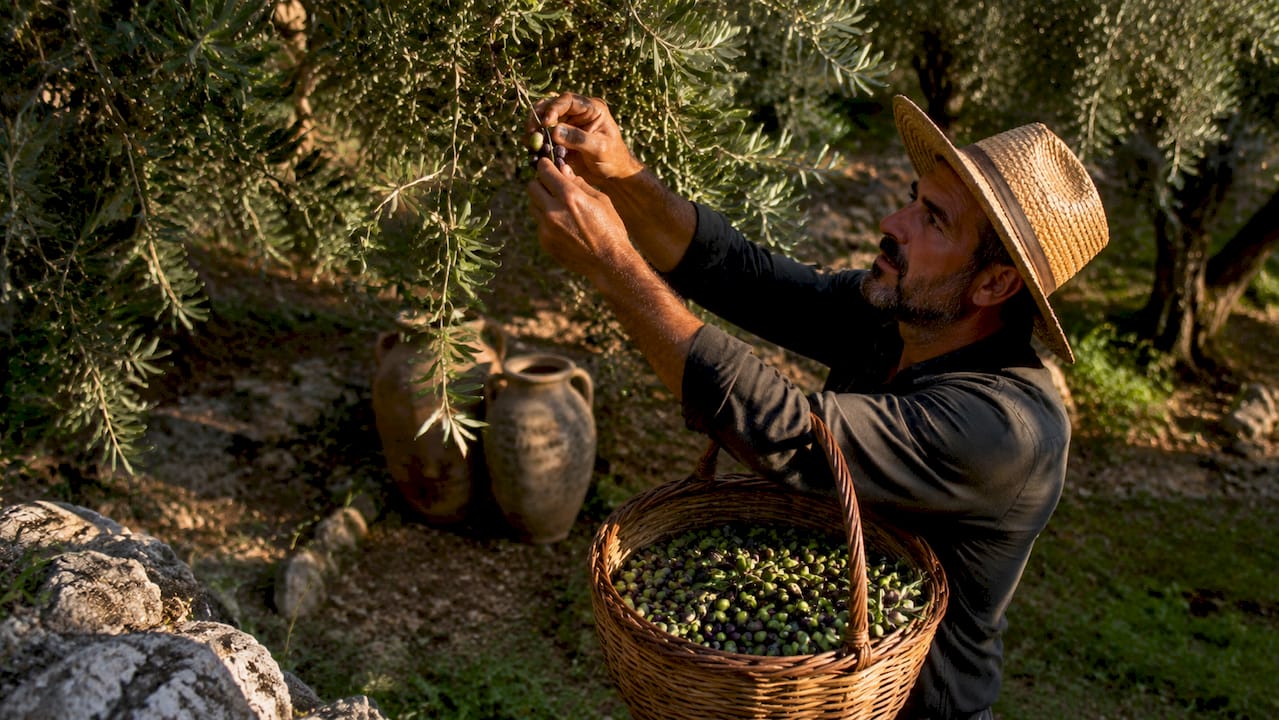
Premium producers in regions such as Puglia, Crete, and Slovenian Istria consistently emphasise handpicking on their labels precisely because it signals this aroma integrity. Italian olive oil makers with decades of hand-harvesting experience possess generational knowledge about tree care and selective harvesting that machines cannot emulate. That knowledge translates directly into the flavour complexity that distinguishes a single-origin artisanal oil from a blended commodity product.
Selectivity also prevents flavour dilution. When damaged or overripe fruit enters the press alongside healthy olives, the resulting oil carries off-flavours that cannot be removed without refining. Refining strips polyphenols and aroma compounds simultaneously. Handpicking removes the problem at source, meaning the oil requires no corrective processing.
Pro Tip: When buying olive oil, look for a harvest date (not just a best-before date), a single stated origin, and ideally a note about harvesting method. These three indicators together are the strongest signal that you are buying from a producer who prioritises quality at every stage.
What should you look for when buying handpicked olive oil?
The premium price of handpicked olive oil is justified, but only if the rest of the production chain matches the quality of the harvest. Cold pressing and handpicking together preserve antioxidants and minimise oxidation. An oil that was hand-harvested but stored poorly or processed late loses much of its advantage. Knowing what to look for on a label protects you from paying a premium for a product that does not deliver.
Organic certification adds another layer of assurance. Organic groves typically avoid synthetic pesticides and fertilisers, which can affect polyphenol expression in the fruit. The organic olive oil selection process at Terracenturia details how these factors interact with harvesting method to produce consistent quality.
| Quality indicator | What to look for |
|---|---|
| Harvest date | Specific month and year, not just a best-before date |
| Origin | Single grove or named region, not a blend of EU origins |
| Harvesting method | “Hand-harvested” or “handpicked” stated explicitly |
| Polyphenol content | Stated in mg/kg; above 250 mg/kg meets EFSA health claim threshold |
| Processing time | Milled within 24 hours of harvest where stated |
| Certification | Organic, PDO, or equivalent quality standard |
Artisanal producers who handpick typically also harvest early in the season, when polyphenol concentrations are highest. This combination of early harvest and gentle picking is the defining characteristic of the highest-grade EVOOs. The monovarietal olive oil guide explains how single-variety oils make traceability and quality verification significantly easier for consumers.
Key takeaways
Handpicked olives produce superior olive oil because minimal bruising preserves polyphenols, volatile aroma compounds, and chemical integrity that mechanical harvesting consistently degrades.
| Point | Details |
|---|---|
| Bruising destroys polyphenols | Mechanical stress activates polyphenol oxidase, reducing antioxidant content irreversibly. |
| Selectivity is irreplaceable | Hand harvesters choose only correctly ripened, undamaged fruit that machines cannot distinguish. |
| Flavour depends on intact cells | Volatile aroma compounds survive only when olive cell walls remain undamaged at harvest. |
| Cost reflects genuine labour | Manual harvesting represents 50 to 60% of production costs, explaining the premium price. |
| Labels reveal production quality | Harvest date, single origin, and stated harvesting method are the clearest quality signals. |
Why I think most people underestimate the harvest moment
Most olive oil conversations focus on extraction. Cold-pressed, first-press, stone-ground. These terms carry weight in marketing, and they do matter. But in my experience, the harvest moment is where quality is either secured or lost, and it receives far less attention than it deserves.
What strikes me most about handpicking is not the labour cost or even the polyphenol numbers. It is the selectivity. A skilled harvester walking through a grove is making hundreds of micro-decisions per hour, rejecting fruit that a machine would collect without hesitation. That judgement, built over seasons and generations, is genuinely irreplaceable. The craftsmanship from grove to bottle that defines the best producers starts with exactly this kind of human attention.
I also think consumers underestimate how much the harvest method affects their daily experience of olive oil. The difference between a flat, odourless oil and one that smells of fresh-cut grass and green tomato is not primarily about the mill or the bottle. It is about whether the olives arrived at the mill intact. Once you taste an oil made from carefully handpicked, early-harvest fruit, the comparison becomes obvious and the premium stops feeling like a luxury.
The health argument reinforces the culinary one. If you are buying olive oil partly for its polyphenol content, as many health-conscious consumers now do, then the harvesting method is not a secondary consideration. It is the first one.
— Mak
Experience genuinely handpicked olive oil from Slovenian Istria
Terracenturia produces high-polyphenol organic EVOO from handpicked olives in Slovenian Istria, with polyphenol content reaching 1,371 mg/kg. Every bottle reflects the principles covered in this article: early harvest, hand selection, and rapid cold extraction. The oils meet scientific quality standards for health-promoting polyphenol concentration and carry the flavour complexity that only intact, carefully selected fruit can produce. If you want to understand what the health benefits of high-polyphenol EVOO actually taste like in practice, Terracenturia’s range is a direct demonstration. Explore the full collection and read the production detail behind each oil at terracenturia.com.
FAQ
What makes handpicked olives better than machine-harvested ones?
Handpicked olives suffer minimal bruising, which preserves polyphenols and volatile aroma compounds that mechanical harvesting degrades. The selectivity of hand harvesting also means only correctly ripened, undamaged fruit enters the press.
How does harvesting method affect olive oil polyphenol content?
Bruising activates polyphenol oxidase, an enzyme that breaks down antioxidant compounds before the oil is even extracted. Mechanical stress raises free fatty acidity and peroxide values, both of which indicate polyphenol loss and reduced oil quality.
Why are handpicked olive oils more expensive?
Manual harvesting accounts for 50 to 60% of total olive production costs due to the labour intensity involved. The premium price reflects genuine cost, not simply marketing positioning.
How can I tell if an olive oil was handpicked?
Look for a specific harvest date, a named single origin, and an explicit statement of harvesting method on the label. Producers who handpick typically highlight it because it is a genuine quality differentiator.
Does processing speed matter as much as harvesting method?
Both matter and work together. Processing within 24 hours of harvest is critical, but bruised fruit from mechanical harvesting degrades faster during that window. Handpicking and prompt milling together produce the best outcome.