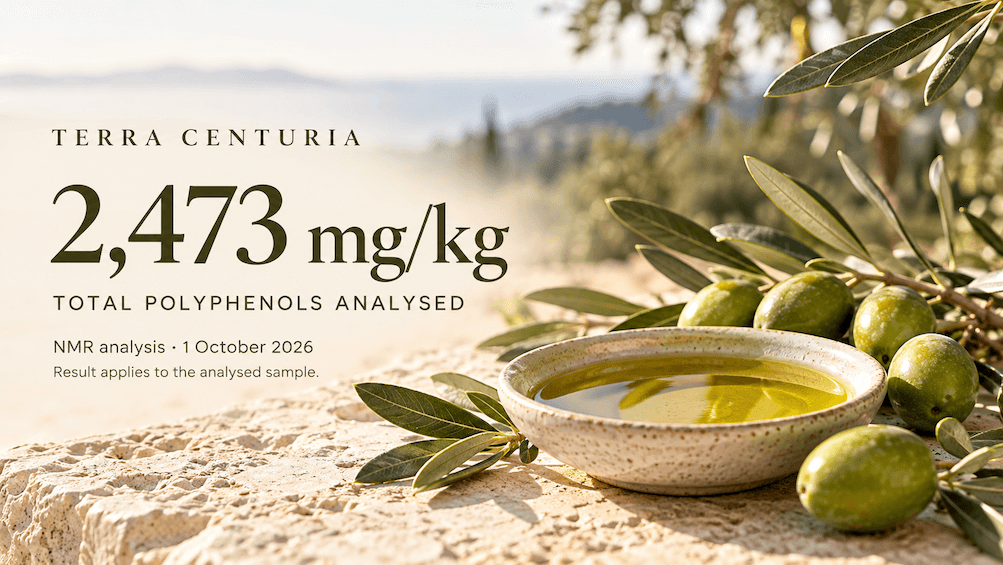
Uma nova análise laboratorial detectou 2.473 mg/kg de polifenóis totais analisados em uma amostra de azeite Terra Centuria da Eslovênia, fornecendo um panorama detalhado de sua composição fenólica.
The analysis was performed at the NMR Centre of the Ruđer Bošković Institute in Zagreb. The certificate, dated 1 October 2026, reports both the total concentration of the polyphenols analysed and the levels of individual compounds.
Among the results are 407 mg/kg of oleocanthal and 392 mg/kg of oleacein, giving a combined concentration of 799 mg/kg. The analysis also records 1,214 mg/kg of total tyrosol derivatives and 1,259 mg/kg of total hydroxytyrosol derivatives.
What the result means
According to the certificate, 20 g of the analysed oil provides 49.5 mg of hydroxytyrosol, tyrosol and their derivatives. This is approximately 9.9 times the 5 mg per 20 g threshold specified for the EU health claim on olive oil polyphenols.
The authorised claim states: “Olive oil polyphenols contribute to the protection of blood lipids from oxidative stress.” The beneficial effect is obtained with a daily intake of 20 g of olive oil. A varied, balanced diet and a healthy lifestyle remain important.
From the grove to the laboratory
At Terra Centuria, our approach brings together care for our olive groves in Slovenian Istria, early harvesting and careful processing. Laboratory analysis adds measurable detail to that work, allowing us to share the composition of the tested oil with greater transparency.
For us, this result is a moment to appreciate the work behind every harvest and to continue refining what we do, from caring for the trees to preserving the character of the oil.
Analysis details: Certificate C2122-01687, dated 1 October 2026. The results apply specifically to the analysed sample.