TL;DR:
- Antioxidants in olive oil, especially polyphenols like oleocanthal, protect cells from oxidative stress and inflammation. Consuming high-polyphenol extra virgin olive oil daily can reduce cardiovascular risks, support neuroprotection, and control inflammation. The antioxidant levels depend on olive variety, harvest time, processing speed, and cooking methods, with raw use providing the most benefits.
Antioxidants in olive oil are bioactive compounds that protect your body from oxidative stress, the cellular damage that drives ageing, inflammation, and chronic disease. Extra virgin olive oil (EVOO) is the richest dietary source of polyphenols including oleocanthal, hydroxytyrosol, and oleuropein, compounds that modulate COX-1 and COX-2 pathways to reduce inflammation at a molecular level. The European Food Safety Authority (EFSA) has approved health claims confirming that olive oil polyphenols protect LDL particles from oxidative damage, a direct link between antioxidant activity and cardiovascular protection. Understanding the role of antioxidants in olive oil tells you not just why this food has been prized for millennia, but how to choose and use it to get the most from every drop.
What types of antioxidants are found in olive oil?
EVOO contains three principal classes of antioxidants: polyphenols, vitamin E (primarily alpha-tocopherol), and squalene. Each class works differently, and together they give high-quality EVOO a protective profile that refined oils simply cannot match.
Polyphenols are the headline act. Oleocanthal produces the peppery throat sensation you notice in fresh EVOO, and that sensation is a direct signal of anti-inflammatory activity. Hydroxytyrosol and oleuropein are the most potent free-radical scavengers in the group, neutralising reactive oxygen species before they can damage cell membranes or DNA. Research published in 2026 confirms that EVOO polyphenols also inhibit pathological protein aggregation linked to neurodegenerative diseases, adding neuroprotection to their already long list of functions.
Vitamin E works alongside polyphenols to protect the oil itself from oxidation during storage, and it performs the same role inside the body, shielding cell membranes from lipid peroxidation. Squalene, a triterpene hydrocarbon found in high concentrations in olive oil, acts as an oxygen quencher and contributes to the oil’s remarkable oxidative stability.
| Antioxidant | Source in EVOO | Primary biological function |
|---|---|---|
| Oleocanthal | Olive fruit phenolics | COX-1/COX-2 inhibition, anti-inflammatory |
| Hydroxytyrosol | Olive fruit and leaves | Free-radical scavenging, LDL protection |
| Oleuropein | Olive fruit and leaves | Antioxidant, antimicrobial, cardioprotective |
| Alpha-tocopherol (vitamin E) | Olive fruit lipids | Cell membrane protection, oxidative stability |
| Squalene | Olive fruit unsaponifiables | Oxygen quenching, skin and cellular protection |
Pro Tip: The throat sting you feel after swallowing fresh EVOO is caused by oleocanthal. A strong, lasting sting signals a high-polyphenol oil. No sting means low antioxidant content, regardless of what the label claims.
How do antioxidants in olive oil benefit human health?
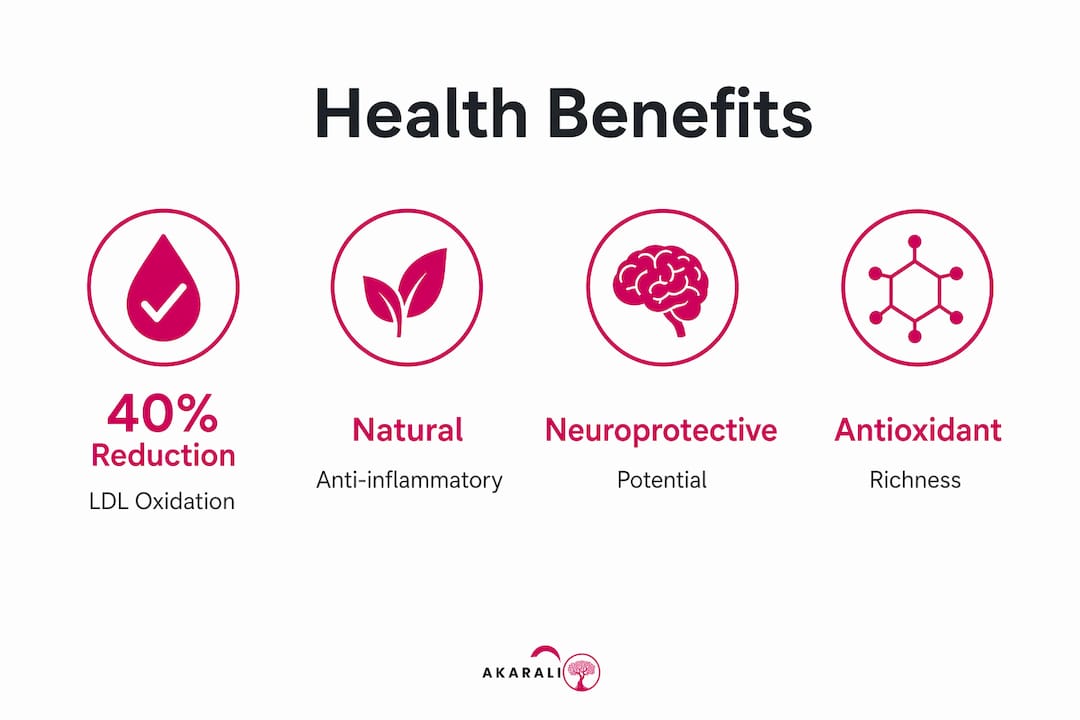
The health benefits of EVOO are not folklore. They are grounded in decades of clinical research, and 2026 evidence continues to strengthen the case. The benefits cluster around four areas: cardiovascular health, neuroprotection, inflammation control, and gut health.
Cardiovascular protection
The EFSA-approved health claim states that olive oil polyphenols protect LDL cholesterol from oxidative stress. Oxidised LDL is the primary trigger for atherosclerosis, so blocking that oxidation directly reduces the risk of arterial plaque formation. Replacing saturated fats with high-quality EVOO lowers LDL and raises HDL, improving the overall cholesterol profile. The PREDIMED trial, one of the largest dietary intervention studies ever conducted, demonstrated that a Mediterranean diet supplemented with EVOO significantly reduced major cardiovascular events. That is not a modest finding. It is evidence strong enough to inform clinical dietary guidelines across Europe.
Anti-inflammatory effects
Oleocanthal is a natural COX inhibitor. A 50 g serving of high-phenol EVOO delivers oleocanthal equivalent to roughly 10% of a standard ibuprofen dose. That figure sounds small, but chronic low-grade inflammation responds to consistent, moderate suppression over time rather than single large doses. Daily EVOO consumption therefore acts as a sustained anti-inflammatory intervention through diet alone.
Neuroprotective potential
2026 research links EVOO polyphenols to reduced oxidative stress in brain tissue and inhibition of the protein aggregation associated with Alzheimer’s disease. This is an emerging area, but the mechanistic evidence is credible. Hydroxytyrosol crosses the blood-brain barrier, giving it direct access to neural tissue where it can neutralise free radicals before they trigger neuronal damage.
Key health areas supported by olive oil antioxidants
- Heart health: Polyphenols prevent LDL oxidation and support healthy endothelial function, reducing arterial inflammation.
- Brain health: Hydroxytyrosol and oleuropein reduce oxidative stress in neural tissue, potentially slowing cognitive decline.
- Inflammation control: Oleocanthal inhibits COX enzymes, mimicking the mechanism of non-steroidal anti-inflammatory drugs.
- Gut health: EVOO polyphenols act as prebiotics, supporting beneficial gut bacteria and reducing intestinal inflammation.
- Cellular protection: Vitamin E and squalene protect cell membranes from lipid peroxidation across multiple tissue types.
“The European Food Safety Authority confirms that olive oil polyphenols protect LDL particles from oxidative stress when consuming 20 g of EVOO daily providing at least 5 mg of hydroxytyrosol and its derivatives.”
What factors affect antioxidant levels in olive oil?
Not all olive oils deliver the same antioxidant load. The difference between a high-polyphenol EVOO and a standard refined olive oil is not marginal. It is the difference between a functional food and a cooking fat.
EVOO versus refined oils
Cold-pressed EVOO retains the full polyphenol profile of the olive fruit. Refining strips most of these compounds out through heat, chemical treatment, and filtration. You can explore the key differences between EVOO and refined oils in detail, but the short version is this: if the label does not say “extra virgin,” the antioxidant content is negligible.
Variety, harvest time, and processing
Olive variety is a major determinant of polyphenol content. Early-harvest olives, picked before full ripeness, consistently produce oils with higher phenolic concentrations than late-harvest fruit. Processing speed matters too. Olives oxidise rapidly after picking, so mills that press within hours of harvest preserve far more polyphenols than those with longer delays. The organic olive oil selection process at artisan producers prioritises all three variables: variety, harvest timing, and rapid cold pressing.
Heat and cooking methods
Heat degrades polyphenols. The table below shows how antioxidant retention changes with cooking method.
| Cooking method | Temperature range | Antioxidant retention |
|---|---|---|
| Raw (dressings, finishing) | No heat | Full retention |
| Low to medium heat (sautéing) | Up to 180°C | Good retention |
| High heat (deep frying) | Above 200°C | Significant degradation |
| Repeated use (reheating) | Variable | Severe degradation |
EVOO generates fewer harmful oxidation products during cooking than most other oils, thanks to its antioxidant content. That said, the polyphenols themselves are consumed in the process of protecting the oil. High heat and repeated use destroy the very compounds you are paying for.
Pro Tip: Use your best high-polyphenol EVOO raw or as a finishing oil. Reserve a mid-grade EVOO for low to medium heat cooking. This preserves the most valuable antioxidants while keeping costs sensible.
How can you use antioxidant-rich olive oil every day?
Getting the health benefits of EVOO requires consistent, well-considered use rather than occasional drizzles. The Mediterranean diet model, which links EVOO to its most documented health outcomes, uses olive oil as the primary fat source across multiple meals daily.
Daily intake and serving ideas
A daily intake of around 20–50 g of EVOO covers the range associated with measurable health benefits, from the EFSA minimum of 20 g for LDL protection up to the higher intakes seen in Mediterranean populations. Practical ways to reach that amount include:
- Dressing salads with 1–2 tablespoons of raw EVOO
- Finishing soups, grilled vegetables, or legumes with a drizzle before serving
- Using EVOO as a dip for bread instead of butter
- Incorporating it into sauces and marinades where it is not exposed to high heat
The Mediterranean diet pattern pairs EVOO with vegetables, pulses, and whole grains, creating a dietary context where antioxidants from multiple sources work together. That synergy amplifies the individual benefits of each component.
Storage tips to protect antioxidants at home
- Store EVOO in a dark glass bottle or tin, away from direct light.
- Keep it away from heat sources such as the hob or oven.
- Seal the bottle tightly after each use to limit oxygen exposure.
- Use the oil within 12–18 months of the harvest date, not the bottling date.
What to avoid
- High heat cooking above 180°C degrades polyphenols and vitamin E rapidly.
- Reusing oil after frying destroys antioxidant compounds and generates harmful aldehydes.
- Buying oils without a harvest date makes it impossible to judge freshness or antioxidant potency.
- Storing oil in clear plastic bottles accelerates light-induced oxidation.
Key takeaways
The role of antioxidants in olive oil centres on three mechanisms: neutralising free radicals, inhibiting inflammatory enzymes, and protecting LDL cholesterol from oxidative damage that triggers cardiovascular disease.
| Point | Details |
|---|---|
| Polyphenols drive the benefits | Oleocanthal, hydroxytyrosol, and oleuropein are the primary antioxidants responsible for EVOO’s health effects. |
| EFSA confirms LDL protection | Consuming 20 g of EVOO daily with sufficient polyphenols carries an approved EU health claim for cardiovascular protection. |
| EVOO beats refined oils | Refining removes most polyphenols; only cold-pressed extra virgin oil retains meaningful antioxidant content. |
| Heat degrades antioxidants | Use high-polyphenol EVOO raw or at low to medium heat to preserve its protective compounds. |
| Consistency matters | Daily use within a Mediterranean-style diet, not occasional consumption, produces the documented health outcomes. |
The throat sting is the point
I have tasted a lot of olive oils over the years, and the single most reliable quality signal is the one most people misread. When a fresh EVOO makes you cough or leaves a peppery burn at the back of your throat, that is oleocanthal doing exactly what it is supposed to do. I have watched people at tastings reach for water to wash it away, treating it as a flaw. It is the opposite of a flaw. It is the most direct sensory confirmation that the oil you are holding has genuine anti-inflammatory potency.
What I find genuinely interesting about the 2026 research is the neuroprotection angle. The cardiovascular evidence has been solid for decades, but the emerging data on polyphenol benefits for brain health adds a dimension that changes how I think about daily EVOO use. This is not just a heart food. It is increasingly looking like a brain food too.
My practical advice is simple. Buy the best EVOO you can afford, check the harvest date, and use it raw as often as possible. Do not save it for special occasions. The health benefits accumulate through daily, consistent intake. A bottle of genuinely high-polyphenol EVOO used every day is worth far more to your health than an expensive bottle used once a month on a salad.
— Mak
Terracenturia’s high-polyphenol EVOO for serious health benefits
If antioxidant content is your primary criterion, the polyphenol concentration of your oil matters more than its origin story. Terracenturia produces organic EVOO from Slovenian Istria with a polyphenol content of 1,371 mg/kg, a figure that places it well above the threshold required for the EFSA-approved health claim. The oil is cold-pressed from early-harvest fruit, processed rapidly to preserve the full phenolic profile, and certified organic. For those who want both the gourmet and wellness benefits of genuinely antioxidant-rich EVOO, Terracenturia’s range is worth examining. You can find the full product selection and polyphenol data at Terracenturia.
FAQ
What are the main antioxidants in olive oil?
The primary antioxidants in EVOO are polyphenols including oleocanthal, hydroxytyrosol, and oleuropein, alongside vitamin E and squalene. Polyphenols are responsible for most of the documented anti-inflammatory and cardiovascular benefits.
Why do antioxidants matter in olive oil?
Antioxidants neutralise free radicals that cause oxidative stress, which drives inflammation, LDL oxidation, and cellular ageing. The EFSA confirms that olive oil polyphenols specifically protect LDL particles from oxidative damage, reducing the risk of atherosclerosis.
Does cooking destroy antioxidants in olive oil?
High heat above 180°C and repeated reuse significantly degrade polyphenols and vitamin E. Using EVOO raw or at low to medium heat preserves most antioxidants and delivers the greatest health benefit.
How much EVOO should you consume daily for antioxidant benefits?
The EFSA-approved health claim is based on a daily intake of 20 g of EVOO providing at least 5 mg of hydroxytyrosol and its derivatives. Higher intakes of up to 50 g align with Mediterranean dietary patterns and broader health outcomes.
Is all extra virgin olive oil equally rich in antioxidants?
No. Polyphenol content varies significantly based on olive variety, harvest timing, and processing method. Early-harvest, cold-pressed EVOO from high-phenol varieties consistently delivers the highest antioxidant concentrations, as detailed in Terracenturia’s high-polyphenol olive oil guide.