TL;DR:
- A sustainable olive oil selection workflow involves evaluating quality, environmental, and health criteria before purchase. It emphasizes checking harvest date, organic certification, polyphenol content, and proper packaging to ensure genuine nutritional value. Applying these filters helps consumers make informed, responsible choices that support responsible farming practices.
A sustainable olive oil selection workflow is the process of systematically evaluating olive oil against quality, health, and environmental criteria before making a purchase. Most culinary enthusiasts buy on price or label aesthetics alone, which produces inconsistent results and supports producers with questionable practices. A structured approach changes that. By applying clear filters at each stage, from farm certification to packaging and polyphenol content, you select oils that deliver genuine nutritional value and support responsible land management. Terracenturia, which produces high-polyphenol extra virgin olive oil (EVOO) in Slovenian Istria, applies exactly this kind of rigorous selection thinking to every batch it brings to market.
What quality and sustainability criteria should you assess?
The sustainable olive oil selection workflow begins with three non-negotiable quality markers: harvest date, cold pressing, and polyphenol content. A label without a clear harvest date is a red flag. Labels missing origin or harvest data should be excluded immediately, because without that information you cannot assess freshness or traceability.
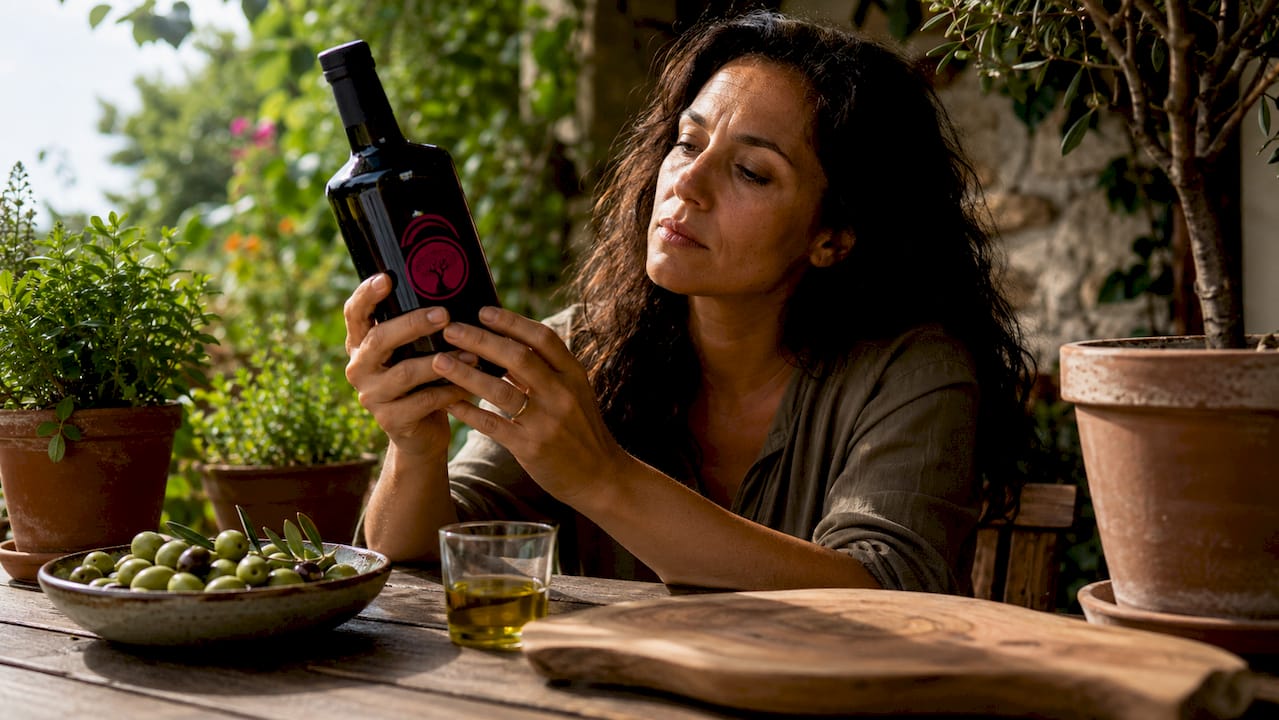
Cold pressing is the production method that preserves the most nutritional value. Sustainable farming systems prohibit synthetic pesticides and chemical fertilisers, relying instead on natural composts and mechanical cold pressing to protect polyphenol levels. That matters because polyphenols degrade quickly when heat or solvents are introduced during extraction.
Sustainability indicators go beyond farming method. Look for:
- Organic certification from a recognised body such as USDA or CAD, which requires annual inspections, no GMOs, no synthetic inputs, and cold mechanical extraction without solvents
- Integrated production standards, which regulate pesticide use and soil management even when full organic status is not claimed
- Chemical-free farming declarations backed by documentation, not just marketing language
- Dark glass or tin packaging, which blocks light and slows oxidation
- Batch and producer information printed on the label, confirming traceability from grove to bottle
Pro Tip: Ask the producer for a lab analysis certificate showing polyphenol content in mg/kg. Oils above 250 mg/kg meet the threshold associated with meaningful antioxidant benefit.
Packaging is a sustainability signal in its own right. Dark glass and tins reduce light exposure and are more recyclable than plastic. A producer who invests in proper packaging usually applies the same care to farming and milling.
How to run a step-by-step olive oil selection process
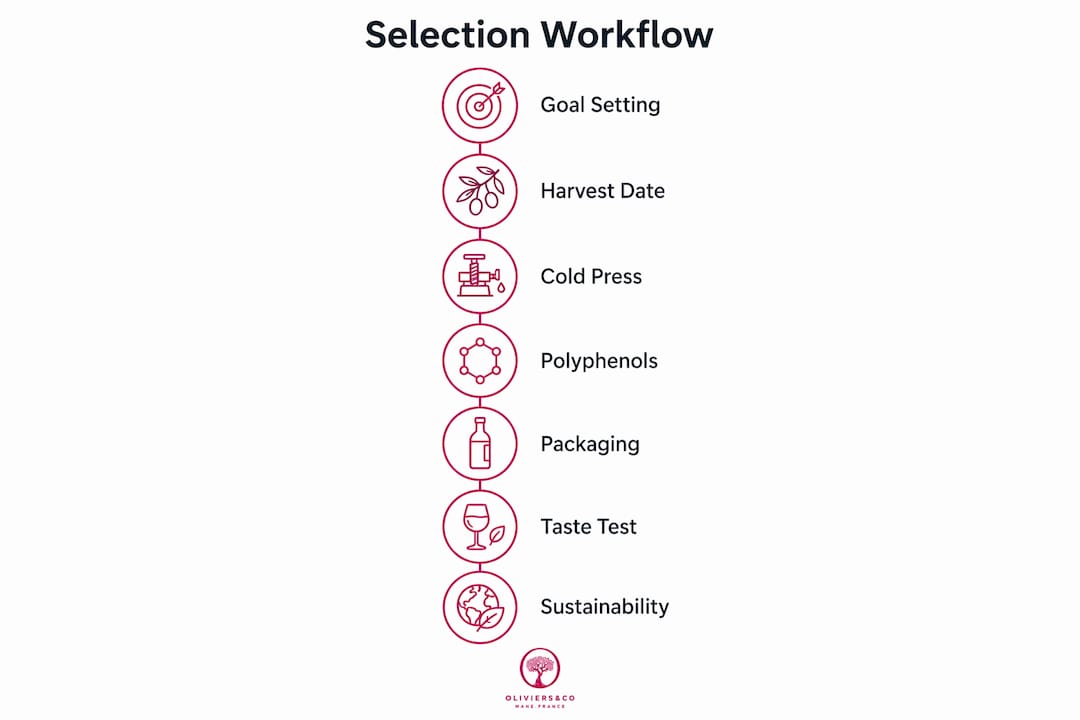
A practical organic olive oil workflow follows five clear stages. Each stage filters out unsuitable options and narrows your shortlist to oils worth buying.
- Set your selection goals. Decide on type (monovarietal or blend), provenance (single estate or regional), and budget. These three filters alone eliminate most of the market before you read a single label.
- Research producers and verify transparency. Check whether the producer publishes harvest dates, farming methods, and lab results. Sustainability claims are meaningful only when suppliers measure and report practices such as waste reduction, packaging efficiency, and renewable energy usage. A producer who cannot provide documentation is not genuinely transparent.
- Shortlist by harvest date, lab analysis, and packaging. Prioritise oils harvested within the past 12 months. Request or download the lab analysis to confirm polyphenol content. Check that packaging is dark glass or tin.
- Taste and evaluate. Tasting olive oil involves assessing bitterness, fruitiness, and finish to differentiate pleasant structure from harshness. A good EVOO produces a mild throat catch from polyphenols. Flat, greasy, or rancid notes indicate poor quality or age.
- Make the purchase decision and plan storage. Buy from producers who offer clear return or quality guarantees. Store your oil away from heat and light, and use it within 12–18 months of harvest.
Pro Tip: When tasting multiple oils, cleanse your palate with plain water and a slice of green apple between samples. This resets your sensitivity to bitterness and fruitiness.
The table below summarises the key evaluation criteria at each stage.
| Stage | Primary criterion | What to check |
|---|---|---|
| Goal setting | Type and provenance | Monovarietal vs. blend; single estate vs. regional |
| Producer research | Transparency | Published harvest dates, farming method, lab results |
| Shortlisting | Freshness and polyphenols | Harvest within 12 months; polyphenol certificate |
| Tasting | Flavour profile | Bitterness, fruitiness, clean finish |
| Purchase and storage | Packaging and shelf life | Dark glass or tin; use within 12–18 months |
For culinary enthusiasts who also apply this thinking to other ingredients, the same sourcing discipline applies across the plate. Sustainable fish selection follows comparable logic: provenance, method, and traceability are the decisive filters.
Common pitfalls in eco-friendly olive oil sourcing
Most selection mistakes happen at the research stage, not the tasting stage. Knowing what to avoid saves time and money.
- Vague sustainability claims. Words like “natural” or “eco-friendly” carry no legal weight without supporting certification or documentation.
- Missing harvest data. A best-before date is not a harvest date. Best-before dates can be set years into the future regardless of when the olives were picked.
- Ignoring flavour profile. Bitterness in EVOO is a sign of polyphenols, not a defect. Consumers who reject bitter oils often end up with lower-quality, heavily processed products.
- Decision fatigue. The olive oil market is large. Using two decisive filters such as “extra virgin” plus “organic” or “early harvest” simplifies selection and reduces overwhelm without sacrificing quality.
- Poor storage after purchase. Heat, light, and air degrade polyphenols rapidly. A premium oil stored next to the hob loses its nutritional advantage within weeks.
“Proper storage in dark glass or tins and using olive oil within 12–18 months of harvest maintains peak flavour and nutritional value. Improper storage degrades polyphenols and taste, reducing both benefits and satisfaction.”
The most overlooked pitfall is confusing price with quality. Expensive oils from well-known regions are not automatically superior to smaller-production oils from less famous origins. Slovenian Istria, for example, produces EVOOs with polyphenol levels that rival the most celebrated Mediterranean producers, yet the region remains underrepresented on supermarket shelves.
How do health benefits connect to sustainable production?
Polyphenols and antioxidants in olive oil contribute to well-documented health benefits, including antioxidant activity and heart wellness. Cold-pressed oils retain higher levels of these compounds, which directly connects sustainable production methods to nutritional value. This is not a coincidence. Organic farming avoids synthetic inputs that can interfere with the olive tree’s natural polyphenol production, and fast milling within 24 hours of harvest locks in those compounds before oxidation begins.
The comparison below shows how production method affects the nutritional and environmental profile of the oil.
| Production factor | Conventional approach | Sustainable approach |
|---|---|---|
| Pesticide use | Synthetic pesticides permitted | Prohibited; natural composts used |
| Extraction method | May use heat or solvents | Cold mechanical pressing only |
| Milling speed | Variable | Within 24 hours of harvest |
| Polyphenol retention | Lower | Higher |
| Environmental impact | Higher chemical load | Reduced soil and water contamination |
The practical implication is clear. When you choose an oil produced through organic cold pressing, you are not simply paying for a label. You are selecting a product whose production method directly supports the nutritional density you are paying for. The polyphenol benefits of a well-produced EVOO are measurable, not theoretical.
Consumers who integrate this understanding into their selection criteria make better decisions consistently. They stop treating olive oil as a commodity and start treating it as a functional food with a traceable production story.
Key takeaways
A sustainable olive oil selection workflow produces better health outcomes and supports responsible farming when applied consistently at every stage, from certification check to storage.
| Point | Details |
|---|---|
| Start with non-negotiable filters | Harvest date, cold pressing, and organic certification are the three filters that matter most. |
| Verify sustainability claims | Require documentation such as lab analysis and certification records, not just label language. |
| Taste with purpose | Bitterness signals polyphenols; reject oils that taste flat, greasy, or rancid. |
| Manage decision fatigue | Use two decisive filters (“extra virgin” plus “organic”) to narrow the market quickly. |
| Store correctly | Use dark glass or tin, keep away from heat and light, and consume within 12–18 months of harvest. |
Why I think most consumers approach olive oil selection backwards
Most people taste first and research second. That sequence feels intuitive, but it produces poor results. You can taste an oil that seems pleasant and still be buying something harvested two years ago, stored in clear plastic, and produced with synthetic inputs. The flavour alone does not tell you that.
The producers I trust most are the ones who make their documentation easy to find before you even open the bottle. Harvest date on the front label. Polyphenol certificate downloadable from the website. Farming method explained in plain language, not marketing copy. That transparency is not common, which is exactly why it is the most reliable signal of genuine quality.
I have also noticed that culinary enthusiasts who apply the same sourcing rigour to olive oil as they do to, say, local restaurant sourcing end up with a much more consistent pantry. The discipline transfers. Once you know what a traceable, well-produced ingredient looks like, you recognise the absence of that information immediately.
The single change that makes the biggest difference is committing to a harvest date filter before anything else. If the label does not show one, the oil does not make the shortlist. That one rule eliminates the majority of poor-quality products without requiring any specialist knowledge.
— Mak
Terracenturia’s organic EVOO: built for this selection process
Terracenturia produces high-polyphenol EVOO from Slovenian Istria, with a polyphenol content of 1,371 mg/kg. Every batch is cold pressed, organically certified, and traceable to a specific harvest. The production process follows the exact criteria this article describes: no synthetic inputs, fast milling, and dark glass packaging. If you want to apply your organic olive oil evaluation criteria to a real product, Terracenturia’s range is a direct test case. You can review the full product range, including lab analysis and certification details, at Terracenturia. The sourcing story is transparent, the quality credentials are documented, and the health rationale is grounded in measurable polyphenol data.
FAQ
What is a sustainable olive oil selection workflow?
A sustainable olive oil selection workflow is a structured process for evaluating olive oil based on quality markers, environmental credentials, and health value before purchasing. It typically includes checking organic certification, harvest date, polyphenol content, and packaging type.
How do I verify that an olive oil is genuinely organic?
Look for certification from a recognised body such as USDA or CAD, which requires annual inspections and prohibits synthetic pesticides, GMOs, and solvent-based extraction. A producer who cannot supply a certification document should not be treated as organic.
Why does harvest date matter more than best-before date?
A harvest date tells you exactly when the olives were picked and pressed, which determines freshness and polyphenol levels. A best-before date can be set years in advance and gives no information about when the oil was actually produced.
What polyphenol level should I look for in a quality EVOO?
Oils above 250 mg/kg are associated with meaningful antioxidant benefit. High-polyphenol EVOOs such as those produced by Terracenturia reach levels well above that threshold, which is confirmed by independent lab analysis certificates.
How long does sustainable olive oil stay at peak quality?
Stored in dark glass or tin, away from heat and light, a quality EVOO maintains peak flavour and nutritional value for 12–18 months from the harvest date. After that point, polyphenols degrade and the flavour profile flattens.