TL;DR:
- Early harvest olive oil is made from olives picked before full ripeness to maximize polyphenol content. It has a bold, grassy flavor with bitterness and a peppery finish, indicating freshness and high nutritional value. Proper storage and quick processing are essential to preserve its quality and health benefits.
Early harvest olive oil is defined as extra virgin olive oil (EVOO) produced from olives picked before full ripeness, typically when they are still green or just beginning to change colour. The industry term for this category is “precocious harvest” or simply “early harvest EVOO,” and it sits at the premium end of the olive oil spectrum. These oils carry a distinctly higher polyphenol content than oils made from fully ripe fruit, which translates directly into stronger flavour and greater health benefits. Terracenturia specialises in exactly this style of oil, sourced from Slovenian Istria and produced to extra virgin standards that demand no sensory defects and strict acidity control.
What is early harvest olive oil and how is it made?
The harvest window defines everything. Olives are picked in october or november, while still green or only beginning to turn, to capture the highest possible concentration of polyphenols and aromatic compounds. Once olives ripen fully and turn black, those compounds diminish rapidly. Timing the harvest correctly is the single most consequential decision a producer makes.
The production process follows a strict sequence to protect quality at every stage:
- Hand selection and picking. Olives are harvested by hand or with gentle mechanical rakes to avoid bruising. Damaged fruit oxidises quickly and degrades oil quality before it even reaches the mill.
- Rapid transport to the mill. Processing within 8–24 hours of picking is non-negotiable. Delays beyond that window allow heat and microbial activity to break down polyphenols and raise acidity.
- Cold extraction. The olives are crushed and pressed at temperatures below 27°C. Cold extraction preserves the volatile aromatic compounds and the fat-soluble antioxidants that define a premium oil.
- Immediate bottling in dark glass. Exposure to light and air after extraction is the next threat. Dark glass bottles block photo-oxidation and lock in the oil’s character from the first pour.
The result is an oil produced exclusively by mechanical means, meeting extra virgin quality criteria with no chemical intervention at any stage.
Pro Tip: Ask producers for the harvest date, not just the bottling date. An oil bottled in March from an october harvest is already several months old. The freshest oils are typically bottled within weeks of pressing.
What is the flavour of early harvest olive oil?
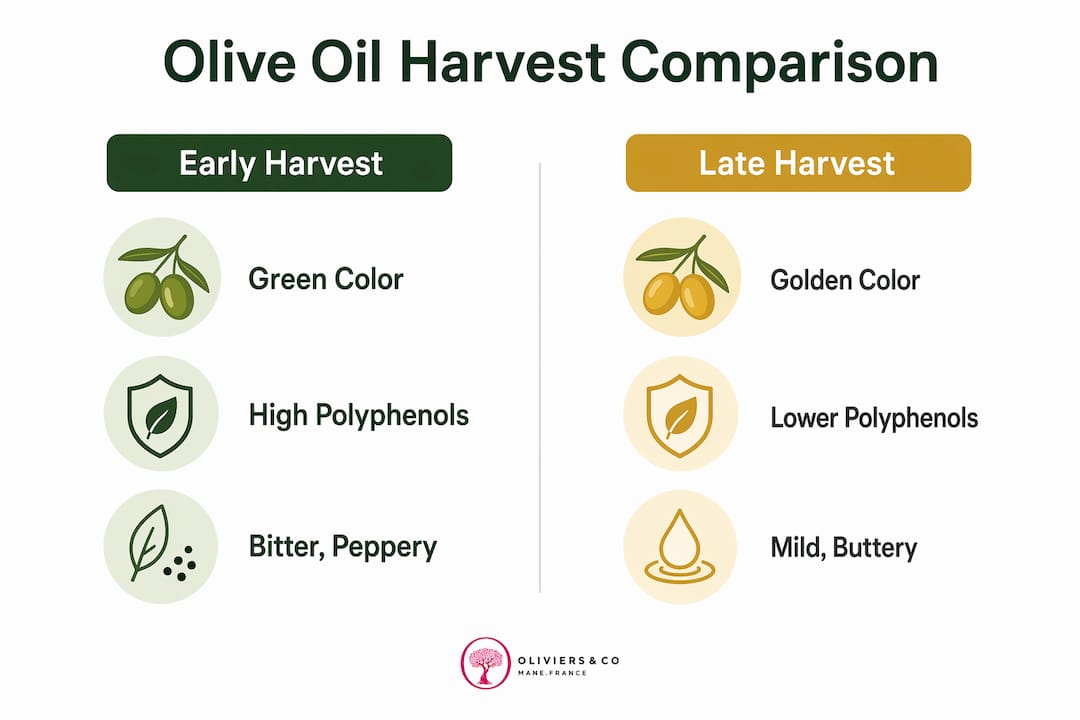
Early harvest olive oil tastes nothing like the mild, buttery oils many people associate with Mediterranean cooking. The green colour and grassy aromas are direct results of the pigments and chemical composition of less ripe olives. Expect fresh-cut grass, green tomato, artichoke, and sometimes a faint herbal note reminiscent of fresh basil.

The two sensations that surprise first-time tasters are bitterness and a peppery finish at the back of the throat. Both are quality markers, not flaws. Bitterness and pepperiness signal high polyphenol content and freshness. An oil that tastes flat and neutral has almost certainly lost its polyphenols through age, heat, or poor storage.
| Characteristic | Early harvest olive oil | Standard (late harvest) olive oil |
|---|---|---|
| Colour | Vivid green to golden green | Golden yellow |
| Aroma | Grassy, herbaceous, green tomato | Mild, fruity, sometimes buttery |
| Bitterness | Pronounced | Low to absent |
| Peppery finish | Strong, lingering | Faint or absent |
| Polyphenol level | High | Lower |
| Best use | Finishing, dressings, raw applications | Cooking, baking, general use |
Terroir and olive variety add further nuance. Oils from Slovenian Istrian varieties such as Istrska Belica carry a particularly intense peppery finish, while Arbequina from Spain tends towards a softer, more almond-like bitterness. Neither is superior in absolute terms. The right choice depends on what you are cooking and how bold you want the flavour to be.
Pro Tip: Pour a small amount into a glass, warm it in your palm, and inhale before tasting. The heat releases volatile aromatics that reveal the oil’s full character far better than tasting it cold from a spoon.
What are the health benefits of early harvest olive oil?
The health case for early harvest EVOO rests almost entirely on polyphenols. These are naturally occurring plant compounds that act as antioxidants inside the body, neutralising free radicals that damage cells and contribute to chronic disease. Polyphenols reduce markers of oxidative stress by up to 30%, a finding that places high-polyphenol oils firmly in the category of functional foods rather than mere cooking fats.
The key benefits supported by research include:
- Cardiovascular protection. Polyphenols reduce LDL oxidation, which is the process that makes “bad” cholesterol harmful to artery walls. Regular consumption of polyphenol-rich olive oil is associated with lower rates of cardiovascular events in Mediterranean populations.
- Anti-inflammatory effects. Oleocanthal, a specific polyphenol found in early harvest oils, inhibits the same inflammatory enzymes targeted by ibuprofen, though at lower intensity.
- Antioxidant defence. Vitamin E, present alongside polyphenols, works synergistically to protect cell membranes from oxidative damage.
- Longer shelf stability. Polyphenols act as natural preservatives, protecting the oil itself from rancidity and extending its useful life compared to later harvest oils.
“The antioxidant power of polyphenols in early harvest olive oil does not just benefit the person consuming it. It also protects the oil from oxidation, meaning a well-stored bottle retains its health properties far longer than a standard supermarket oil.”
Standard olive oils made from fully ripe fruit contain fewer polyphenols because the compounds degrade as the fruit matures. This is the core nutritional argument for choosing an early harvest oil when health is the priority. The role of polyphenols in EVOO goes well beyond flavour. It is the difference between an oil that actively supports your health and one that is simply a cooking fat.
How should you store early harvest olive oil?
Storage determines how long an early harvest oil retains its character. Even the finest oil degrades quickly when exposed to the wrong conditions. The enemies are light, heat, and air. Each one accelerates oxidation and strips the oil of its polyphenols and aromatic compounds.
Follow these storage practices to protect your investment:
- Use dark glass bottles. Light exposure drives photo-oxidation, which breaks down polyphenols and turns the oil rancid. Clear glass or plastic containers offer no protection.
- Keep it cool and dark. A kitchen cupboard away from the hob is ideal. Avoid windowsills, countertops near the oven, or any spot that receives direct sunlight.
- Seal the bottle after every use. Air contact oxidises the oil progressively. A tight cap or stopper slows this process significantly.
- Use within 6–8 weeks of opening. Once opened, even a well-stored oil begins to lose its volatile aromatics. Buy in a size you will finish within that window.
- Check for signs of oxidation. A rancid oil smells of old wax, crayons, or stale nuts. If you notice any of these aromas, the oil has turned and should not be used for finishing dishes.
For detailed guidance on keeping your oil at its best, Terracenturia’s EVOO preservation advice covers every stage from purchase to the last pour.
Key takeaways
Early harvest olive oil delivers superior polyphenol content, bolder flavour, and greater health benefits than standard olive oil, provided it is produced quickly, stored correctly, and consumed fresh.
| Point | Details |
|---|---|
| Harvest timing is critical | Olives picked in october or november, while still green, yield the highest polyphenol levels. |
| Process within 24 hours | Delays beyond 24 hours after picking degrade polyphenols and raise acidity. |
| Bitterness signals quality | A peppery, bitter finish confirms high polyphenol content and freshness, not a defect. |
| Store in dark glass | Light and heat are the primary causes of oxidation; dark glass and cool storage preserve the oil. |
| Polyphenols protect health | High-polyphenol oils reduce oxidative stress markers and support cardiovascular health. |
Why I think most people are buying early harvest oil for the wrong reasons
Most people who seek out early harvest olive oil do so because they have read that it is “healthier.” That is true, but it is also the least interesting reason to choose it. The flavour is where the real argument lives.
I have tasted dozens of oils across multiple harvest years, and the ones that stay with me are not the ones with the highest polyphenol count on the lab report. They are the ones where the peppery finish builds slowly and then catches you off guard, or where the grassy aroma is so vivid it genuinely smells like standing in an olive grove in october. That sensory experience is what early harvest oil is actually about.
The health benefits are real and well documented. But if you approach this oil purely as a supplement, you will miss the point. Use it raw. Drizzle it over a bowl of white beans, a plate of burrata, or a thick slice of sourdough with good salt. The flavour compounds that make it healthy are the same ones that make it extraordinary to eat. Treat it like a finishing condiment, not a cooking fat, and you will understand immediately why producers go to such lengths to harvest early and press fast.
The growing consumer interest in high-polyphenol olive oils is encouraging, but I hope it does not reduce these oils to a wellness product. The best early harvest oils are genuinely delicious. That should be the first reason to seek them out.
— Mak
Terracenturia’s early harvest EVOO: quality you can taste and measure
Terracenturia produces cold-pressed, early harvest extra virgin olive oil from Slovenian Istria, with a polyphenol content of 1,371 mg/kg. That figure places it well above the threshold that qualifies as high-polyphenol under European health claim standards. Every batch is processed within the critical 24-hour window after picking, and the oil is bottled in dark glass to protect its compounds from the moment it leaves the press. For anyone serious about both flavour and nutritional quality, Terracenturia’s premium early harvest EVOO is a direct expression of everything this article describes. Read more about the organic selection process behind each bottle.
FAQ
What is early harvest olive oil?
Early harvest olive oil is extra virgin olive oil made from olives picked in october or november before they fully ripen, resulting in higher polyphenol content and a bolder, more peppery flavour than standard olive oils.
How does early harvest differ from late harvest olive oil?
Early harvest oils are greener, more bitter, and richer in polyphenols. Late harvest oils, made from fully ripe olives, are milder and golden in colour but contain fewer antioxidants.
Why is early harvest olive oil more expensive?
Hand-harvesting green olives yields less oil per kilogram of fruit than harvesting ripe olives. The rapid processing requirement and premium quality standards also add to the cost.
How long does early harvest olive oil last?
An unopened bottle stored in a cool, dark place retains its quality for up to 18 months from pressing. Once opened, use it within 6–8 weeks for the best flavour and nutritional value.
Is bitterness in olive oil a sign of poor quality?
No. Bitterness and a peppery finish are positive quality indicators that confirm high polyphenol content. A flat, odourless oil is far more likely to be of poor quality.