TL;DR:
- Extra virgin olive oil is produced solely by mechanical means from fresh olives and is high in polyphenols and oleic acid. It is suitable for most cooking methods, including sautéing, roasting, and frying, when used properly to avoid degradation. Using EVOO raw as a finishing oil or in dressings preserves its flavor, aroma, and nutritional benefits, especially its polyphenol content.
Extra virgin olive oil, commonly known as EVOO, is defined by the International Olive Council as oil produced solely by mechanical means from fresh olives, with a free acidity below 0.8%. It is the least processed form of olive oil and the richest in polyphenols and oleic acid. Most home cooks know EVOO as a salad drizzle, but the ways to use EVOO extend far beyond that. This guide covers the healthiest cooking methods, finishing techniques, creative applications, and storage habits that protect both flavour and nutrition.
1. What are the healthiest ways to use EVOO in cooking?
EVOO suits most home cooking methods. Its smoke point of 190–210°C covers sautéing, roasting, and shallow frying without degrading the oil. That range dispels the persistent myth that EVOO is unsuitable for cooking.
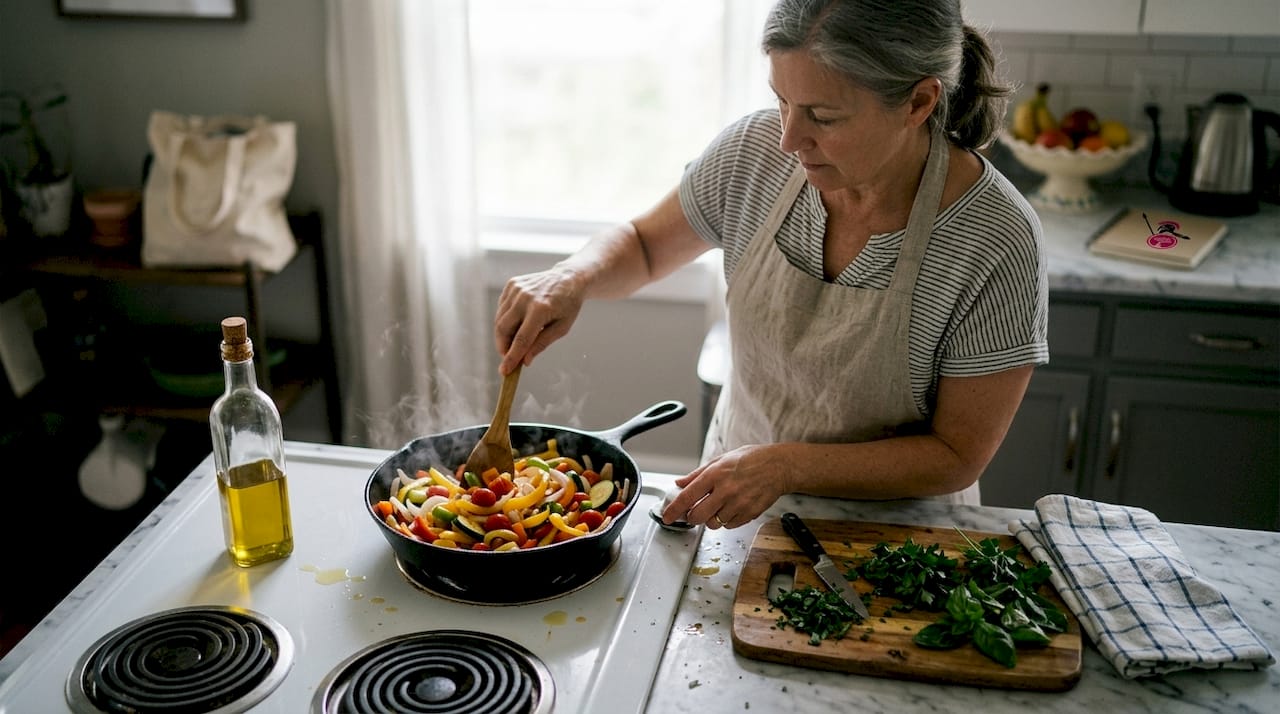
The oil’s stability comes from its composition. Oleic acid at roughly 75% and a dense polyphenol profile give EVOO greater heat resistance than most refined seed oils. Polyphenols act as natural antioxidants that slow oxidation during cooking.
The single most damaging mistake home cooks make is adding oil to a screaming hot pan. Adding oil to a cold pan and warming it gradually prevents rapid degradation and preserves both flavour and nutritional value. That one habit change protects the oil’s quality every time you cook.
EVOO also holds up across multiple uses when managed correctly. Frying with EVOO allows 3–5 reuse cycles, with degradation depending on food moisture and residue left in the oil. Filter the oil after each use and store it in a sealed container away from light.
Pro Tip: Keep two bottles of EVOO in your kitchen. Use a mid-priced bottle for everyday cooking and reserve a high-polyphenol finishing oil for raw applications. This two-bottle system, recommended by culinary professionals, protects the aromatics and antioxidants of your premium oil.
2. How to use EVOO as a finishing oil
Raw EVOO delivers the full force of its aroma, bitterness, and polyphenol content. Finishing dishes with a drizzle just before serving is one of the most effective uses for extra virgin olive oil because heat has not touched the oil’s volatile compounds.
Classic finishing applications include:
- Grilled vegetables drizzled immediately off the heat
- Soups and stews finished at the table
- Fresh bread dipped in EVOO with sea salt
- Aged cheeses paired with a peppery, grassy oil
- Salad dressings built on EVOO as the primary fat
Polyphenols enhance flavour complexity and deliver antioxidant protection that is most potent when the oil is consumed raw. The characteristic bitterness and peppery finish you taste in a quality EVOO are direct signals of high polyphenol content.
Mediterranean culinary tradition has long separated cooking oils from finishing oils. A robust, peppery Istrian or Sicilian EVOO used raw on a plate of white beans or grilled fish is a deliberate flavour decision, not an afterthought.
“Timing the addition of olive oil shapes the entire flavour architecture of a dish. A finishing drizzle is not decoration. It is the final seasoning that ties every element together.” — Terumi Morita, culinary writer on Mediterranean cooking
Pro Tip: When selecting a finishing EVOO, taste for three qualities: fruitiness (fresh grass or green tomato), bitterness (a sign of polyphenols), and peppery heat at the back of the throat (a sign of oleocanthal). A good single-origin EVOO will show all three.
3. EVOO in salad dressings and cold preparations
EVOO in salad dressings is the most straightforward raw application, but the technique matters. A basic vinaigrette uses a 3:1 ratio of EVOO to acid (lemon juice or vinegar). Whisking vigorously creates a temporary emulsion that coats leaves evenly.
Cold preparations preserve every polyphenol and aromatic compound in the oil. Tabbouleh, fattoush, and Greek salad all rely on EVOO as the primary dressing fat. The oil carries fat-soluble vitamins from vegetables directly into the body. EVOO enhances absorption of fat-soluble vitamins A, D, E, and K when included in raw dishes alongside vegetables. That nutritional function makes EVOO in salads more than a flavour choice.
Yoghurt-based dressings also benefit from EVOO. Stir a tablespoon into plain Greek yoghurt with garlic and lemon for a quick dip or sauce. The oil adds richness without overpowering the yoghurt’s tang. Pairing EVOO with seasonal produce amplifies both the nutritional value and the flavour of cold preparations.
4. Creative uses for EVOO beyond cooking
EVOO works in contexts most home cooks have not tried. The oil’s fat content and mild to robust flavour profile make it adaptable across sweet and savoury applications.
| Application | Benefit | Flavour impact |
|---|---|---|
| Drizzled over porridge or yoghurt | Adds healthy fats and slows glucose absorption | Mild, nutty richness |
| Stirred into hummus | Improves texture and extends shelf life | Grassy, smooth finish |
| Used in baking (cakes, breads) | Replaces butter for a moist crumb | Subtle fruity note |
| Mixed into marinades | Carries fat-soluble aromatics into meat or vegetables | Deepens herb and spice flavour |
| Added to smoothies | Boosts healthy fat intake | Nearly undetectable at 1 tablespoon |
Baking with EVOO is particularly underused. Replacing butter with EVOO in a lemon cake or focaccia produces a tender crumb and a faint fruitiness that butter cannot replicate. Use a mild, low-bitterness EVOO for sweet baking and a more assertive oil for savoury breads.
EVOO in coffee is a growing trend in specialty cafés. A teaspoon stirred into black coffee adds body and a slight richness. Use a delicate, buttery EVOO rather than a peppery one to avoid clashing with the coffee’s bitterness.
5. Expert tips for maximising EVOO’s nutritional and culinary value
Storage is the most neglected part of EVOO use. Light, heat, and oxygen are the three enemies of oil quality. Proper storage means a dark glass bottle or tin, kept in a cool cupboard away from the hob.
Key habits that protect EVOO quality:
- Bring ingredients to room temperature before cooking to avoid thermal shock that degrades the oil rapidly
- Buy in quantities you will use within 3–4 months of opening to avoid polyphenol degradation over time
- Check the harvest date on the label, not just the best-before date, for genuine freshness
- Discard reused oil that has turned dark, foams excessively, or smells rancid
- Store away from strong-smelling foods, as EVOO absorbs odours through its fat molecules
Pro Tip: Watch how your EVOO behaves when it first hits a warm pan. Fresh, high-quality oil produces small, even bubbles. Excessive foaming from the start is a sign the oil has degraded or been reused too many times. Trust that visual cue before you taste anything.
EVOO is also a superior carrier for fat-soluble vitamins, making it worth including in meals that contain vitamins A, D, E, or K. That function is most effective when the oil is used raw or added at the end of cooking, where polyphenols remain intact.
Key takeaways
The most effective approach to using EVOO is to match the oil’s quality and character to the cooking method, using a workhorse bottle for heat and a high-polyphenol oil for raw finishing.
| Point | Details |
|---|---|
| Cook within safe temperature limits | EVOO retains antioxidants up to 190°C, covering most home cooking methods safely. |
| Use a two-bottle system | Keep one EVOO for cooking and one premium oil for finishing to protect aromatics and polyphenols. |
| Finish dishes raw for maximum nutrition | Drizzling EVOO after cooking preserves polyphenols and delivers the full flavour profile. |
| Store correctly to extend shelf life | Keep EVOO in a dark, airtight container away from heat and use within 3–4 months of opening. |
| Expand beyond the obvious | EVOO works in baking, dressings, dips, marinades, and even porridge for a healthy fat boost. |
Why I think most home cooks are wasting their best EVOO
The most common mistake I see is using a premium, high-polyphenol EVOO for frying onions. That is not a crime, but it is a waste. Heat destroys the volatile aromatics that make a great finishing oil worth its price. The bitterness, the peppery finish, the grassy fruitiness: all of that disappears in a hot pan.
My own habit is simple. I keep a mid-range EVOO next to the hob and a bottle of Terracenturia’s Istrian EVOO in the cupboard for finishing. The difference on a plate of roasted tomatoes or a bowl of lentil soup is not subtle. It is the difference between a dish that tastes cooked and one that tastes alive.
I have also found that exploring regional EVOO varieties changes how you think about food pairing entirely. A Slovenian Istrian oil with its assertive bitterness works differently on grilled fish than a buttery Ligurian oil. Neither is wrong. Both are deliberate choices once you know what you are tasting for.
The health side is real too. Since I started using a high-polyphenol EVOO raw every day, whether on bread, stirred into yoghurt, or finishing a salad, I notice I reach for processed fats far less. The oil is satisfying in a way that refined fats are not. That is the oleic acid and the polyphenols doing exactly what the research says they do.
— Mak
Terracenturia’s EVOO: built for every use in this guide
Terracenturia specialises in high-polyphenol organic EVOO from Slovenian Istria, an area with a centuries-long tradition of olive cultivation. The oils are produced using cold-press methods that preserve the polyphenol content and the full aromatic profile. Whether you are looking for a finishing oil with genuine bitterness and complexity, or a monovarietal EVOO with traceable origin and consistent character, Terracenturia’s range covers both. Every bottle is produced with the cooking and finishing applications in this guide in mind.
FAQ
Can you cook with EVOO at high temperatures?
EVOO’s smoke point sits at 190–210°C, which covers sautéing, roasting, and shallow frying safely. Its oleic acid and polyphenol content make it more heat-stable than most refined seed oils.
How many times can you reuse EVOO for frying?
EVOO can be reused 3–5 times when filtered and stored correctly after each use. Discard the oil if it turns dark, foams heavily, or smells rancid.
What is the best way to use EVOO raw?
Drizzle high-polyphenol EVOO over finished dishes, salads, soups, or bread just before serving. Raw use preserves the full polyphenol content and delivers the strongest flavour.
How should EVOO be stored at home?
Store EVOO in a dark glass bottle or tin in a cool cupboard, away from heat and light. Use within 3–4 months of opening to retain freshness and polyphenol potency.
Does EVOO help with vitamin absorption?
EVOO enhances the absorption of fat-soluble vitamins A, D, E, and K when included in meals alongside vegetables or other nutrient-rich foods.