
Finding authentic extra virgin olive oil can feel challenging for discerning food lovers who value both taste and health. The difference comes down to strict production standards and preservation of delicate, antioxidant-rich polyphenols. Extra virgin olive oil is obtained solely through mechanical or physical means without heat or chemicals, which ensures peak freshness and flavor while protecting the compounds your body needs. This introduction clarifies why premium, traditionally crafted oils offer superior benefits for those who prioritize wellness and gourmet quality.
Table of Contents
- What Defines Extra Virgin Olive Oil
- Polyphenols and Antioxidant Benefits Explained
- Organic Production and Traditional Craftsmanship
- How EVOO Compares to Other Cooking Oils
- Common Pitfalls in Selecting EVOO
Key Takeaways
| Point | Details |
|---|---|
| Quality Standards for EVOO | Extra Virgin Olive Oil must be mechanically extracted without heat or chemicals, with free acidity below 0.8%, ensuring superior flavor and health benefits. |
| Polyphenol Benefits | EVOO is rich in polyphenols, which act as powerful antioxidants, supporting heart health, reducing inflammation, and protecting brain function. |
| Importance of Freshness | Check the harvest date; EVOO is best consumed within 4-6 months of pressing for maximum antioxidant levels. |
| Avoiding Misleading Labels | Look for authentic labeling such as ‘extra virgin,’ avoid clear bottles, and seek organic or PDO certifications to ensure quality. |
What Defines Extra Virgin Olive Oil
Extra virgin olive oil (EVOO) stands apart as the highest quality grade available. The distinction matters because it determines both flavor potential and antioxidant content, making it the choice for health-conscious consumers.
EVOO is obtained solely through mechanical or physical means, without solvents or re-esterification. No heat. No chemicals. This gentle extraction preserves the delicate compounds that give EVOO its health benefits.
Free acidity tells a crucial story about quality. The International Olive Oil Council defines EVOO as having free acidity of 0.8% or lower (measured as oleic acid). Lower acidity means fresher olives, better handling, and superior flavor.
Key Defining Characteristics
EVOO must meet strict criteria to earn its classification:
- Mechanical extraction only – no solvents, heat processing, or chemical treatments
- Zero sensory defects – no rancid, musty, or off flavors when professionally tasted
- Acidity below 0.8% – indicates freshness and proper olive condition at pressing
- Specific physicochemical properties – meeting exact standards for peroxide value and UV absorption
These standards exist because flavor and antioxidant compounds are fragile. Heat destroys them. Chemicals compromise purity. Refined processes strip away the very elements that make EVOO valuable for your health.
How It Differs From Virgin Olive Oil
Virgin olive oil seems similar, but there’s a critical difference. Virgin allows minor sensory defects and higher acidity—sometimes up to 2%. The extraction method remains mechanical, but quality control is less stringent.
For antioxidant impact specifically, EVOO’s stricter standards matter. Fresher olives (indicated by lower acidity) retain more polyphenols. The no-heat requirement preserves these heat-sensitive compounds.
Real freshness requires mechanical extraction without heat—this is what protects the antioxidants your body needs.
Why This Definition Protects Your Investment
When you purchase EVOO labeled to international standards, you’re getting verified quality. The definition isn’t marketing language—it’s a legal classification enforced by regulatory bodies worldwide.
Cheaper oils labeled “pure olive oil” or “light olive oil” undergo refinement processes that eliminate defects by removing flavor and nutrients. They’re commodity products, not functional foods.
True EVOO retains the character of the olives. Tasting notes like grassy, peppery, or buttery indicate polyphenol-rich oils. These flavor compounds are antioxidants working for your health.

Pro tip: Check the harvest date on your bottle—EVOO pressed within 4-6 months of purchase contains peak polyphenol levels, making it genuinely worth the premium price for health-conscious consumers.
Polyphenols and Antioxidant Benefits Explained
Polyphenols are the superstars hiding inside extra virgin olive oil. These natural plant compounds work as powerful antioxidants, protecting your cells from damage caused by free radicals and oxidative stress.
EVOO contains more than 20 types of polyphenols, each contributing different health benefits. This variety matters—your body responds better to multiple antioxidant compounds working together than a single isolated substance.
Think of polyphenols as microscopic bodyguards. Free radicals (unstable molecules created during metabolism and exposure to pollution) damage healthy cells. Polyphenols neutralize these threats before they cause inflammation, aging, and disease.
How Polyphenols Work in Your Body
When you consume EVOO rich in polyphenols, these compounds are absorbed and distributed throughout your system. They reduce oxidative stress at the cellular level, calming inflammation that underlies heart disease, cancer, and cognitive decline.
The anti-inflammatory effect is where the real magic happens:
- Heart protection – polyphenols help maintain healthy cholesterol and blood vessel function
- Cancer risk reduction – antioxidant activity prevents DNA damage that leads to malignant cell growth
- Brain health – compounds cross the blood-brain barrier, protecting neurons from degeneration
- Metabolic support – reduced inflammation improves glucose regulation and insulin sensitivity
Freshly pressed EVOO delivers maximum polyphenol impact. The longer oil sits on a shelf, the more these delicate compounds degrade, especially when exposed to light or heat.
Why EVOO Beats Other Antioxidant Sources
You might wonder why olive oil specifically deserves attention when antioxidants exist in berries, nuts, and supplements. The answer lies in bioavailability and synergy.
Polyphenols in EVOO are naturally preserved through mechanical pressing without chemical treatments, keeping them structurally intact. Your digestive system recognizes and absorbs them efficiently.
Many antioxidant supplements provide isolated compounds in megadoses that your body actually cannot absorb effectively. EVOO delivers polyphenols in natural ratios, exactly as they evolved in olives—your body knows how to handle them.
The combination of polyphenol variety and natural food matrix makes EVOO uniquely effective for sustained antioxidant protection.
Real Health Outcomes
These aren’t theoretical benefits. Studies link regular EVOO consumption to measurably lower inflammation markers, improved lipid profiles, and reduced cardiovascular disease risk. Mediterranean populations consuming EVOO daily show dramatically lower cancer rates compared to populations eating refined oils.
Your daily choice of cooking oil directly impacts whether your cells are under antioxidant protection or oxidative stress.
Pro tip: Purchase EVOO with a recent harvest date (within the current year) and store bottles in a cool, dark place away from heat and light to preserve polyphenol content at peak levels for maximum antioxidant benefit.
Organic Production and Traditional Craftsmanship
Organic production and traditional craftsmanship work together to create EVOO that’s genuinely worth your investment. This isn’t just marketing—it’s a commitment to both quality and sustainability that directly impacts the antioxidants in your bottle.
Traditional production emphasizes mechanical extraction without heat or chemicals, preserving natural flavors and the compounds that make olive oil healthy. This method has been refined over centuries in regions like Slovenian Istria, where families pass down knowledge across generations.
Organic farming removes synthetic pesticides and fertilizers from the equation. Healthier soil produces healthier olive trees. Healthier trees yield olives packed with more polyphenols—the antioxidants your body needs.
The Synergy Between Organic and Traditional Methods
Organic and traditional aren’t redundant—they complement each other perfectly.
- No synthetic chemicals – organic standards prohibit pesticides that could accumulate in oil
- Mechanical pressing only – traditional methods avoid heat damage to antioxidants
- Soil biodiversity – organic farms support beneficial microorganisms that strengthen plants
- Hand-harvested olives – careful picking prevents bruising that triggers oxidation
- Small-batch processing – traditional operations process quickly to preserve freshness
Mass-produced oils use industrial extraction methods with heat, solvents, and refinement steps. These processes strip away flavor and nutrients to create a homogenized product. Organic, traditionally produced oils retain character because they’re handled gently at every stage.
Why Craftsmanship Matters More Than Scale
Small producers who follow traditional methods make decisions that industrial operations ignore. They monitor fermentation carefully. They know their olives personally—understanding when each grove reaches peak ripeness. They adjust pressing techniques based on olive variety and harvest conditions.
This attention to detail translates directly to your health. A traditionally crafted oil from a single small harvest contains measurably higher polyphenol levels than oil blended from dozens of harvests and refined for consistency.
Craftsmanship also means transparency. You can often trace your bottle back to specific groves, specific harvest dates, and specific families who grew the olives.
True craftsmanship means prioritizing quality over volume—each bottle reflects decisions made for excellence, not convenience.
The Sustainability Story
Organic, traditionally produced oils support ecosystems rather than depleting them. Synthetic inputs create dependency and soil degradation. Traditional methods with organic certification build soil health year after year, making vineyards more resilient to climate stress.
When you choose organic, traditionally crafted EVOO, you’re voting for agricultural practices that will sustain olive groves for the next generation.
Pro tip: Look for oils with specific harvest dates and producer information on the label—transparency about sourcing and production methods indicates genuine commitment to quality over mass production.
How EVOO Compares to Other Cooking Oils
When you’re standing at the grocery store comparing oil options, the differences go far deeper than price. Most cooking oils are refined commodities stripped of nutrients. EVOO is fundamentally different—and the antioxidant impact is measurable.
Extra virgin olive oil is unrefined and produced through mechanical means, preserving antioxidants and polyphenols that refining processes destroy. Sunflower oil, canola oil, and vegetable oil undergo high-heat refinement that strips away beneficial compounds to create neutral flavor and extended shelf life.
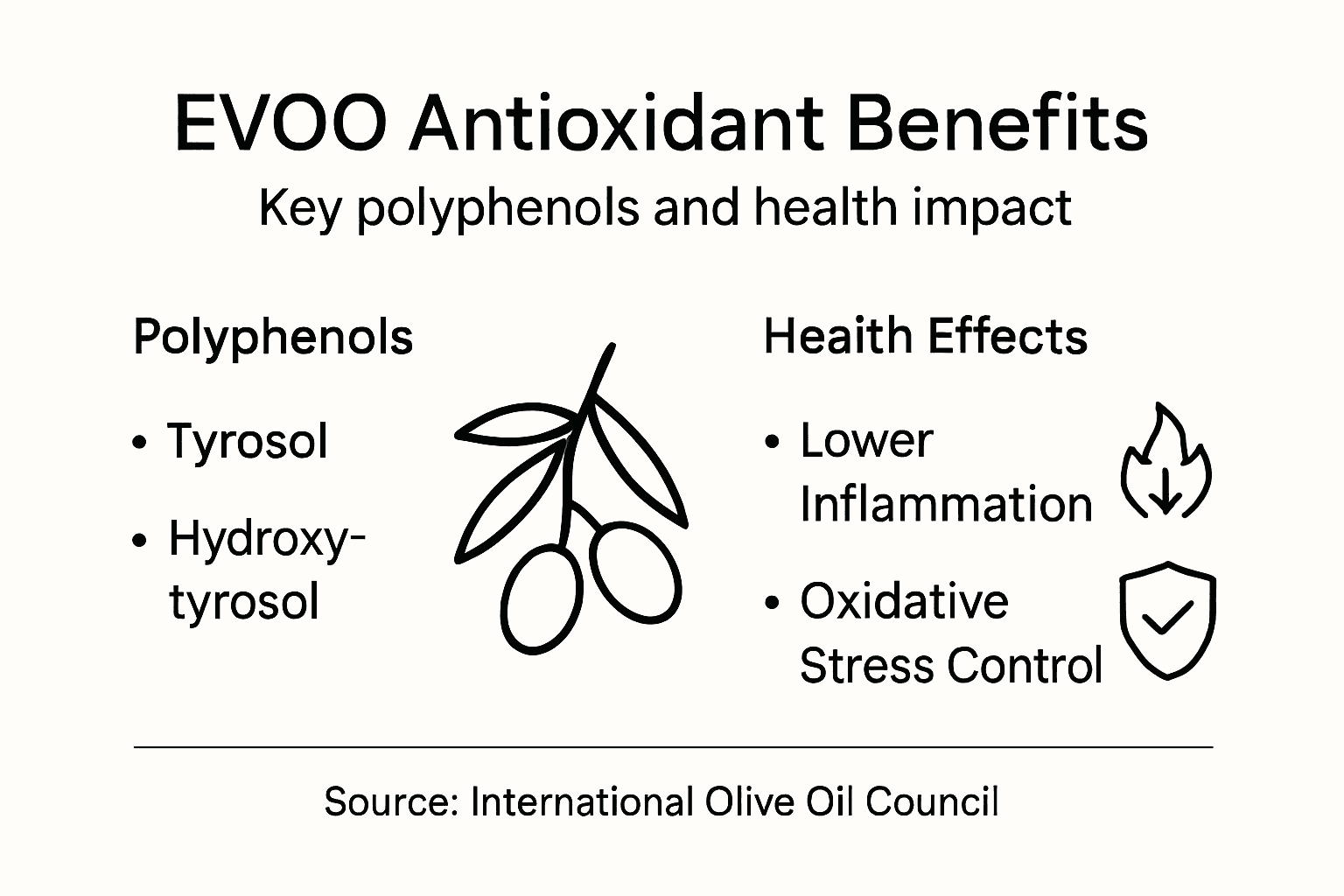
You’re not just choosing a cooking medium—you’re choosing whether your daily meals provide antioxidant protection or deliver oxidized fats that increase inflammation.
The Refinement Problem
Refined oils sound clean, but the process is harsh. Seeds or beans are heated, pressurized, and treated with solvents to extract maximum oil. Bleaching and deodorization follow to remove flavor and color. What remains is a shelf-stable product devoid of polyphenols.
EVOO skips this entire process. Mechanical pressing at low temperatures keeps bioactive compounds intact.
EVOO vs. Common Cooking Oils
Here’s what separates EVOO from typical kitchen staples:
- Sunflower oil – refined, high in omega-6, lacks polyphenols entirely
- Canola oil – often genetically modified, refined, minimal antioxidants
- Vegetable oil – mixed source refined oils with inflammatory omega-6 ratios
- Coconut oil – high in saturated fat, no polyphenol content
- EVOO – minimally processed, polyphenol-rich, monounsaturated fats
The health outcome isn’t subtle. Regular consumption of refined oils increases inflammation markers. EVOO consumption measurably reduces them.
Here’s how extra virgin olive oil compares to other common cooking oils:
| Oil Type | Extraction Method | Main Antioxidant Content | Composition Highlights |
|---|---|---|---|
| Extra Virgin Olive | Mechanical, no heat/chemicals | High polyphenol levels | Rich in monounsaturated fats |
| Sunflower | High-heat, refined | Very low to none | High in omega-6 |
| Canola | Refined, often with chemicals | Minimal antioxidants | Moderate omega-3, omega-6 |
| Vegetable Blend | Mixed, refined | Negligible | High in polyunsaturated fats |
| Coconut | Refined or virgin | No polyphenols | High in saturated fats |
Monounsaturated Fats Matter Too
Beyond polyphenols, EVOO offers superior health benefits from its monounsaturated fat profile and rich antioxidant content. These fats support cardiovascular health and work synergistically with polyphenols to reduce inflammation.
Refined oils are loaded with polyunsaturated fats (especially omega-6), which become pro-inflammatory when oxidized during processing and cooking.
The Smoke Point Advantage
Contrary to old advice, EVOO has adequate smoke point for most cooking. It handles sautéing, roasting, and even low-to-medium pan frying without breaking down. The antioxidants actually provide protection against oxidation during gentle heating.
For high-heat frying, refined oils damage themselves chemically. EVOO’s polyphenols defend against that damage.
Refined oils cost less upfront but compromise your cellular health—EVOO’s antioxidant investment pays dividends in reduced inflammation and disease risk.
Pro tip: Reserve EVOO for finishing dishes and lower-heat cooking where its polyphenols remain fully active, maximizing the antioxidant benefit your body receives per tablespoon.
Common Pitfalls in Selecting EVOO
Most people buying EVOO make the same mistakes. They grab whatever bottle looks fancy, trust marketing claims, and end up with oxidized oil that’s lost most of its antioxidants. Avoiding these pitfalls protects your investment and ensures you’re actually getting health benefits.
The Clear Bottle Problem
Light is the enemy of polyphenols. Authentic EVOO should be packaged in dark glass that protects against UV exposure and oxidation.
Clear and green bottles look appealing on shelves, but they’re letting light degrade your oil every single day. By the time you buy it, significant polyphenol loss has already occurred. Dark glass or tinted bottles preserve freshness and antioxidant potency.
Missing Harvest Dates and Origin Information
If a bottle lacks a harvest date, walk past it. EVOO without traceability is usually old oil blended from multiple sources and seasons. Freshness determines polyphenol content.
Legitimate producers proudly display:
- Harvest date – shows when olives were pressed
- Origin information – identifies specific regions or groves
- Producer name – allows you to research their reputation
- Certification marks – organic, protected designation, quality seals
These details indicate transparency and accountability. They’re how you verify you’re buying genuine EVOO, not commodity oil masquerading as premium.
The following table summarizes common pitfalls to avoid when purchasing EVOO:
| Pitfall | Why It Matters | How to Avoid |
|---|---|---|
| Clear or light bottles | Light degrades polyphenols | Only buy dark glass bottles |
| Missing harvest dates | Old oil loses benefits | Choose bottles with clear date |
| Vague labeling terms | May indicate refined oil | Look for ‘extra virgin’ only |
| No origin/producer listed | Harder to verify quality | Prefer transparent producers |
| No certifications | Might lack official standards | Seek organic or PDO seals |
Beware of Misleading Marketing Terms
“First press” sounds premium, but it’s meaningless marketing. Modern mechanical pressing extracts oil in a single process, so “first” or “cold press” labels don’t describe actual production methods.
Terms like “pure olive oil,” “light olive oil,” and “olive oil blend” are intentionally vague. They signal refined or blended products lacking polyphenols. True EVOO is simply labeled “extra virgin olive oil.”
Storage and Age Issues
Old oil loses polyphenols continuously. EVOO stays optimal for about 18 months from harvest under proper conditions. Bottles sitting in warehouse heat or on sunny shelves degrade rapidly.
Check the harvest date. If it’s more than two years old, polyphenol levels have dropped significantly. Fresher oil costs more but delivers measurable antioxidant impact.
The Certification Gap
Not all labels with quality claims are verified. Look for specific certifications:
- Protected Designation of Origin (PDO)
- Organic certification
- International Olive Council awards
These require third-party testing. Marketing claims alone mean nothing.
Misleading labels and old oils are widespread—your scrutiny at purchase directly determines whether you get antioxidant benefits or just expensive vegetable oil.
Pro tip: Before purchasing, photograph the label details including harvest date, producer name, and certifications; compare multiple bottles to identify the freshest, most transparent option with genuine quality markers.
Discover the Antioxidant Power of Authentic Extra Virgin Olive Oil
Choosing the right extra virgin olive oil can feel overwhelming with so many options that lack true freshness, transparency, and antioxidant content. This article highlights the critical difference true EVOO makes for your health including superior polyphenol levels, minimal acidity, and traditional mechanical extraction without heat or chemicals. If you are searching for an organic, antioxidant-rich EVOO that delivers genuine wellness benefits crafted with care and expertise, your journey starts here.
Explore premium EVOO produced in Slovenian Istria, where centuries of traditional craftsmanship meet sustainable organic farming to protect and amplify the natural antioxidants your body needs. Only the freshest oils with clear harvest dates and authentic sourcing make it to our collection. Experience the difference yourself by visiting Terra Centuria and learn more about what makes our oils exceptional. Dont settle for less when you can elevate your health and culinary experience with every drop.
Start your wellness journey now by choosing EVOO proven for antioxidant impact at Terra Centuria. Discover detailed production stories and health insights that deepen your appreciation for this functional superfood. Visit Terra Centuria and make your next purchase a true investment in quality and well-being.
Frequently Asked Questions
What is extra virgin olive oil (EVOO)?
Extra virgin olive oil (EVOO) is the highest quality olive oil made from olives that have been mechanically pressed without the use of heat or chemicals, preserving its flavor and health benefits.
How does EVOO differ from regular olive oil?
EVOO has stricter standards, including a lower acidity level of 0.8% or less and no sensory defects. Regular olive oil may allow for higher acidity and minor defects and is often refined, losing valuable antioxidants.
What are the health benefits of consuming EVOO?
EVOO is rich in polyphenols, powerful antioxidants that help protect against oxidative stress, reduce inflammation, and lower the risk of chronic diseases such as heart disease and cancer.
How should I store EVOO to maintain its quality?
Store EVOO in a cool, dark place away from heat and light to preserve its delicate antioxidants and prevent degradation. Opt for bottles made of dark glass to protect it from light exposure.
Recommended
- High Polyphenol Olive Oil: Unlocking Potent Health Benefits – Terra Centuria
- Polyphenolic Olive Oil: Unlocking Its Antioxidant Power – Terra Centuria
- 6 Types of Olive Oil and How to Choose the Healthiest – Terra Centuria
- 7 Essential Olive Oil Quality Markers for Health Benefits – Terra Centuria
- Antioxidants for Sporting Dogs: Guide
- Antioxidants in Dog Food – Why Quality Matters