
Finding the right organic extra virgin olive oil in a crowded marketplace can feel overwhelming—even for the most dedicated gourmet. With so many labels promising purity, health, and flavor, only true premium oils meet the standards set by the International Olive Council, which defines extra virgin quality with free acidity below 0.8% and absolute freshness. Understanding what separates truly exceptional oils from the rest helps you prioritize antioxidant-rich options that deliver both remarkable taste and measurable health benefits.
Table of Contents
- Step 1: Define Your Organic EVOO Requirements
- Step 2: Research Reputable Producers And Certifications
- Step 3: Evaluate Product Quality And Antioxidant Content
- Step 4: Sample And Verify Taste And Aroma
- Step 5: Confirm Sustainability And Traceability
Quick Summary
| Important Insight | Detailed Explanation |
|---|---|
| 1. Define Your Quality Criteria | Clarify personal requirements for organic EVOO to ensure you select the right product tailored to your needs. |
| 2. Research Reliable Producers | Investigate producers with accolades and certifications to validate their commitment to quality and sustainability. |
| 3. Evaluate Antioxidant Levels | Look for key indicators like polyphenol content and free acidity to guarantee high-quality nutritional benefits. |
| 4. Experience Taste and Aroma | Taste is crucial; evaluate oils personally to confirm their quality beyond what labels can convey. |
| 5. Verify Sustainability and Traceability | Ensure transparency in the production chain to align purchases with personal values and quality expectations. |
Step 1: Define your organic EVOO requirements
Before you start hunting for that perfect bottle, clarify what “premium organic” actually means to you. This foundation shapes every decision you’ll make moving forward and saves you from settling for oils that look good but don’t deliver.
Start by understanding the baseline standards. Premium EVOO demands specific chemical composition and sensory properties that distinguish it from regular olive oil. The International Olive Council sets strict requirements including free acidity below 0.8% and the absence of defects, ensuring you’re getting oil produced purely through mechanical or physical means with zero chemical processing.
Consider your specific priorities:
- Health benefits – Are you seeking high antioxidant content for wellness?
- Culinary use – Will this oil finish dishes, cook, or blend into preparations?
- Flavor profile – Do you prefer buttery and mild, or grassy and peppery?
- Production ethics – How important are specific farming practices beyond basic organic certification?
- Freshness requirements – Do you need oil from a particular harvest year?
Your answers to these questions become your personal quality checklist. Someone prioritizing antioxidants has vastly different requirements than someone seeking a versatile cooking oil. Define this upfront and you’ll recognize the right oil immediately when you find it.
Understanding what makes olive oil organic gives you deeper insight into certification standards that protect your investment. Organic certification goes beyond marketing language—it represents measurable commitments to soil health, pest management without synthetic chemicals, and production transparency.
Write down your top three non-negotiables. This creates accountability and prevents impulse purchases based on beautiful labeling or aggressive marketing.
Your requirements act as a filter, keeping you focused on oils that genuinely match your needs rather than settling for whatever looks premium on the shelf.
Pro tip: Create a personal scorecard with your five most important criteria ranked by importance, then rate each potential oil against it—this systematic approach prevents the confusion that hits when you’re standing in front of twenty beautiful bottles.
Step 2: Research reputable producers and certifications
Not all organic olive oils are created equal. You need to know which producers consistently deliver the quality you’re after and what certifications actually guarantee your standards.
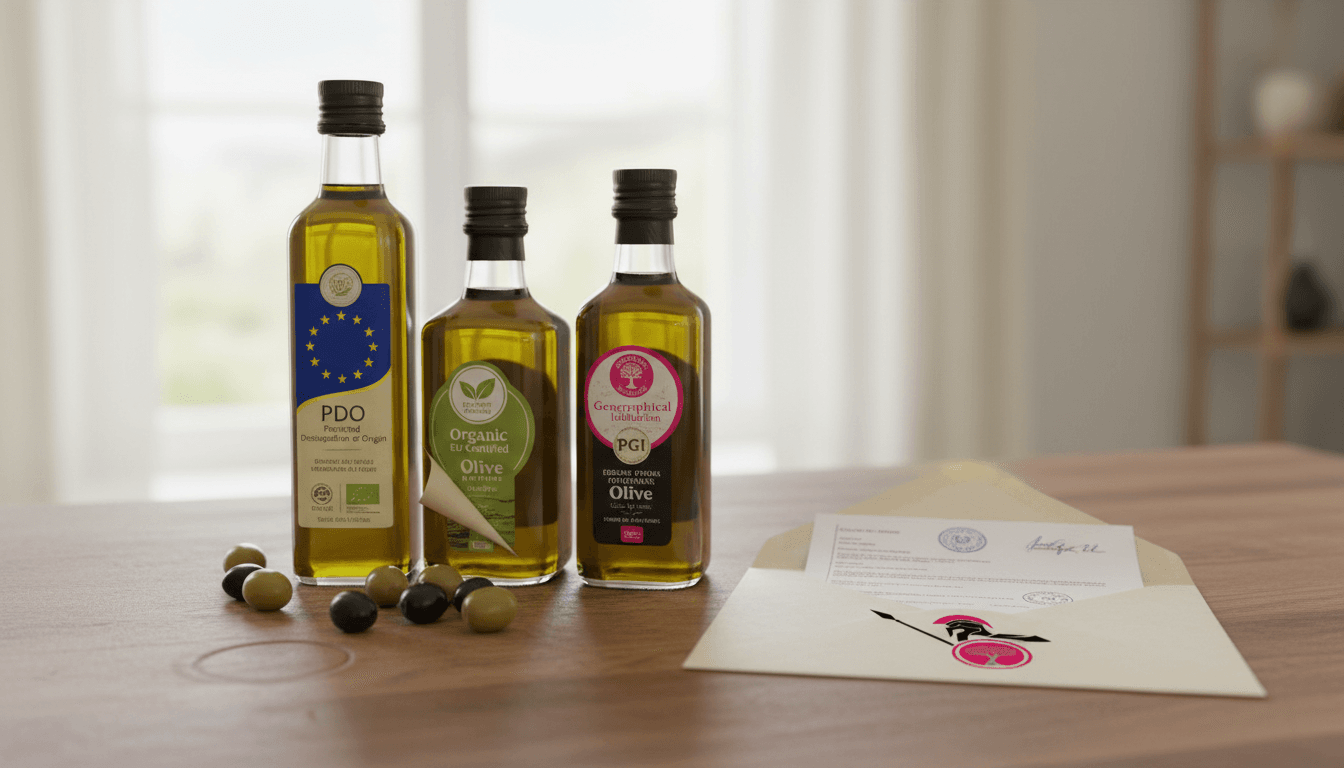
Start by checking international olive oil competitions that rank top producers. These competitions test oils against the strictest standards and verify authenticity across organic categories. Top producers from Spain, Italy, and Croatia regularly earn recognition for exceptional organic EVOO quality. Their consistent wins signal reliability and commitment to excellence.
When evaluating producers, look for these verification markers:
- Competition awards from reputable organizations like the International Olive Council or World’s Best Olive Oils rankings
- Third-party certifications beyond basic organic labels—look for EU organic seals, USDA organic, or regional designations
- Transparency about harvest dates and production methods on product labels
- Producer heritage and family history, which often correlates with quality standards
- Direct sourcing information that traces oil back to specific regions or estates
Don’t assume that every organic label means premium quality. Organic certification addresses farming practices but doesn’t guarantee taste, freshness, or antioxidant levels. A producer might technically be organic yet still sell mediocre oil. This is why competition recognition matters—it adds an extra layer of verification that goes beyond paperwork.
Research producer websites and look for detailed information about their cultivation methods, harvest timing, and quality control processes. Producers confident in their product openly share this information. If you can’t find specifics about how they make their oil or when they harvested it, that’s a red flag.
Award-winning producers aren’t just lucky—they’ve proven their commitment to quality through repeated recognition under rigorous international standards.
Pro tip: Visit producer websites and social media to see if they document their harvest season, share tasting notes, or provide batch information—transparency signals a producer who stands behind their product.
Step 3: Evaluate product quality and antioxidant content
This is where your selection gets scientific. Premium organic EVOO should deliver measurable antioxidant benefits alongside exceptional taste, and you need to know what to look for on labels and in actual product composition.
The most critical markers of premium quality are antioxidant compounds like polyphenols and tocopherols that provide health benefits and improve shelf stability. High antioxidant capacity directly correlates with superior EVOO quality. These bioactive compounds also contribute to anti-aging effects, which explains why health-conscious consumers specifically seek oils with documented polyphenol content.
When evaluating specific oils, examine these quality indicators:
- Free acidity levels below 0.8% (lower is better)
- Polyphenol content measured in milligrams per kilogram (look for 250+ mg/kg for premium oils)
- Peroxide value indicating freshness and proper storage
- Harvest date on the label (fresher oils have higher antioxidant content)
- Storage conditions mentioned in product descriptions or websites
Don’t rely solely on marketing claims. Request third-party testing results or certifications that verify antioxidant levels. Reputable producers provide this information willingly because it supports their premium pricing. If a producer won’t share specifics about polyphenol content or quality metrics, that’s a significant warning sign.
Comparative analysis matters too. Organic farming practices and conventional methods can produce oils with varying antioxidant profiles, but premium organic oils should consistently outperform basic organic alternatives. Storage conditions significantly impact antioxidant stability over time, so check how the producer handles their oil before it reaches you.
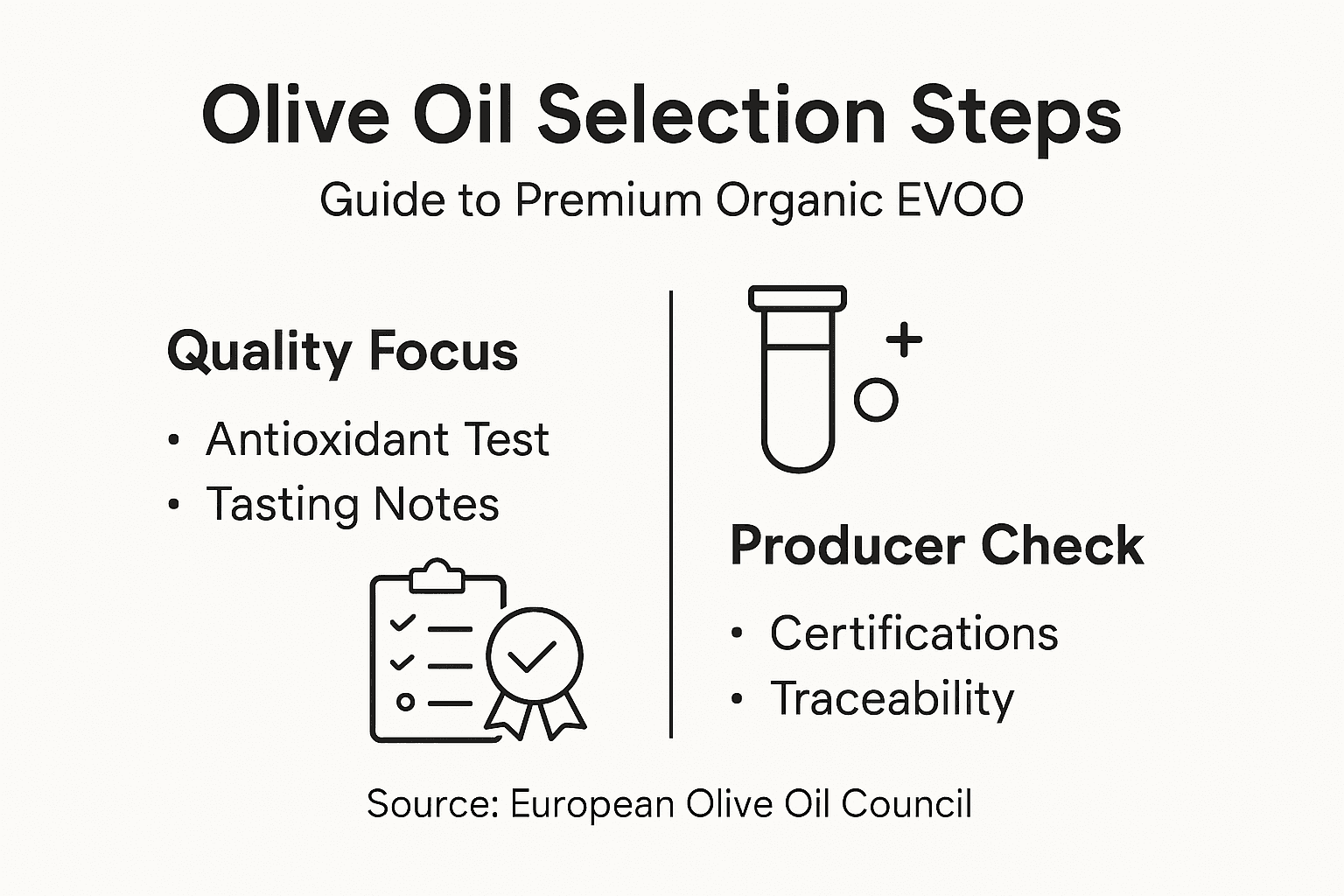
Look for oils that provide tasting notes alongside quality metrics. The best producers combine scientific verification with sensory description, giving you both objective proof of quality and subjective guidance on flavor characteristics.
Here is a summary of key criteria for identifying premium organic EVOO:
| Evaluation Aspect | What to Look For | Why It Matters |
|---|---|---|
| Free Acidity | Below 0.8% | Indicates top-quality extraction |
| Polyphenol Content | 250+ mg/kg | Higher antioxidants for wellness |
| Authentic Certification | EU/USDA/Regional organic labels | Verifies organic and sustainable production |
| Competition Recognition | Awards from reputable competitions | Confirms excellence and reliability |
| Transparency | Harvest dates, producer details | Shows commitment to freshness and traceability |
Premium antioxidant content isn’t just a wellness marketing term—it’s a measurable compound that improves both your health benefits and the oil’s shelf life.
Pro tip: Contact producers directly and ask for polyphenol testing results or third-party certifications—quality producers respond quickly and thoroughly, while mediocre ones often avoid the question.
Step 4: Sample and verify taste and aroma
Your palate is your final quality control. Tasting premium organic EVOO reveals qualities that no label can fully communicate, and learning to evaluate what you’re experiencing ensures you’re getting genuine premium quality.
Professional olive oil tasting follows standardized organoleptic assessment methods established by the International Olive Council since the 1980s. Expert panels evaluate oils for the absence of sensory defects and intensity of fruitiness. You don’t need to be a sommelier to apply these principles, but understanding what experts look for transforms your personal tasting experience.
When sampling an oil, follow this sequence:
- Pour a small amount into a glass or tasting bowl, ideally at room temperature
- Observe the color and clarity—quality oils should be bright and transparent
- Smell first by bringing the glass close to your nose and noting aromas like grass, almond, apple, or pepper
- Take a small sip and let it coat your mouth before swallowing
- Notice the finish, especially any peppery sensation at the back of your throat (a sign of quality antioxidants)
Premium organic EVOO should taste fresh and vibrant, never flat or musty. Look for distinct flavor characteristics rather than bland neutrality. Grassy, buttery, peppery, nutty, or fruity notes all indicate quality, depending on the oil’s origin and harvest timing. Defects like mustiness, vinegar taste, or rancid flavor signal problems with production or storage.
Taste multiple oils side by side when possible. Comparison clarifies what distinguishes premium from mediocre. A truly exceptional oil will stand out immediately. If you’re unsure whether an oil tastes good, trust that instinct—premium quality should be obvious.
Quality olive oil announces itself through your senses before any label information matters.
Pro tip: Taste oils on neutral foods like plain bread or apple slices to isolate the oil’s flavor profile without food interactions clouding your perception.
Step 5: Confirm sustainability and traceability
You’re almost at the finish line. Before making your final selection, verify that the oil’s production chain is transparent and sustainable. This ensures your purchase aligns with your values and guarantees authentic quality.
Look for European organic certification with regular audits and traceability systems that guarantee farm-to-bottle transparency. The EU organic logo indicates strict production regulations, third-party certification, and mandatory testing for purity and sensory attributes. This systematic approach protects both quality and sustainability across the entire supply chain.
When evaluating traceability, check for these specific markers:
- EU organic logo or equivalent regional certification clearly displayed on the label
- Producer name and location that you can verify through independent research
- Harvest date or vintage year indicating freshness and batch specificity
- Processing information describing how the oil was extracted and stored
- Contact details allowing you to reach the producer directly with questions
- Third-party certifications beyond basic organic status, such as awards or specialty designations
Real traceability means you can follow the oil backward. You should know which farm it came from, when it was harvested, how it was processed, and how it was stored. Producers confident in sustainability practices share this information willingly on their websites and labels.
Ask yourself a simple question: Can I contact this producer if I have concerns? Legitimate producers respond to consumer inquiries because they stand behind their products. If contact information is difficult to find or producers ignore questions, that’s a red flag about their commitment to transparency.
Sustainability extends beyond organic certification. Look for producers who discuss soil health, water conservation, biodiversity practices, or community engagement. These details reveal a commitment to long-term environmental stewardship rather than just meeting minimum organic standards.
Here is a comparison of sustainability and traceability practices in organic olive oil production:
| Practice | Description | Impact on Product |
|---|---|---|
| Farm-to-Bottle Tracing | Documented supply chain from field to shelf | Ensures authenticity and freshness |
| Third-Party Audits | Regular certification inspections | Maintains consistent quality standards |
| Environmental Actions | Soil, water, and biodiversity initiatives | Supports long-term ecosystem health |
| Producer Accessibility | Easy-to-find contact information | Facilitates consumer trust and feedback |
True sustainability means accountability at every step, from soil to your table.
Pro tip: Visit producer websites and search for their certifications, awards, and farm details before purchasing—transparent producers make this information prominently visible and easy to access.
Discover Premium Organic EVOO That Meets Your Exacting Standards
Selecting truly premium organic extra virgin olive oil can feel overwhelming when faced with confusing labels and unverified claims. You want oil with guaranteed high polyphenol content, transparent farm-to-bottle traceability, and authentic flavor that matches your wellness and culinary goals. Our article on the Organic Olive Oil Selection Process for Premium Quality highlights how identifying critical factors like antioxidant levels, awards, and sustainability helps you avoid settling for mediocre oils.
At Terra Centuria, we bring you exceptional organically grown EVOO from Slovenian Istria crafted through natural methods and traditional expertise. Every bottle undergoes rigorous quality control ensuring superior free acidity, rich antioxidants, and detailed transparency about harvest and production. Explore our selection at Terra Centuria to experience oils that truly deliver on their promise of wellness and flavor. To deepen your understanding of organic olive oil benefits and certification, visit Understanding What Makes Olive Oil Organic. Ready to taste authenticity backed by science and tradition Visit us now and elevate your healthy lifestyle with premium EVOO.
Frequently Asked Questions
How do I define my organic EVOO requirements for premium quality?
To determine your organic Extra Virgin Olive Oil (EVOO) requirements, clarify your priorities such as health benefits, culinary use, flavor profile, production ethics, and freshness needs. Write down your top three non-negotiables to guide your selection process.
What should I look for in reputable producers of organic olive oil?
Evaluate producers based on their awards in international competitions, third-party certifications, and transparency regarding harvest dates and production methods. Research their heritage and direct sourcing information to ensure reliability and quality.
How can I assess the antioxidant content of olive oil I’m considering?
Check labels for key quality indicators like free acidity below 0.8% and polyphenol content of 250 mg/kg or higher. Request third-party testing results if they’re not listed, as reputable producers typically provide this information willingly.
What are the steps to effectively taste and evaluate organic EVOO?
Pour a small amount of oil into a glass, observe its color, smell for aroma notes, and then taste it to assess flavor and finish. Focus on the presence of vibrant, distinct flavors, as premium oils should not taste flat or musty.
Why is confirming sustainability and traceability important in olive oil selection?
Confirming sustainability and traceability ensures the oil’s production chain aligns with your values and guarantees authentic quality. Look for clear documentation from farm to bottle and accessible information about the producer to validate their practices.
How do I create a systematic approach for selecting premium organic olive oil?
Develop a personal scorecard ranking your top five criteria by importance, then rate each potential oil against this list. This structured method will help prevent confusion and impulsive choices when faced with multiple options.