TL;DR:
- Single origin olive oil comes from olives grown in one distinct region, reflecting its unique terroir and flavor. It usually has higher polyphenol levels and offers transparency about its provenance, unlike blended oils. Using it raw enhances flavor and health benefits, making it ideal for finishing dishes.
Single origin olive oil is produced exclusively from olives grown in one identifiable place, capturing the unique character of that region’s soil, climate, and cultivar. Most shoppers reach for a bottle without considering where the olives came from or how that origin shapes what ends up on their plate. That gap matters. Understanding why single origin olive oil matters puts you in control of both the flavour you experience and the health benefits you actually receive. The difference between a traced, single origin extra virgin olive oil (EVOO) and a generic blend is not subtle. It is the difference between tasting a place and tasting a formula.
Why single origin olive oil matters: terroir, flavour, and quality
Single origin olive oil acts as a spotlight on a specific ecosystem. Soil composition, altitude, proximity to the sea, rainfall, and sunlight exposure all shape the oil’s aromatic compounds and antioxidant content. That means two oils made from the same cultivar, grown just 50 kilometres apart, can taste entirely different. This concept is called terroir, a term borrowed from wine but equally applicable to olive oil.

Terroir is not marketing language. It describes a measurable reality. An olive grove in coastal Slovenian Istria, for example, benefits from the Adriatic’s moderating influence, mineral-rich limestone soils, and strong bora winds that stress the trees into producing more concentrated compounds. Those conditions produce oils with a distinct peppery finish and high polyphenol levels that a grove in a warmer, flatter region simply cannot replicate.
Harvest timing adds another layer of complexity:
- Early harvest (green stage): Produces oils with a grassy, bitter, and peppery character. Early-harvest olives yield oils rich in polyphenols compared to later pickings.
- Mid harvest: Balances fruitiness with moderate bitterness, offering a rounder profile.
- Late harvest (ripe stage): Yields softer, buttery oils with lower antioxidant content and a shorter shelf life.
Each stage produces a genuinely different product. A single origin oil tells you exactly which stage was chosen and why.
Pro Tip: When reading a label, look for a harvest date rather than just a best-before date. The harvest date tells you how fresh the oil actually is, which directly affects both flavour and polyphenol concentration.
How does single origin differ from blended olive oil?
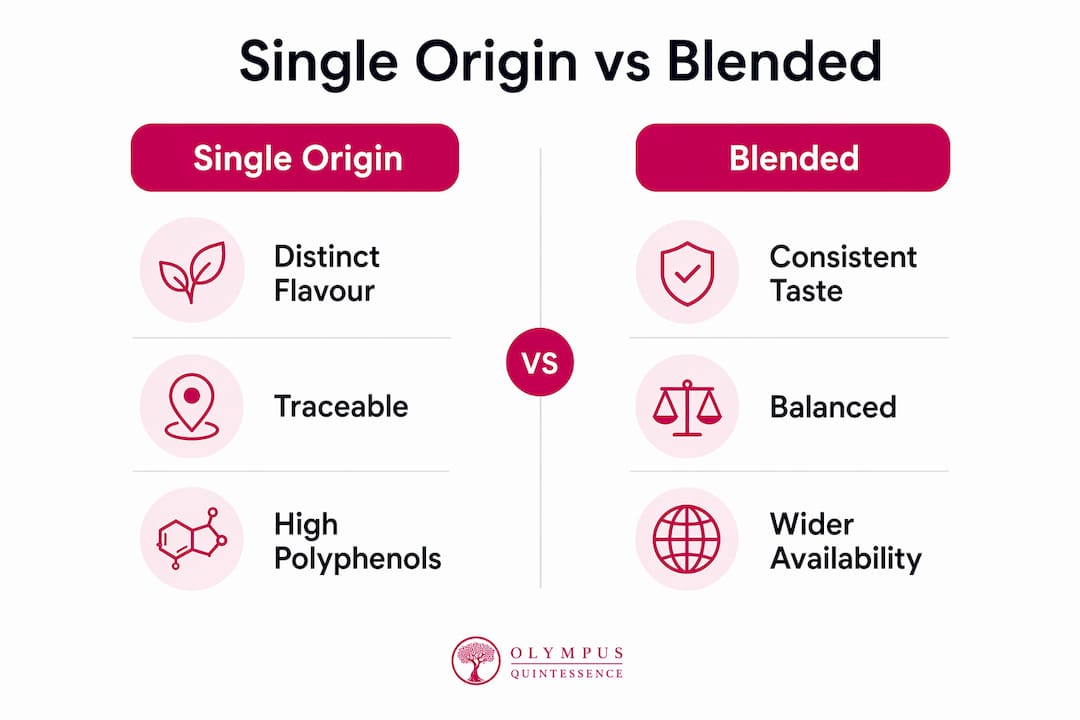
Blended olive oils combine oils from multiple origins or cultivars to achieve consistency and balance across batches. That consistency is genuinely useful for high-volume cooking where a neutral, predictable flavour is the goal. The trade-off is that blending erases the distinctive character that makes a great oil memorable.
Single origin oils offer clearer traceability and express a specific place’s character more vividly than any blend can. For consumers who care about provenance, that transparency is not a luxury. It is the baseline for making an informed choice. The same principle applies across the food and beverage world. In specialty coffee, for instance, single origin differs from blends in exactly the same way: one tells a specific story, the other smooths differences away.
| Feature | Single origin EVOO | Blended olive oil |
|---|---|---|
| Flavour profile | Distinct, place-specific character | Consistent, neutral to mild |
| Traceability | Full provenance to farm or region | Multiple, often unlisted origins |
| Polyphenol levels | Typically higher, cultivar-dependent | Variable, often diluted |
| Best culinary use | Finishing, dressings, dipping | General cooking, frying |
| Label transparency | Harvest date, cultivar, region | Minimal origin detail |
The table above shows that neither category is objectively superior for every purpose. A blended oil has its place in a busy kitchen. A single origin EVOO earns its place at the table, poured over food just before serving, where its complexity can be fully appreciated.
For buyers who want to go deeper on what qualifies as genuinely premium, the guide on what defines gourmet olive oil sets out the criteria clearly.
What are the health benefits of single origin EVOO?
The health case for single origin extra virgin olive oil rests on polyphenols and antioxidants. These natural compounds contribute to anti-inflammatory and heart health advantages, and their concentration in any given oil depends directly on cultivar, environment, and harvest timing. Single origin oils, because they come from a known place and a specific harvest window, give you a far more reliable indication of what you are actually consuming.
The key compounds to understand are:
- Oleocanthal: A polyphenol with anti-inflammatory properties comparable in mechanism to ibuprofen, found in higher concentrations in early-harvest, high-altitude oils.
- Oleuropein: Linked to cardiovascular protection and blood pressure regulation. Levels drop significantly as olives ripen, which is why harvest timing matters so much.
- Hydroxytyrosol: One of the most potent antioxidants found in olive oil, associated with protecting cells from oxidative stress.
Single origin oils’ health benefits stem from polyphenol and antioxidant levels that are closely tied to cultivar and environment. A blended oil sourced from multiple regions and harvested at varying stages cannot guarantee those levels with the same confidence. For a deeper look at how these compounds work, the polyphenol benefits guide from Terracenturia explains the science without the jargon.
Statistic to note: Terracenturia’s single origin EVOO from Slovenian Istria registers at 1,371 mg/kg of polyphenols. That figure places it well above the threshold considered high-polyphenol by European Food Safety Authority standards, which sets the benchmark for health claims at 250 mg/kg per 20g serving.
How to select, store, and use single origin olive oil
Choosing a genuine single origin oil requires reading the label with some scepticism. Many bottles use vague language like “product of the EU” or “packed in Italy,” which tells you nothing about where the olives actually grew. Look for these specific details:
- Named region or farm: The label should state a specific place, not just a country.
- Cultivar listed: Knowing the olive variety (such as Bianchera, Frantoio, or Leccino) tells you what flavour profile and polyphenol range to expect.
- Harvest date: Freshness degrades over time. An oil harvested in october and consumed by the following spring is at its peak. Avoid oils with only a best-before date and no harvest information.
- Certification: Look for organic certification or PDO (Protected Designation of Origin) status, which legally ties the oil to a specific geographical area and production method.
The organic olive oil evaluation guide from Terracenturia walks through each of these criteria in practical detail.
Storage is equally important. Proper storage in cool, dark places preserves single origin olive oil’s flavour and antioxidant qualities. Heat and light are the two fastest routes to degradation. Keep your oil away from the hob and out of direct sunlight. A dark cupboard or a pantry shelf away from heat sources is ideal. Avoid the fridge, which can cause cloudiness, though the oil recovers at room temperature without damage.
For culinary use, single origin EVOO is ideally used as a finishing oil to showcase its aroma and complexity. Pour it over grilled fish, fresh tomatoes, burrata, or a bowl of soup just before serving. Using it raw preserves the volatile aromatic compounds that high heat destroys. For pairing ideas that bring out the best in specific oils, the practical flavour guide from Terracenturia is worth bookmarking.
Pro Tip: Taste your single origin oil on its own before using it in a dish. Dip a piece of plain bread or simply sip a small spoonful. You will notice the bitterness and peppery finish at the back of the throat, which are signs of high polyphenol content, not a flaw.
Key takeaways
Single origin olive oil delivers superior flavour clarity, traceable provenance, and higher polyphenol concentrations than blended alternatives, making it the better choice for both culinary and wellness purposes.
| Point | Details |
|---|---|
| Terroir shapes quality | Soil, altitude, and climate directly determine an oil’s flavour and antioxidant profile. |
| Harvest timing is critical | Early-harvest oils contain more polyphenols; later harvests produce softer, less nutritious oils. |
| Traceability protects you | A named farm, cultivar, and harvest date are the minimum markers of a genuine single origin oil. |
| Store correctly | Keep oil in a cool, dark place away from heat to preserve both flavour and health compounds. |
| Use as a finishing oil | Add single origin EVOO raw or at the end of cooking to retain its aroma and polyphenol content. |
The part most people overlook about single origin oils
I have tasted a lot of olive oil over the years, and the single most common mistake I see is treating single origin EVOO like a cooking fat rather than an ingredient with its own voice. People heat it hard, store it next to the hob, and wonder why it tastes flat by february. The oil is not the problem. The handling is.
What genuinely changed my perspective was tasting a high-polyphenol oil from Slovenian Istria alongside a standard supermarket blend. The difference was not subtle. The single origin oil had a grassy, almost green-herb sharpness on the nose, followed by a clean bitterness and a long peppery finish that sat at the back of the throat for a full minute. The blend tasted of nothing in particular. That experience is repeatable, and it is the most persuasive argument for choosing single origin EVOO that I know of.
The provenance question also matters more than most people realise. Consumers choose single origin oils for clarity on provenance and authenticity, and that instinct is well-founded. When a label names a specific farm and harvest date, you are not just buying flavour. You are buying accountability. The producer cannot hide behind a blend. That transparency, in my view, is what separates a serious oil from a commodity product.
I do keep a blended oil in the kitchen for high-heat cooking. There is no shame in that. But the single origin bottle lives on the table, not in the cupboard, because it earns its place in every meal it touches.
— Mak
Terracenturia’s single origin EVOO: provenance you can taste
Terracenturia produces high-polyphenol organic EVOO from Slovenian Istria, a region with a centuries-old tradition of olive cultivation and some of the most mineral-rich soils in the Adriatic basin. Their oil registers at 1,371 mg/kg of polyphenols, placing it among the most antioxidant-dense EVOOs available. Every bottle carries a named origin, a specific harvest date, and full certification. The selection and production process prioritises early-harvest fruit, cold extraction, and minimal intervention to preserve the oil’s natural compounds. For anyone serious about both flavour and wellness, Terracenturia’s single origin EVOO is a direct expression of what this article describes: a specific place, a specific harvest, and a measurable nutritional profile.
FAQ
What is single origin olive oil?
Single origin olive oil is produced exclusively from olives grown in one identifiable place, often a single farm or defined region. This ensures the oil reflects the terroir of that specific environment rather than a blend of multiple sources.
Is single origin olive oil healthier than blended?
Single origin EVOO typically contains higher and more consistent levels of polyphenols and antioxidants, because the cultivar, environment, and harvest timing are all controlled and known. Blended oils offer variable polyphenol levels that are harder to verify.
How do I know if an olive oil is genuinely single origin?
Look for a named farm or region, a specific cultivar, and a harvest date on the label. Certification such as PDO status or organic accreditation adds further verification that the oil’s origin is legally protected.
Why does harvest timing affect polyphenol levels?
Early-harvest olives produce oils richer in polyphenols than olives picked at full ripeness. As olives mature, polyphenol content decreases while fruitiness increases, so harvest timing is a direct lever on the oil’s nutritional profile.
Can I cook with single origin olive oil?
Single origin EVOO is best used raw or as a finishing oil to preserve its aroma and polyphenol content. For high-heat cooking, a standard extra virgin or refined olive oil is more practical and cost-effective.