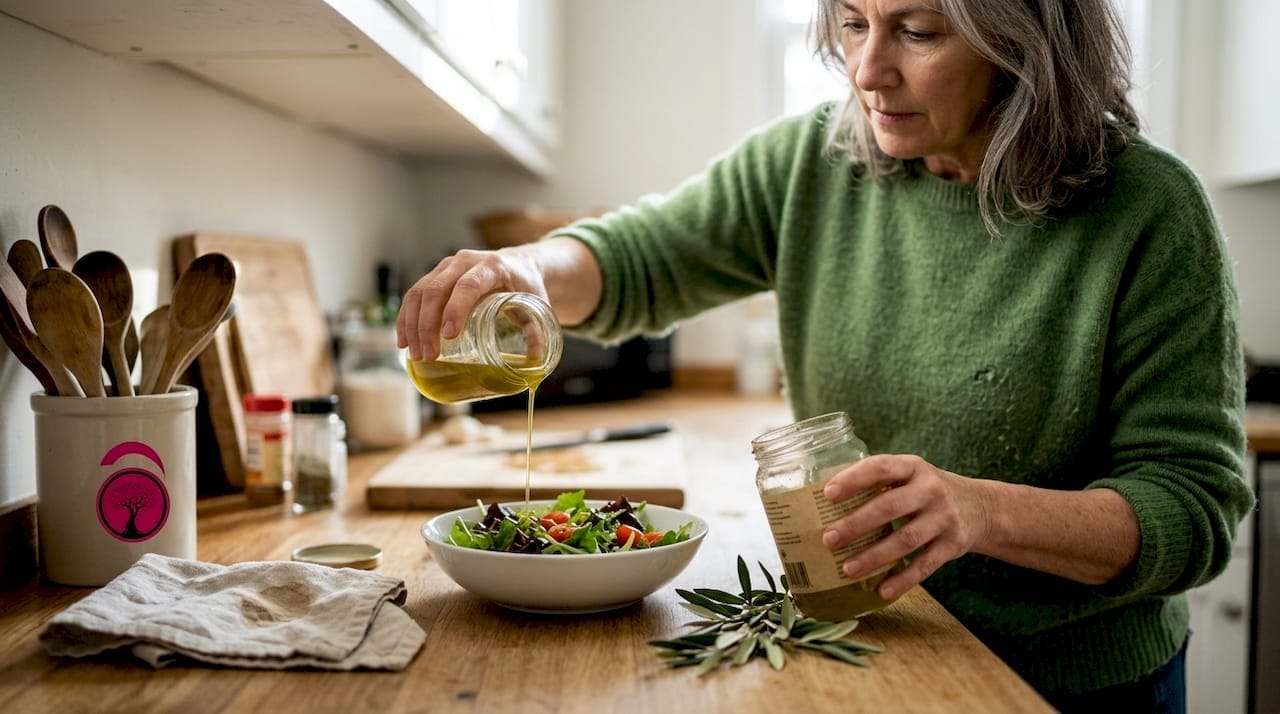
Most people reach for the clearest bottle on the shelf, assuming a bright, golden oil signals purity and quality. That instinct is understandable but scientifically backwards. Unfiltered extra virgin olive oil (EVOO) retains naturally occurring micro-particles, sediment, and polyphenols that protect blood lipids from oxidative stress. These compounds are partly removed during filtration, meaning the cloudier bottle you passed over may actually be the healthier choice. This article walks you through the science, breaks down the filtered versus unfiltered debate, and gives you practical tools to find and use the most nutritious olive oil available.
Table of Contents
- What makes unfiltered olive oil unique?
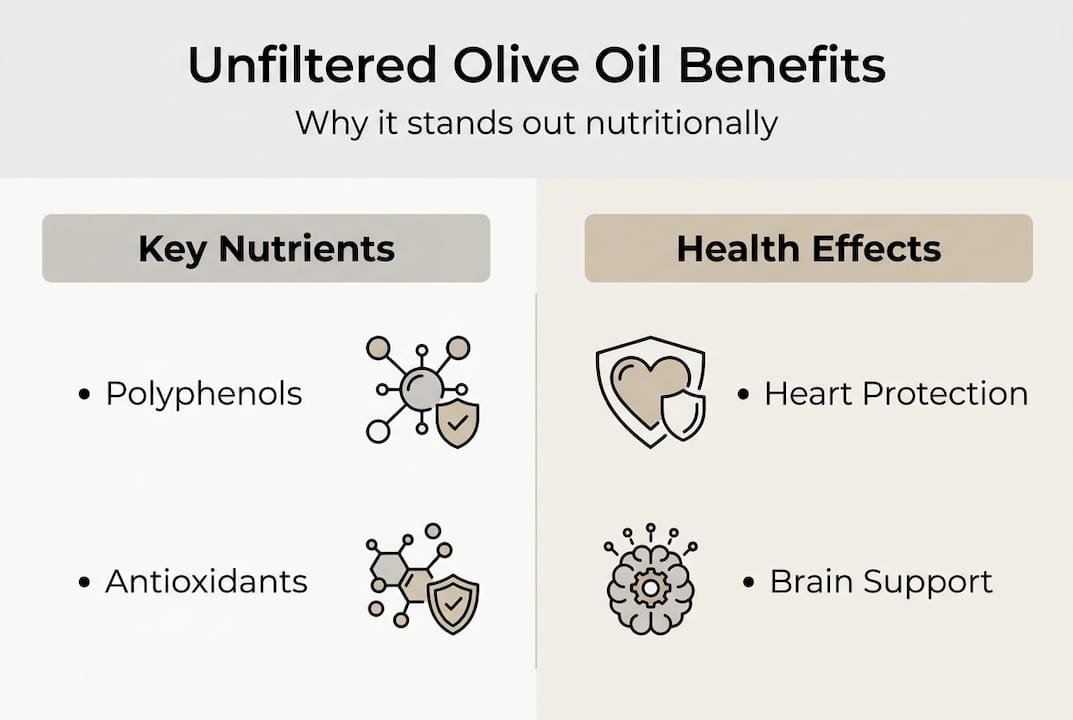
- Health benefits of polyphenols in unfiltered olive oil
- Filtered vs unfiltered: Does clarity equal health?
- How to choose and use unfiltered olive oil for maximum benefits
- Why most shoppers overlook unfiltered olive oil—and how to change that
- Discover premium unfiltered, high polyphenol olive oil
- Frequently asked questions
Key Takeaways
| Point | Details |
|---|---|
| Polyphenol advantage | Unfiltered olive oil is richer in polyphenols, offering potent antioxidant and anti-inflammatory benefits. |
| Cloudiness signals benefits | Cloudy, unfiltered olive oil usually means more micronutrients and flavor versus clear, filtered oil. |
| Quality over clarity | The healthiest olive oil is high in polyphenols, regardless of how clear or cloudy it appears. |
| Usage and storage tips | For best health results, use unfiltered olive oil raw and store it properly to protect nutrients. |
| Selection matters | Choose olive oil based on polyphenol content and sourcing, not just appearance or labeling. |
What makes unfiltered olive oil unique?
When olives are pressed, the resulting oil carries more than just fat. It contains tiny fragments of olive pulp, water droplets, natural enzymes, and a dense population of polyphenols in extra virgin olive oil that give the oil its characteristic bite and haze. Filtering strips out the visible cloudiness, but it also removes a portion of those beneficial compounds along with the sediment.
The difference between filtered and unfiltered EVOO is not merely cosmetic. It is compositional. Unfiltered oil preserves a more complete nutritional profile because nothing has been mechanically separated from the freshly pressed juice. Think of it like the difference between whole fruit juice and a clarified version: both come from the same source, but one retains more of what nature put there.
Here is a direct comparison of the two:
| Feature | Unfiltered EVOO | Filtered EVOO |
|---|---|---|
| Appearance | Cloudy, hazy | Clear, bright |
| Polyphenol content | Higher | Slightly lower |
| Flavor | Robust, complex | Milder, smoother |
| Shelf life | Shorter | Longer |
| Micronutrient retention | Greater | Reduced |
The key polyphenols that make unfiltered oil stand out include:
- Oleocanthal: Known for its anti-inflammatory and antioxidant effects, it mimics the action of ibuprofen at the molecular level.
- Hydroxytyrosol: One of the most potent antioxidants found in any food, it neutralizes free radicals with exceptional efficiency.
- Oleacein: Supports cardiovascular function and has demonstrated neuroprotective properties in early research.
- Tyrosol: A gentler antioxidant that works alongside hydroxytyrosol to extend cellular protection.
Unfiltered oils also tend to score higher on taste panels because the retained micro-particles carry volatile aromatic compounds. That peppery finish you feel at the back of your throat? That is oleocanthal doing its job, and it is more pronounced in unfiltered varieties. Exploring the full range of olive oil types and health impacts helps put unfiltered EVOO in proper context among its peers.
Health benefits of polyphenols in unfiltered olive oil
Now that you have seen what makes unfiltered oil special, let’s look at the actual health payoff. The evidence here is not anecdotal. It comes from large clinical trials, regulatory bodies, and decades of nutritional research.
The European Food Safety Authority (EFSA) issued a formal health claim stating that consuming ≥5mg hydroxytyrosol per day protects blood lipids from oxidative stress. To put that in perspective, a high polyphenol EVOO can deliver that dose in roughly one to two tablespoons. Filtered oils, with lower polyphenol concentrations, may require significantly more volume to reach the same threshold.
Cardiovascular protection is where the science is strongest. Large clinical trials show reduced cardiovascular mortality in populations consuming polyphenol-rich EVOO regularly. The PREDIMED trial, one of the most cited nutrition studies of the past two decades, found that a Mediterranean diet supplemented with high polyphenol olive oil significantly reduced major cardiovascular events.
“Olive oil polyphenols contribute to the protection of blood lipids from oxidative stress.” — European Food Safety Authority (EFSA) approved health claim
Here is a summary of the key polyphenols and their primary health roles:
| Polyphenol | Primary benefit | Daily target |
|---|---|---|
| Hydroxytyrosol | Antioxidant, lipid protection | ≥5mg |
| Oleocanthal | Anti-inflammatory | Varies |
| Oleacein | Cardiovascular, neuroprotective | Varies |
| Tyrosol | Cellular antioxidant support | Varies |
Beyond heart health, the antioxidant benefits of polyphenolic olive oil extend to brain function. Hydroxytyrosol crosses the blood-brain barrier and has shown protective effects against neurodegeneration in preliminary studies. Anti-cancer research is earlier stage but promising, with several polyphenols demonstrating the ability to inhibit tumor cell growth in laboratory settings.
Pro Tip: To maximize your daily polyphenol intake, use unfiltered EVOO as a finishing oil over cooked vegetables, legumes, or whole grains. Heat degrades polyphenols, so raw application preserves the most benefit.
The distinction between high polyphenol olive oil benefits and standard EVOO benefits is meaningful. Not all olive oils are created equal, and polyphenol concentration is the single most important variable. Understanding the polyphenols vs antioxidants guide helps clarify why polyphenol count matters more than general antioxidant claims on labels.
Filtered vs unfiltered: Does clarity equal health?
With scientific health benefits established, we can now analyze how appearance affects nutritional value. The short answer is: clarity does not equal health. In fact, the opposite is often true.
Filtering olive oil involves passing it through cellulose pads, diatomaceous earth, or other media to remove suspended particles. The result is a visually appealing, shelf-stable product. But polyphenol-rich olive oils deliver more antioxidant activity regardless of how clear they look, and filtration consistently reduces the concentration of those compounds.
Here is why so many shoppers still choose filtered oil:
- Visual preference: Clear oil looks refined and premium to an untrained eye.
- Longer shelf life: Filtered oils are more stable because the micro-particles that accelerate oxidation have been removed.
- Milder flavor: Some consumers find unfiltered oil too intense, especially if they are new to high-quality EVOO.
- Wider availability: Most supermarket EVOOs are filtered because they need to survive longer distribution chains.
- Marketing language: Words like “pure” and “refined” are often associated with clarity, even when they signal lower nutritional value.
The cloudiness in unfiltered oil is not a defect. It is a sign of retained micro-particles loaded with phenolic compounds and natural enzymes. A bottle that looks slightly murky or has visible sediment at the bottom is showing you something real: minimally processed oil that has not been stripped of its nutritional complexity.
Pro Tip: When buying unfiltered EVOO, look for a harvest date rather than just a best-by date. Fresher oil means higher polyphenol content, and unfiltered oils are best consumed within 12 months of harvest.
The trade-off is real, though. Unfiltered oils are less shelf-stable and can turn rancid faster if stored poorly. That is not a reason to avoid them; it is a reason to store them properly and buy from producers who handle them with care. Comparing EVOO vs regular olive oil makes it clear that even among extra virgin oils, the gap in polyphenol benefits high-quality olive oil delivers versus commodity versions is substantial.
How to choose and use unfiltered olive oil for maximum benefits
Having corrected common myths, let’s get practical about how to reap the rewards of unfiltered olive oil. Knowing what to look for on a label and how to handle the oil at home makes a real difference in what you actually get from it.
Polyphenol measurement is key to choosing the healthiest olive oil. Look for these indicators when selecting a bottle:
- “Unfiltered” on the label: Some producers use terms like “cloudy” or “olio nuovo” (new oil) to signal minimal processing.
- Total polyphenol content: Premium producers list this in mg/kg. Aim for oils above 250 mg/kg; exceptional oils exceed 500 mg/kg.
- Harvest date: Polyphenols degrade over time. Fresher is always better.
- Organic certification: Reduces the risk of pesticide residues that can interfere with the oil’s natural compounds.
- Single origin: Blended oils are harder to trace for quality control. Single-estate or single-region oils offer more transparency.
- Dark glass or tin packaging: Protects against light-induced oxidation, which degrades polyphenols faster than almost anything else.
Once you have the right bottle, how you use it matters just as much. The 10 ways to use extra virgin olive oil for health and flavor include raw applications that preserve the most polyphenols. Drizzle it over salads, use it as a dip with quality bread, finish soups or roasted vegetables with a pour just before serving, or blend it into dressings. Avoid using unfiltered EVOO for high-heat frying; the micro-particles and water content make it smoke faster and degrade the beneficial compounds.
Pro Tip: Store your unfiltered EVOO away from the stove. Heat, light, and air are the three enemies of polyphenol stability. A dark cupboard or pantry shelf is ideal. Refrigeration is acceptable but may cause the oil to solidify temporarily, which does not affect quality.
For a thorough breakdown of what separates authentic high-quality oils from imitations, the organic olive oil evaluation guide and olive oil health tips are practical starting points that go beyond basic label reading.
Why most shoppers overlook unfiltered olive oil—and how to change that
Here is an uncomfortable truth: the olive oil industry has conditioned consumers to associate clarity with quality for decades. Filtered oil is easier to produce at scale, easier to ship, and easier to sell because it looks the part. Unfiltered oil, by contrast, looks imperfect. It clouds up, it settles, and it demands more careful handling. These are not flaws. They are features of a less manipulated product.
The market’s preference for filtered oil is a business decision dressed up as a quality standard. Most shoppers never question it because the visual cue is so convincing. But once you understand that cloudiness signals retained polyphenols and nutritional richness, the logic flips entirely. You stop seeing the haze as a problem and start seeing it as proof.
The shift required is not complicated. It means reading labels for polyphenol content instead of judging bottles by their appearance. It means buying from producers who publish harvest dates and test results. The benefits of polyphenol-rich olive oil are well documented, and the gap between a high polyphenol unfiltered EVOO and a standard supermarket bottle is not subtle. It is the difference between a functional food and a cooking fat.
Discover premium unfiltered, high polyphenol olive oil
If you are ready to move from filtered commodity oil to something genuinely functional, the next step is finding a source you can trust. Not all oils labeled “unfiltered” or “high polyphenol” are equal, and third-party testing is the only real guarantee.
At Terra Centuria, every batch of EVOO from Slovenian Istria is rigorously tested for polyphenol content, harvest date verified, and handled to preserve maximum nutritional integrity. You can read more about the high polyphenol olive oil benefits backed by each bottle, explore the full organic olive oil selection process to understand what goes into every harvest, and browse premium high polyphenol EVOO options crafted with both health and flavor in mind. This is where education meets action.
Frequently asked questions
Is unfiltered olive oil healthier than filtered olive oil?
Unfiltered olive oil typically retains higher levels of polyphenols and natural micronutrients, giving it stronger antioxidant and anti-inflammatory potential than its filtered counterpart.
What are polyphenols, and why are they important in olive oil?
Polyphenols are natural plant compounds with powerful antioxidant and anti-inflammatory properties; key examples like oleocanthal, hydroxytyrosol, and oleacein are directly linked to heart health and cellular protection.
How should unfiltered olive oil be stored for maximum freshness?
Keep it in a cool, dark place away from heat and light, and use it within 12 months of the harvest date to preserve polyphenol levels and prevent rancidity.
Can you cook with unfiltered olive oil?
Unfiltered EVOO is best used raw as a finishing oil, in dressings, or for dipping, since heat degrades its polyphenols and the micro-particles can lower its smoke point.
Does cloudy olive oil mean it’s higher quality?
Cloudiness usually signals retained micro-particles and polyphenols, but true quality is confirmed by polyphenol concentration, harvest date, and producer transparency, not appearance alone.