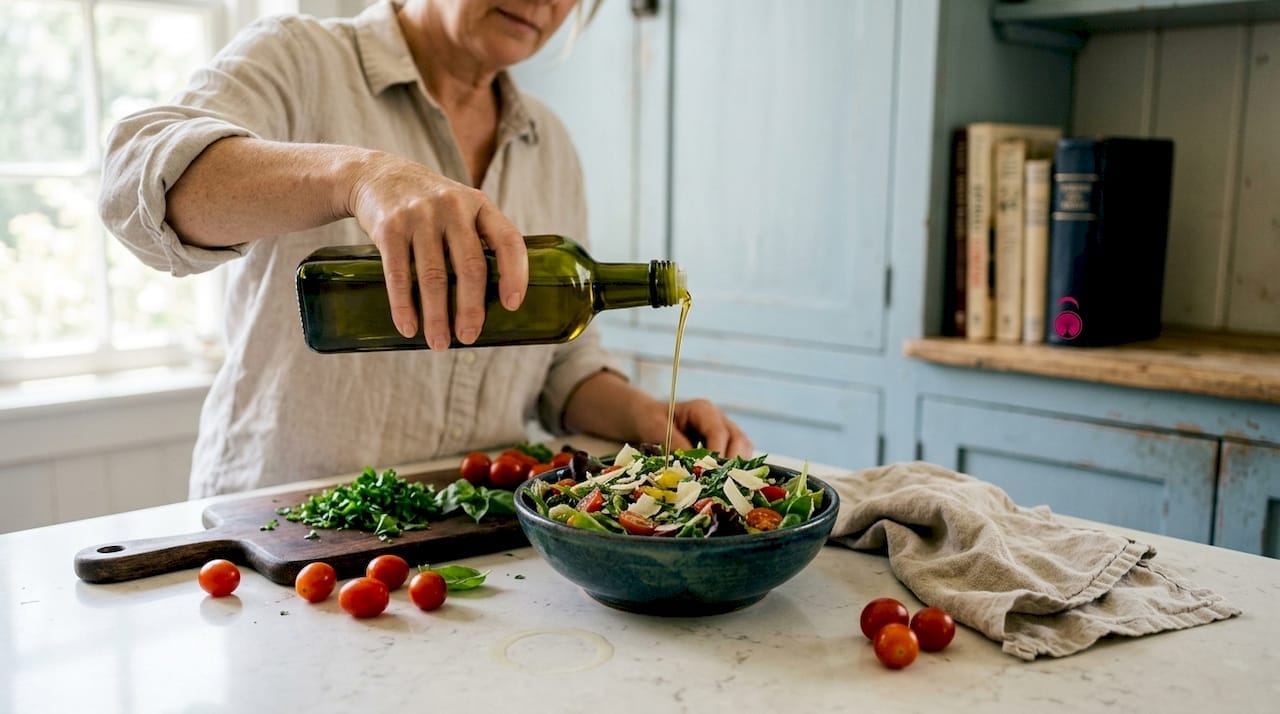
Choosing healthy cooking fats can feel overwhelming when you want to boost wellness without compromising taste. Extra virgin olive oil (EVOO) stands out as a powerhouse ingredient rich in antioxidants and healthy fats, making it ideal for health-conscious home cooks. This article reveals 10 practical, delicious ways to incorporate EVOO into your daily meals, helping you enjoy both culinary excellence and meaningful health benefits. You’ll discover how to select quality oil, use it raw or cooked, and maximize its anti-inflammatory properties in every dish.
Table of Contents
- How To Evaluate And Choose Quality Extra Virgin Olive Oil
- Top 10 Ways To Use Extra Virgin Olive Oil In Your Cooking And Meals
- Comparing Extra Virgin Olive Oil Uses: Raw Versus Cooking Applications
- Discover Premium Extra Virgin Olive Oil At Terra Centuria
- What Is The Best Way To Store Extra Virgin Olive Oil?
Key takeaways
| Point | Details |
|---|---|
| Replace saturated fats | Swapping butter for EVOO delivers heart-healthy benefits without sacrificing flavor. |
| Preserve antioxidants | Using EVOO raw or with moderate heat maintains its polyphenol content for maximum wellness impact. |
| Optimal daily intake | Incorporate 1-2 tablespoons daily by adding EVOO to meals rather than consuming it separately. |
| Choose high-polyphenol varieties | Premium EVOO with elevated polyphenol levels offers stronger anti-inflammatory effects and better heat resilience. |
| Versatile applications | EVOO works beautifully in dressings, finishing drizzles, gentle cooking, and even baking. |
How to evaluate and choose quality extra virgin olive oil
Selecting the right EVOO transforms your cooking and amplifies health benefits. Not all bottles deliver the same nutritional punch. Polyphenols are natural antioxidants in EVOO that fight inflammation and support gut health. High-polyphenol varieties provide the strongest therapeutic effects, especially when you use them correctly.
Quality EVOO starts with production methods. Look for labels indicating cold-pressed or first cold extraction, which preserve delicate antioxidants. Organic certification matters because it ensures olives grew without synthetic pesticides that can compromise oil purity. Artisanal producers often harvest olives at optimal ripeness and press them within hours, locking in freshness and flavor compounds that mass-produced oils lack.
Taste reveals quality instantly. Premium EVOO should taste fruity, slightly bitter, and peppery. That peppery sensation comes from oleocanthal, a powerful anti-inflammatory compound. If your oil tastes flat, greasy, or rancid, it’s lost its health value. Origin matters too. Oils from specific regions like Slovenian Istria often reflect traditional methods and terroir that enhance both flavor and polyphenol content.
Key selection criteria:
- Harvest date within the past 12-18 months
- Dark glass bottles protecting oil from light damage
- Specific polyphenol content listed (aim for 250+ mg/kg)
- Single-origin or estate-bottled for traceability
- Certifications like PDO or organic seals
Storage directly impacts longevity. Keep your EVOO in a cool, dark place away from the stove. Heat, light, and oxygen degrade polyphenols rapidly. Once opened, consume within three to six months for peak freshness. Understanding these factors helps you invest in oils that truly deliver wellness benefits rather than empty calories.
Pro Tip: Buy smaller bottles you’ll finish quickly rather than large containers that oxidize before you use them. Fresh EVOO always outperforms old oil, no matter the initial quality.
For deeper guidance on identifying premium options, explore the high polyphenol olive oil guide and learn about the organic olive oil selection process. These resources explain how health benefits of high polyphenol EVOO connect directly to production choices.
Top 10 ways to use extra virgin olive oil in your cooking and meals
Now that you understand quality markers, let’s explore practical applications that maximize EVOO’s culinary and wellness potential. These ten methods fit seamlessly into daily routines while delivering measurable health improvements.
Create vibrant salad dressings. Whisking EVOO with vinegar, lemon juice, and herbs produces dressings that preserve polyphenols since no heat is involved. This raw application delivers maximum antioxidant benefits while coating greens in healthy fats that help absorb fat-soluble vitamins.
Finish cooked dishes with a drizzle. Adding EVOO after cooking vegetables, grains, or proteins enhances flavor without degrading antioxidants. This technique works beautifully on roasted cauliflower, quinoa bowls, or grilled chicken.
Replace butter in sautéing. Use EVOO for moderate-heat cooking like sautéing garlic, onions, or leafy greens. Incorporating 1-2 tablespoons daily by replacing saturated fats maximizes cardiovascular benefits without adding excess calories.
Roast vegetables with EVOO coating. Toss Brussels sprouts, carrots, or sweet potatoes in EVOO before roasting at 375-400°F. The oil helps vegetables caramelize while maintaining enough polyphenol content to support wellness.
Blend into homemade hummus and dips. Adding EVOO to chickpea spreads, white bean dips, or tzatziki boosts creaminess and antioxidant levels. This method integrates healthy fats naturally into snacks and appetizers.
Enhance marinades for proteins. Combining EVOO with citrus, garlic, and spices creates marinades that tenderize meat and seafood while infusing anti-inflammatory compounds. Let proteins sit for 30 minutes to several hours for best results.
Substitute in baking recipes. Replace butter or vegetable oil with EVOO in muffins, quick breads, and cakes. Use a 1:1 ratio for butter or 3/4 cup EVOO for every 1 cup of other oils. Mild-flavored EVOO works best for sweet applications.
Create bread dipping stations. Pour EVOO into a shallow dish, add herbs like rosemary or thyme, and serve with crusty bread. This simple appetizer delivers healthy fats and satisfies without heavy butter.
Mix into yogurt or smoothies. Adding a tablespoon of EVOO to Greek yogurt or fruit smoothies increases satiety and provides creamy texture. This unconventional use helps you reach daily intake goals naturally.
Drizzle over soups and stews. Finishing hot soups with EVOO adds richness and preserves antioxidants since you’re not cooking the oil. Try it on tomato soup, lentil stew, or vegetable minestrone.
Important consumption notes:
- Avoid taking EVOO as straight shots, which concentrates calories without culinary enjoyment
- Distribute your 1-2 tablespoons throughout meals for better nutrient absorption
- Pair EVOO with colorful vegetables to enhance both flavor and phytonutrient intake
- Experiment with herb and spice combinations to keep dishes interesting
These applications demonstrate EVOO’s versatility while respecting its nutritional profile. For additional creative uses, check out olive oil for wellness tips and olive oil health tips that expand your culinary repertoire.
Comparing extra virgin olive oil uses: raw versus cooking applications
Understanding when to use EVOO raw versus cooked helps you optimize both health benefits and flavor. Heat affects polyphenol stability, but high-quality EVOO tolerates moderate cooking better than many assume.
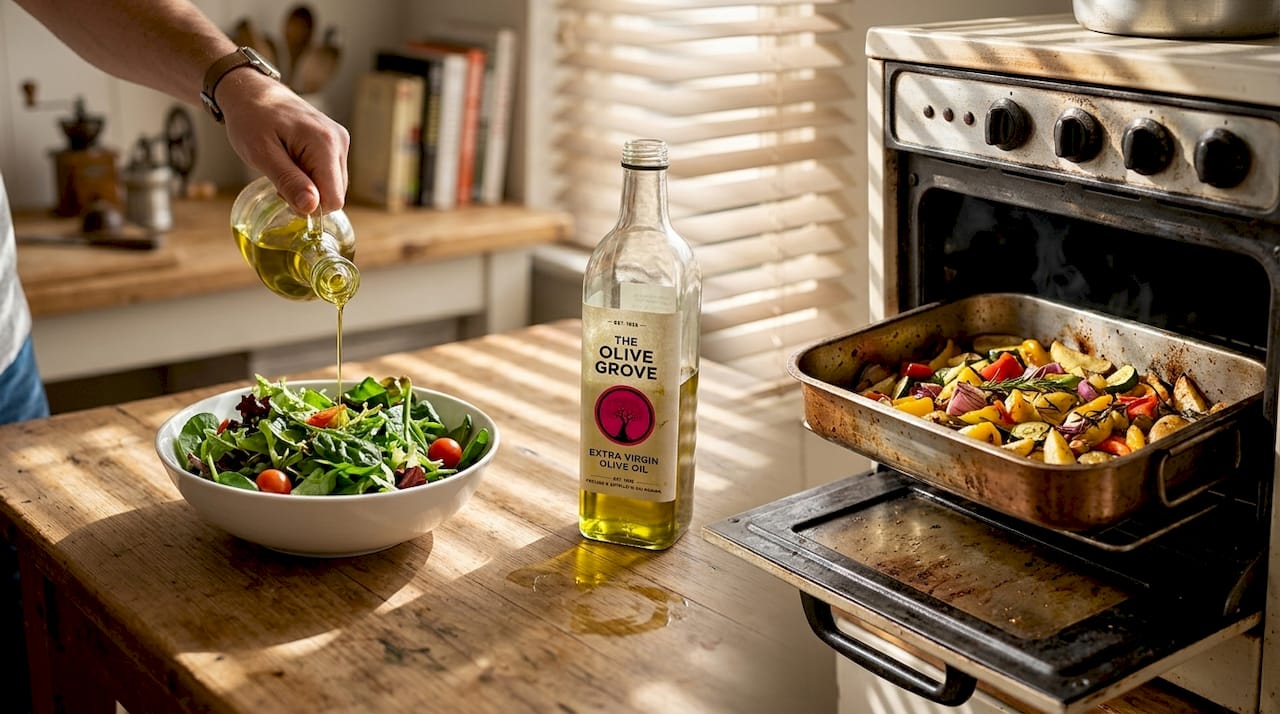
Polyphenols survive moderate heat but remain best preserved in raw applications. When you heat EVOO above 375°F, some antioxidant compounds begin degrading. However, high-phenolic EVOO maintains more beneficial compounds even after cooking compared to regular olive oils. This resilience makes premium varieties worth the investment for both raw and cooked dishes.
Raw EVOO applications deliver maximum polyphenol content. Salad dressings, finishing drizzles, and cold preparations preserve oleocanthal and hydroxytyrosol at full strength. These compounds modulate gut microbiota and reduce systemic inflammation more effectively when unconverted by heat. If your primary goal is therapeutic benefit, prioritize raw uses.
Moderate-heat cooking still provides substantial value. Sautéing at medium temperatures (300-350°F) or roasting vegetables at 375°F preserves enough antioxidants to support wellness while developing complex flavors through the Maillard reaction. The key is avoiding prolonged high-heat exposure like deep frying, which degrades both flavor and nutrition.
| Application Type | Antioxidant Retention | Flavor Profile | Best Uses |
|---|---|---|---|
| Raw (no heat) | 95-100% preserved | Fruity, peppery, bright | Dressings, finishing drizzles, dips |
| Low to moderate heat (under 350°F) | 70-85% preserved | Mellowed, slightly nutty | Sautéing, gentle roasting, baking |
| High heat (over 400°F) | 40-60% preserved | Diminished complexity | Not recommended for premium EVOO |
Optimization strategies for cooked applications:
- Choose high-polyphenol EVOO for better heat stability
- Add a finishing drizzle of raw EVOO after cooking to boost antioxidant levels
- Use lower temperatures for longer cooking times rather than intense heat
- Combine EVOO with antioxidant-rich ingredients like tomatoes or garlic for synergistic effects
Pro Tip: Reserve your most expensive, high-polyphenol EVOO for raw uses and finishing touches. Use a slightly less premium (but still quality) EVOO for everyday cooking to balance cost and benefit.
The EVOO versus regular olive oil differences become especially apparent when comparing heat tolerance. Extra virgin varieties maintain more integrity under cooking stress than refined alternatives.
Discover premium extra virgin olive oil at Terra Centuria
Applying these techniques works best when you start with exceptional oil. Terra Centuria specializes in high polyphenol organic EVOO produced through traditional methods in Slovenian Istria. Each bottle reflects careful cultivation, optimal harvest timing, and immediate cold pressing that preserves the antioxidant compounds you’ve learned about throughout this article.
The high polyphenol olive oil guide walks you through testing and tasting notes that distinguish truly premium oils from mass-market alternatives. Understanding the organic olive oil selection process empowers you to make informed choices that align with your wellness goals. When you invest in quality EVOO, every drizzle and sauté becomes an opportunity to nourish your body while enjoying extraordinary flavor.
What is the best way to store extra virgin olive oil?
Proper storage preserves EVOO’s delicate antioxidants and prevents rancidity. Always keep your oil in dark glass bottles that block ultraviolet light, which degrades polyphenols rapidly. Store bottles in a cool, dark cupboard away from the stove, where heat accelerates oxidation. Avoid refrigerating EVOO, as condensation forms when you remove cold bottles, introducing moisture that shortens shelf life. Consume opened bottles within three to six months for optimal flavor and health benefits. For comprehensive storage guidance, review the EVOO storage and quality guide that covers container types and ideal conditions.
Can extra virgin olive oil be used for high-heat cooking?
EVOO works well for moderate-heat cooking like sautéing and roasting but loses nutritional value during high-heat methods like deep frying. Polyphenols survive moderate heat but degrade significantly above 400°F. High-polyphenol EVOO withstands cooking temperatures better than regular olive oils due to its elevated antioxidant content. For maximum benefit, reserve premium EVOO for finishing touches and use it for cooking methods under 375°F. This approach balances culinary versatility with health optimization.
How much extra virgin olive oil should I use daily for optimal health?
Health experts recommend 1-2 tablespoons daily to support cardiovascular health and reduce inflammation. The key is replacing saturated fats like butter rather than adding extra calories to your diet. Avoid consuming olive oil as shots, which concentrates calories without the satisfaction and nutrient synergy of eating it with food. Instead, distribute your daily intake across meals by using EVOO in dressings, cooking, and finishing applications. This integration maximizes absorption of fat-soluble vitamins while making healthy eating enjoyable. Explore olive oil daily use tips for creative incorporation strategies.
What dishes pair best with extra virgin olive oil?
EVOO complements fresh salads, roasted vegetables, grilled seafood, and artisan breads beautifully. Its fruity, peppery notes enhance Mediterranean-inspired dishes while adding depth to simple preparations. Use EVOO as a dipping oil for crusty bread, drizzle it over caprese salads, or finish grilled fish with a generous pour. Combining EVOO with fresh herbs like basil, oregano, or thyme creates aromatic flavor profiles that elevate everyday meals. The oil’s richness balances acidic ingredients like tomatoes and citrus, making it ideal for vinaigrettes and marinades. Discover more creative applications through organic olive oil food pairings that showcase EVOO’s culinary range.