
Standing in front of a supermarket shelf lined with dozens of olive oil bottles, you’ve probably wondered which one truly delivers on quality. While labels promise premium taste and health benefits, most people pour olive oil without ever really tasting it. Learning to properly evaluate olive oil transforms your cooking and helps you identify authentic extra virgin products. This guide teaches you the professional tasting method used by experts to assess quality, detect defects, and appreciate the nuanced flavors that make exceptional olive oil worth seeking out.
Table of Contents
- What You Need To Taste Olive Oil Properly
- Step-By-Step Guide To Tasting Olive Oil
- Understanding Olive Oil Classifications And Standards
- Common Mistakes And Tips For Better Olive Oil Tasting
- Explore Premium Olive Oils At Terra Centuria
- How To Taste Olive Oil – Frequently Asked Questions
Key takeaways
| Point | Details |
|---|---|
| Proper assessment method | Tasting involves evaluating appearance, aroma, and flavor while identifying positive traits and potential defects. |
| Classification standards | Extra virgin olive oil must contain less than 0.80 grams of free acidity per 100 grams and meet strict sensory requirements. |
| Essential preparation | Use tulip-shaped glasses, maintain room temperature, cleanse your palate between tastings, and avoid strong odors in the environment. |
| Quality indicators | Bitterness and pungency signal fresh, polyphenol-rich oil, while rancid or musty notes reveal poor storage or degraded product. |
What you need to taste olive oil properly
Before you begin tasting, gathering the right tools and creating an optimal environment makes a significant difference in what you can detect. Professional tasters follow specific protocols that you can easily replicate at home.
Start with a clear, tulip-shaped glass or small wine glass. The narrow opening concentrates aromas while the wider bowl allows you to swirl the oil. Blue or dark-colored tasting glasses prevent color from influencing your judgment, though any clear glass works for home tasting. Pour about one tablespoon of oil into each glass.
Your tasting environment matters more than you might expect. Choose a well-lit, odor-free space at room temperature. Strong smells from cooking, perfume, or cleaning products interfere with your ability to detect subtle olive oil aromas. Avoid tasting when you’re hungry or right after eating heavily seasoned food.

Keep plain crackers or sliced apple nearby to cleanse your palate between samples. Water alone doesn’t remove oil residue effectively. If you’re comparing multiple oils, taste no more than four at once to prevent sensory fatigue.
Pro Tip: Warm the oil slightly by cupping the glass in your hands for 30 seconds before smelling. This releases volatile aromatic compounds that reveal the oil’s true character.
Familiarize yourself with basic sensory terminology before tasting. Fruity describes the fresh olive aroma, ranging from ripe to green. Bitter and pungent are positive attributes indicating high polyphenol content and freshness. Defects include rancid (stale, crayon-like), fusty (fermented), musty (moldy), and winey-vinegary notes.
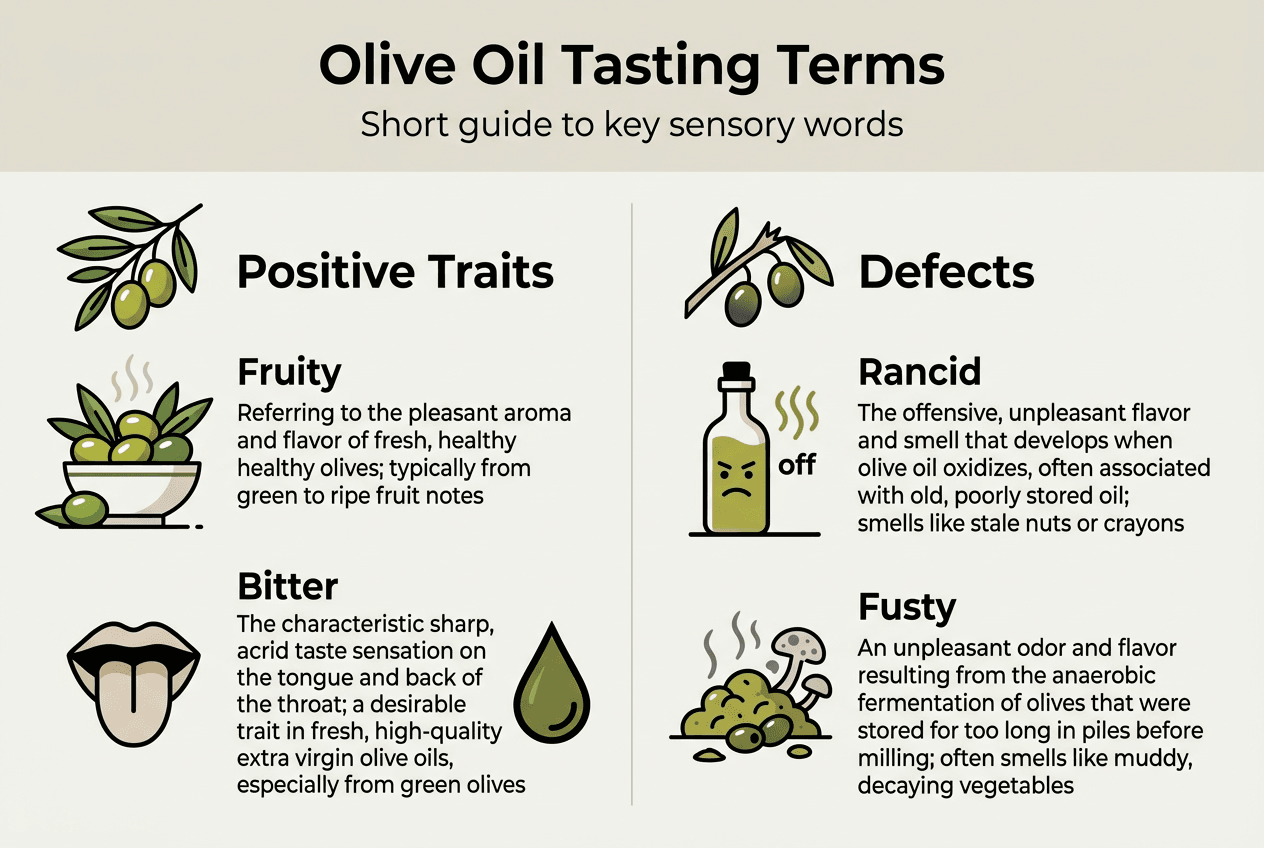
For a comprehensive understanding of quality markers, review this olive oil evaluation guide that explains chemical and sensory assessment methods.
Essential tasting tools
- Clear tulip-shaped or wine glasses
- Small serving spoons or pourers
- Plain crackers or apple slices
- Notepad for recording observations
- Room temperature water
Sensory attributes to assess
| Attribute | What to detect | Quality indicator |
|---|---|---|
| Fruity | Fresh olive aroma intensity | Positive trait, essential for EVOO |
| Bitter | Taste sensation on tongue | Positive, indicates polyphenols |
| Pungent | Peppery throat sensation | Positive, shows freshness |
| Defects | Off odors or flavors | Negative, disqualifies EVOO grade |
Step-by-step guide to tasting olive oil
Once your setup is ready, follow this systematic approach that professional tasters use to evaluate olive oil quality. Each step reveals specific information about the oil’s characteristics.
Observe the appearance. Pour the oil and note its color and clarity. While color ranges from golden yellow to deep green, it doesn’t indicate quality. Chlorophyll content and olive variety determine color, not flavor or health benefits. Look for clarity without cloudiness or sediment.
Warm and swirl. Cup the glass in your palm for 20 to 30 seconds. The warmth releases aromatic compounds. Gently swirl to coat the glass sides and increase the oil’s surface area.
Smell deeply. Bring the glass to your nose and inhale slowly. Take several short sniffs rather than one long breath. Identify the intensity and character of aromas. Fresh, quality oil smells like green plants, grass, herbs, or fresh fruit. Detect any off odors immediately.
Taste and aspirate. Take a small sip, about a teaspoon. Let it coat your entire mouth, reaching all taste zones. Aspirate by drawing air through your teeth while the oil is in your mouth. This technique, which sounds like slurping, spreads the oil and releases flavors.
Identify sensations. Notice where you feel bitterness on your tongue and pungency in your throat. A slight burning or peppery sensation indicates fresh, polyphenol-rich oil. These sensations are desirable, not defects.
Detect defects. Swallow and assess the aftertaste. Rancid oil tastes like old nuts or crayons. Fusty oil has a fermented, sweaty smell. Musty notes suggest mold from poor storage. Any unpleasant flavor disqualifies the oil from extra virgin status.
Pro Tip: Taste oils in order from mildest to most robust. Starting with intensely pungent oils overwhelms your palate and makes detecting subtle flavors in delicate oils nearly impossible.
Understanding different types of olive oil helps you set appropriate expectations for each grade’s flavor profile and quality level.
Understanding olive oil classifications and standards
Official classifications define olive oil quality based on measurable chemical properties and sensory characteristics. These standards protect consumers and ensure label accuracy.
Extra virgin olive oil contains less than 0.80 grams of free fatty acids per 100 grams, expressed as oleic acid. It must also pass sensory evaluation by a trained panel, showing zero defects and a median fruity attribute above zero. This combination of low acidity and superior taste defines the highest quality.
Virgin olive oil permits slightly higher acidity, up to 2.0 grams per 100 grams, and may have minor sensory defects. The median defect must not exceed 3.5, and fruity notes must still be detectable. This grade suits cooking but lacks the complexity of extra virgin.
Ordinary virgin olive oil, rarely sold to consumers, allows acidity up to 3.3 grams per 100 grams. Refined olive oil undergoes chemical processing to remove defects and acidity, resulting in a neutral product lacking health benefits and flavor.
California’s CDFA maintains detailed standards for olive oil production and labeling effective through 2026. These regulations address purity, grade definitions, and mandatory testing. California standards often exceed international requirements, providing additional consumer protection.
Chemical testing measures free fatty acid content, peroxide value (oxidation indicator), and UV absorption (refinement or age indicator). Sensory panels evaluate aroma and flavor using standardized protocols. Both chemical and sensory tests must confirm the declared grade.
Understanding these classifications helps you interpret labels and verify authenticity. When an oil labeled extra virgin tastes flat or shows defects, it likely fails to meet legal standards. For detailed comparisons, explore EVOO vs regular olive oil differences.
Olive oil grade comparison
| Grade | Max acidity | Sensory requirements | Best use |
|---|---|---|---|
| Extra virgin | 0.8% | Zero defects, fruity median above 0 | Raw applications, finishing |
| Virgin | 2.0% | Minor defects allowed, median defect max 3.5 | Light cooking, salads |
| Ordinary virgin | 3.3% | Noticeable defects, limited fruitiness | Rarely sold retail |
| Refined | Variable | Neutral after processing | High-heat cooking only |
Common mistakes and tips for better olive oil tasting
Even experienced home cooks make errors when evaluating olive oil. Avoiding these pitfalls improves your ability to detect quality and make informed purchases.
Many people judge olive oil by color alone, assuming darker green indicates superior quality. Color comes from chlorophyll and varies by olive variety, harvest timing, and processing. A pale golden oil can be exceptional while a deep green one might be mediocre. Professional tasting focuses on aroma and flavor, not appearance.
Tasting oil that has been open too long or stored improperly skews results. Oxygen, light, and heat degrade olive oil rapidly. Once opened, even premium oil deteriorates within weeks if not stored correctly. Always taste fresh oil from a newly opened bottle in a dark glass container kept away from heat.
Failing to cleanse your palate between samples causes flavor carryover. The previous oil’s bitterness or pungency influences your perception of the next sample. Use plain crackers or apple slices, not bread with seeds or strong flavors. Wait at least 30 seconds between tastings.
Confusing pungency with a defect leads to rejecting high-quality oils. That peppery, throat-catching sensation signals abundant polyphenols and fresh pressing. It’s a positive attribute, not harshness. Similarly, bitterness indicates beneficial compounds, not poor quality.
Pro Tip: Create a tasting journal noting the oil’s origin, harvest date, and your sensory observations. Over time, you’ll recognize patterns and develop preferences for specific flavor profiles and regional characteristics.
Learn to identify common defects accurately. Rancid oil smells like old peanuts or tastes waxy. Fusty develops when olives ferment before pressing, creating a sweaty, fermented aroma. Musty comes from olives stored in damp conditions, producing a moldy smell. Winey-vinegary notes indicate fermentation. Any defect disqualifies extra virgin classification.
For guidance on selecting authentic products, review the organic olive oil selection process that explains verification methods and quality indicators.
Tasting mistakes to avoid
- Judging quality by color intensity or bottle design
- Tasting oils stored in clear bottles exposed to light
- Skipping palate cleansing between samples
- Misidentifying pungency as spiciness or a defect
- Tasting when your palate is fatigued or after strong foods
- Ignoring harvest dates and storage conditions
Explore premium olive oils at Terra Centuria
Now that you understand professional tasting techniques and quality standards, applying these skills to exceptional oils reveals their full potential. Terra Centuria specializes in certified high polyphenol extra virgin olive oils from Slovenian Istria, where traditional cultivation methods and ideal growing conditions produce oils with remarkable flavor complexity and health benefits.
Our premium organic olive oils undergo rigorous testing to verify polyphenol content, acidity levels, and sensory excellence. Each bottle represents careful attention to harvest timing, cold extraction, and proper storage. Whether you’re developing your palate or seeking oils that deliver proven health advantages, our collection offers the quality your new tasting skills deserve. Explore our organic olive oil evaluation guide for detailed quality markers, and discover how olive oil health benefits connect directly to the sensory characteristics you can now identify.
How to taste olive oil – frequently asked questions
How long does olive oil last after opening?
Extra virgin olive oil maintains peak quality for about six weeks after opening when stored properly in a dark, cool place with the cap tightly sealed. Exposure to oxygen begins degrading flavor compounds and beneficial polyphenols immediately. Buy smaller bottles you’ll finish within this timeframe rather than large containers that sit half-empty for months.
Can I taste olive oil if I’m not an expert?
Absolutely, anyone can learn to taste olive oil effectively with practice. Your palate naturally detects bitter, pungent, and off flavors without special training. Start by comparing two or three oils side by side, noting obvious differences in aroma and taste. Regular tasting builds sensory memory and confidence in identifying olive oil quality markers over time.
What does bitterness in olive oil indicate?
Bitterness signals the presence of polyphenols, powerful antioxidants that provide health benefits and act as natural preservatives. Fresh, high-quality extra virgin olive oil should taste pleasantly bitter, especially oils from early harvest olives. This bitterness balances with fruity and pungent notes, creating complexity rather than unpleasant harshness.
How to tell if olive oil is rancid?
Rancid olive oil smells like crayons, old nuts, or putty and tastes greasy or waxy without any fresh fruit character. The peppery pungency disappears completely, replaced by a flat, stale flavor. Once you smell rancid oil, you’ll recognize it instantly in future tastings. This defect develops from oxidation due to age, heat exposure, or poor storage conditions.
Is color a reliable indicator of olive oil quality?
No, color tells you nothing about olive oil quality, flavor, or health benefits. Chlorophyll content varies by olive variety, harvest timing, and processing method, creating colors from pale gold to deep green. Professional tasters use blue glasses specifically to eliminate color bias. Focus entirely on aroma, taste, and mouthfeel when evaluating quality.