
Many assume all extra virgin olive oils deliver identical health benefits. That’s wrong. Polyphenol content varies dramatically between bottles, and these antioxidant compounds determine the true wellness impact of your oil. Understanding how polyphenols work, what influences their concentration, and how to identify high polyphenol EVOO transforms your kitchen choices. This guide reveals the science behind polyphenols, debunks common myths, and equips you with practical selection and cooking strategies to maximize the health returns from every drizzle.
Table of Contents
- Introduction To Polyphenols In Extra Virgin Olive Oil
- Health Effects Of Polyphenols In Evoo
- Factors Influencing Polyphenol Content In Evoo
- Common Misconceptions About Evoo Polyphenols
- Practical Culinary Use Of High Polyphenol Evoo
- Summary And Next Steps For Health Conscious Consumers
- Experience High Polyphenol Extra Virgin Olive Oil At Terra Centuria
- Frequently Asked Questions
Key takeaways
| Point | Details |
|---|---|
| Polyphenols are powerful antioxidants | EVOO polyphenols like hydroxytyrosol and oleuropein combat oxidative stress and support heart and brain health. |
| Polyphenol levels vary widely | Olive variety, harvest timing, processing method, and storage conditions all determine antioxidant concentration. |
| Price is misleading | Cost does not reliably predict polyphenol content; lab verification or sensory cues are better guides. |
| Storage and cooking matter | Cool, dark storage preserves compounds; raw or low heat use under 180°C retains most polyphenols. |
| Bitterness signals quality | A pungent, bitter taste indicates higher polyphenol levels and stronger health benefits. |
Introduction to polyphenols in extra virgin olive oil
Polyphenols are plant compounds with potent antioxidant properties. In extra virgin olive oil, the main polyphenols include hydroxytyrosol and oleuropein, which contribute directly to the oil’s high polyphenol olive oil benefits. These molecules scavenge free radicals, reduce oxidative stress, and support cellular health in ways refined oils cannot match.
Polyphenols also shape EVOO’s sensory profile. The bitterness you taste at the back of your throat and the pungent burn in your chest are signs of antioxidant richness. Oils that taste mild and buttery often contain fewer polyphenols, delivering less health impact. Recognizing these flavor cues helps you choose authentic, high quality products that align with wellness goals.
Understanding polyphenols empowers you to navigate crowded supermarket shelves confidently. Not all bottles labeled “extra virgin” offer equal benefits. Learning what drives polyphenol concentration, how to verify content, and why choose extra virgin olive oil over other fats sets you apart as an informed consumer. You can prioritize oils that genuinely enhance cardiovascular and cognitive function, rather than settling for mediocre options based on price or marketing alone.
The polyphenolic olive oil antioxidant benefits extend beyond flavor. These compounds influence how your body manages inflammation, metabolic stress, and aging processes. By selecting oils rich in these molecules and using them properly, you transform everyday cooking into a deliberate health practice.
Health effects of polyphenols in EVOO
Polyphenols work at the cellular level to neutralize free radicals and reduce oxidative damage. Free radicals are unstable molecules that accumulate from environmental toxins, stress, and metabolism. When left unchecked, they damage DNA, proteins, and cell membranes, accelerating aging and disease. EVOO polyphenols interrupt this cycle by donating electrons to stabilize free radicals, preventing chain reactions that harm tissues.
Cardiovascular benefits are well documented. Clinical studies show that high polyphenol EVOO consumption improves endothelial function, reduces LDL oxidation, and lowers systemic inflammation markers. These effects translate to better blood pressure control, reduced arterial plaque formation, and lower heart disease risk. The anti inflammatory properties of oleuropein and hydroxytyrosol modulate pathways that would otherwise promote vascular damage and atherosclerosis.
Brain health also benefits from EVOO polyphenols. Research indicates that oleuropein and hydroxytyrosol modulate oxidative stress in brain cells, offering neuroprotective effects that may slow cognitive decline. These compounds cross the blood brain barrier, where they reduce inflammation and support synaptic plasticity. Regular intake of high polyphenol oils has been linked to better memory performance and lower risk of neurodegenerative conditions.
Metabolic balance improves with consistent polyphenol intake. Studies suggest these antioxidants enhance insulin sensitivity, regulate blood sugar, and support healthy lipid profiles. By reducing chronic low grade inflammation, polyphenols help the body maintain energy balance and resist metabolic syndrome. This makes high polyphenol olive oil guide resources valuable for anyone managing weight, diabetes risk, or metabolic health.
“Oleuropein and hydroxytyrosol contribute to neuroprotective effects by modulating oxidative stress and inflammation in brain cells, suggesting possible roles in preventing neurodegenerative diseases.”
Healthy aging is another key benefit. Polyphenols support mitochondrial function, reduce cellular senescence, and protect against age related oxidative damage. Incorporating polyphenol rich EVOO into your diet is a practical, enjoyable strategy to promote longevity and maintain vitality as you age.
Factors influencing polyphenol content in EVOO
Olive cultivar and geographic origin are primary determinants of polyphenol concentration. Certain varieties naturally produce more phenolic compounds than others. Slovenian Istrian oils show particularly high concentrations due to regional terroir, climate, and traditional cultivation practices. Soil composition, rainfall, and temperature all influence the chemical profile of the fruit, which carries over into the oil.
Harvest timing plays a critical role. Early harvest olives, picked when still green and slightly unripe, contain significantly more polyphenols than fully ripe, black olives. The trade off is yield: early harvest produces less oil per kilogram of fruit but delivers a more antioxidant rich product. Farmers who prioritize quality over quantity invest in these early harvests, reflected in the final product’s health properties.
Processing method matters immensely. Cold press extraction, which keeps temperatures below 27°C, preserves delicate polyphenols that degrade under heat or chemical solvents. Refined olive oils, by contrast, undergo high heat and chemical treatments that strip away most antioxidants. Only true extra virgin oils, pressed mechanically without refinement, retain the full polyphenol profile. This is why high polyphenol organic EVOO from reputable producers commands attention among health focused consumers.
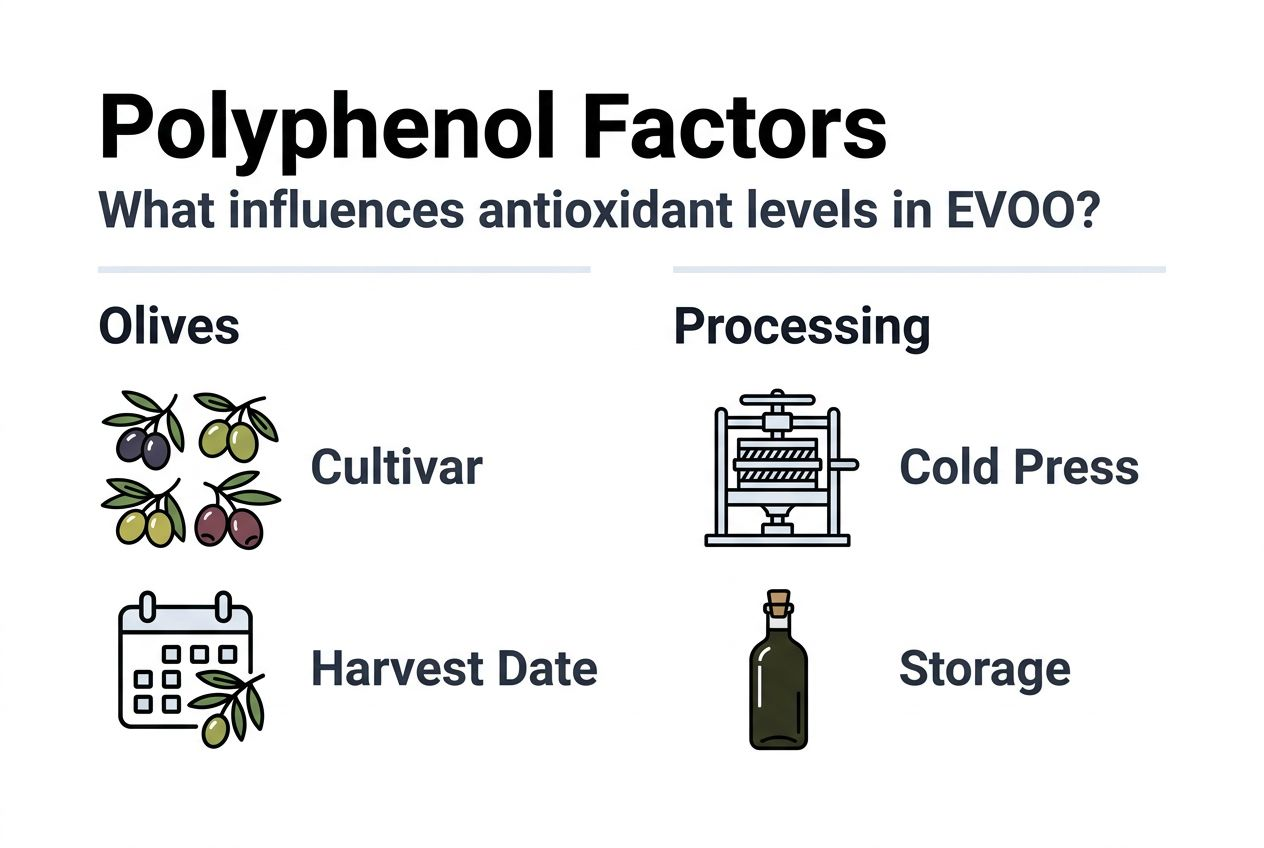
Storage conditions strongly affect polyphenol stability. Exposure to light, heat, and oxygen accelerates degradation. Preserving antioxidant benefits requires cool, dark environments, ideally in dark glass bottles or stainless steel containers. Oils stored improperly lose their potency within months, even if initially rich in polyphenols. Choosing products with proper packaging and storing them correctly at home protects your investment.
Sensory traits correlate with polyphenol levels. Bitterness and pungency are not defects but indicators of antioxidant richness. Oils that make you cough slightly or leave a sharp, peppery finish on your palate typically contain higher phenolic compounds. Consumers unfamiliar with these characteristics may mistakenly prefer bland oils, missing out on olive oil health benefits 2026 research highlights.
Pro Tip: Request polyphenol test certificates or look for labels listing total phenolic content in mg/kg. Values above 250 mg/kg indicate a health promoting oil, while anything over 500 mg/kg is exceptional.
| Factor | Impact on Polyphenols |
|---|---|
| Olive variety | Certain cultivars naturally produce more phenolic compounds |
| Harvest timing | Early harvest yields higher polyphenol concentration |
| Processing method | Cold press preserves antioxidants; refinement destroys them |
| Storage conditions | Cool, dark, airtight storage maintains polyphenol stability |
| Geographic origin | Terroir influences phenolic profile and concentration |
Common misconceptions about EVOO polyphenols
Many consumers believe higher price guarantees higher polyphenol content. That’s false. Price is a poor predictor of polyphenol concentration; lab testing or verified labels provide accurate information. Marketing, packaging, and brand positioning often inflate cost without reflecting true antioxidant value. Expensive oils can contain low polyphenols if harvested late, stored poorly, or produced from inferior cultivars. Conversely, some moderately priced artisan oils from quality conscious producers deliver exceptional polyphenol levels.
Another myth is that bitterness and pungency are defects. In reality, these sensory traits signal the presence of health promoting phenolic compounds. Oils that taste smooth and mild may appeal to untrained palates, but they typically lack the antioxidant punch that makes EVOO a functional food. Educating yourself about these flavor indicators transforms how you evaluate quality and helps you select oils that genuinely support wellness.
Some people assume cooking with EVOO destroys all polyphenols, so they reserve it only for raw use. While high heat does degrade these compounds, moderate cooking temperatures under 180°C preserve most antioxidants. EVOO remains stable and beneficial for sautéing, roasting, and baking at appropriate temperatures. The key is avoiding deep frying or prolonged high heat exposure, which accelerates breakdown.
Labels can mislead. Terms like “pure,” “light,” or “100% olive oil” often describe refined products with negligible polyphenol content. Only “extra virgin” designates unrefined, mechanically pressed oil that retains natural antioxidants. Understanding label language prevents you from paying premium prices for inferior products that deliver little health benefit.
Consumers also mistakenly judge quality solely on color. While vibrant green hues can indicate freshness and early harvest, color alone does not predict polyphenol levels. Professional tasters use opaque cups to eliminate visual bias, focusing instead on aroma, taste, and mouthfeel. Relying on color can lead you astray, especially since some producers add chlorophyll or use blending tricks to manipulate appearance.
Pro Tip: Prioritize organic olive oil evaluation guide resources and olive oil quality markers to build confidence in selecting oils that truly deliver polyphenol richness.
| Misconception | Reality |
|---|---|
| Higher price equals higher polyphenols | Price does not reliably indicate polyphenol content; verification is essential |
| Bitterness is a defect | Bitterness and pungency signal high polyphenol levels and health benefits |
| Cooking destroys all polyphenols | Moderate heat under 180°C preserves most antioxidants; raw use is optimal |
| All “olive oil” is the same | Only extra virgin retains full polyphenol profile; refined oils lack antioxidants |
| Color indicates quality | Color is an unreliable indicator; sensory traits and testing are better guides |
Practical culinary use of high polyphenol EVOO
Selecting the right oil starts with verification. Look for bottles that list total polyphenol content or provide third party lab certificates. If labels lack this information, seek sensory cues: a pronounced bitterness and peppery finish indicate antioxidant richness. Trusted high polyphenol olive oil guide resources help you navigate options and identify producers who prioritize quality over mass production.
Storage is non negotiable. Keep your EVOO in a cool, dark place, away from the stove and sunlight. Transfer large bottles into smaller containers to minimize oxygen exposure as you use the oil. Dark glass or stainless steel containers protect against light induced degradation. Proper storage extends shelf life and preserves the antioxidant potency you paid for.
Raw use maximizes polyphenol intake. Drizzle EVOO over salads, dip crusty bread, or finish cooked dishes with a generous pour. These applications deliver the full spectrum of antioxidants without any heat degradation. You can also blend EVOO into smoothies, yogurt, or hummus for a health boost that tastes great.
Low heat cooking preserves most polyphenols. Use EVOO for sautéing vegetables, pan searing proteins, or roasting at temperatures below 180°C. Heating above 180°C degrades more than 50% of polyphenols within 10 minutes, so reserve high polyphenol oils for gentle cooking methods. For deep frying or very high heat applications, consider oils with higher smoke points and lower antioxidant profiles.
Rotate your bottles regularly. Polyphenols degrade over time, even in ideal conditions. Buy smaller quantities and consume within three to six months of opening for peak freshness. Check harvest dates when available and prioritize oils from the most recent season. Fresh oils not only taste better but also deliver maximum health benefits.
Pro Tip: Pair high polyphenol EVOO with foods rich in fat soluble vitamins, like leafy greens or tomatoes, to enhance nutrient absorption and amplify antioxidant synergies. Explore olive oil health tips for more culinary inspiration.
- Choose EVOO with verified polyphenol content or strong sensory bitterness and pungency.
- Store in cool, dark containers to prevent light and heat degradation.
- Use raw in dressings, dips, and finishing drizzles for maximum antioxidant delivery.
- Cook at temperatures under 180°C to retain most polyphenols.
- Rotate bottles every three to six months to consume fresh, potent oil.
Summary and next steps for health conscious consumers
Polyphenols are the cornerstone of extra virgin olive oil’s health benefits. These antioxidant compounds reduce oxidative stress, support cardiovascular and cognitive function, and promote healthy aging. Understanding what drives polyphenol concentration helps you make informed choices that align with wellness goals.
Selecting EVOO based on verified polyphenol content, sensory traits, and proper labeling ensures you invest in products that deliver genuine health returns. Price and appearance are unreliable guides; focus instead on harvest practices, processing methods, and third party testing. Educating yourself about these factors transforms grocery shopping into a strategic health practice.
Proper storage and mindful cooking preserve the polyphenols you’ve carefully selected. Cool, dark environments protect antioxidants from degradation, while raw or low heat applications maximize their bioavailability. Incorporating high polyphenol EVOO into your daily routine supports long term vitality and disease prevention.
Regular use of quality EVOO is a simple, enjoyable strategy to enhance overall wellness. From heart health to brain function, the benefits are backed by robust research and centuries of Mediterranean tradition. Stay informed, avoid common misconceptions, and prioritize oils that truly deliver on their health promises.
Your next step is exploring trusted sources that specialize in high polyphenol EVOO and provide transparent information about their products.
Experience high polyphenol extra virgin olive oil at Terra Centuria
Now that you understand the critical role polyphenols play, you can confidently choose oils that support your health goals. Terra Centuria offers premium high polyphenol organic EVOO produced in Slovenian Istria, where traditional cultivation and early harvest practices ensure exceptional antioxidant richness. Their organic olive oil selection process prioritizes verified polyphenol content and sensory quality.
Explore their high polyphenol olive oil guide to deepen your knowledge and discover oils that align with your wellness priorities. With transparent testing, expert guidance, and a commitment to quality, Terra Centuria makes it easy to incorporate antioxidant rich EVOO into your culinary routine.
Frequently asked questions
What are polyphenols and why are they important in EVOO?
Polyphenols are natural antioxidants found mainly in the olive fruit and transferred into extra virgin olive oil during cold press extraction. They help reduce oxidative stress by neutralizing free radicals, which are unstable molecules that damage cells and accelerate aging. Polyphenols also exert anti inflammatory effects, supporting heart health by improving blood vessel function and reducing arterial plaque formation. Brain health benefits include neuroprotection and potential reduction in cognitive decline risk. These compounds make EVOO a functional food that delivers measurable wellness advantages beyond basic nutrition.
How can I tell if an extra virgin olive oil is high in polyphenols?
Look for bottles that list verified polyphenol content on the label or provide third party lab certificates showing values above 250 mg/kg. Sensory traits also offer clues: oils with pronounced bitterness and a peppery, pungent finish typically contain higher polyphenol levels. Taste a small amount on its own; a slight throat burn or cough indicates antioxidant richness. Trusted high polyphenol olive oil guide resources and reputable producers who prioritize transparency help you identify quality oils that genuinely support health goals.
Does cooking with EVOO destroy its polyphenols?
High heat cooking above 180°C degrades more than 50% of polyphenols within 10 minutes, so prolonged frying or roasting at very high temperatures reduces antioxidant content significantly. However, moderate heat applications like sautéing, gentle roasting, or baking under 180°C preserve most polyphenols. Using EVOO raw in dressings, dips, or as a finishing drizzle delivers maximum antioxidant benefits. Balance your cooking methods to enjoy both the flavor and health properties of high polyphenol oils.
Is a more bitter or pungent EVOO better for health?
Yes, bitterness and pungency are sensory indicators of higher polyphenol levels and stronger antioxidant activity. These traits result from phenolic compounds like oleuropein and hydroxytyrosol, which contribute to cardiovascular and neuroprotective benefits. Oils that taste mild and buttery often contain fewer polyphenols and deliver less health impact. Embrace the bold flavors as signs of quality and wellness potential, rather than defects to avoid.
Recommended
- Polyphenolic Olive Oil: Unlocking Its Antioxidant Power – Terra Centuria
- High Polyphenol Olive Oil: Unlocking Potent Health Benefits – Terra Centuria
- High Polyphenol Olive Oil Guide: Choose, Taste, and Verify – Terra Centuria
- Olive oil health benefits 2026: choose high polyphenol EVOO – Terra Centuria
- Dr M’s Mediterranean-Inspired Beauty: The Olive Glow Protocol | The M-ethod Aesthetics