TL;DR:
- True artisan olive oil is cold-pressed, single-origin, and high in polyphenols.
- Higher polyphenol content enhances health benefits like cardiovascular protection and inflammation reduction.
- Labels often mislead; check for harvest date, lab testing, and polyphenol levels to ensure quality.
Most people grab a bottle labeled “extra virgin” and assume they’re getting the best olive oil available. They’re not. The gap between a mass-produced EVOO and a true artisan oil isn’t just about taste—it’s about the concentration of polyphenols, antioxidants, and health-protecting compounds that either survive or get lost depending on how the oil was made. Hand-picked, early-harvest olives processed with care can yield an oil with measurably more health impact than anything sitting on a standard grocery shelf. Here’s what separates the two and why it matters for how you eat and feel.
Table of Contents
- What makes olive oil ‘artisan’?
- Harvesting and milling: Preserving nutrients from tree to press
- Cold press extraction: Unlocking the power of polyphenols
- Polyphenols: The science behind the health benefits
- Why health-focused foodies undervalue true artisan olive oil
- Experience the benefits: Choose your high-polyphenol artisan EVOO
- Frequently asked questions
Key Takeaways
| Point | Details |
|---|---|
| Artisan oil defined | Hand-harvested, cold-pressed, single-origin oils deliver top flavor and nutrition. |
| Polyphenols matter | High-polyphenol content is key for antioxidant and anti-inflammatory health effects. |
| Organic methods win | Organic artisan practices avoid chemicals and maximize natural nutrition. |
| Choose wisely | Check labels and seek specific polyphenol levels for the greatest health benefits. |
What makes olive oil ‘artisan’?
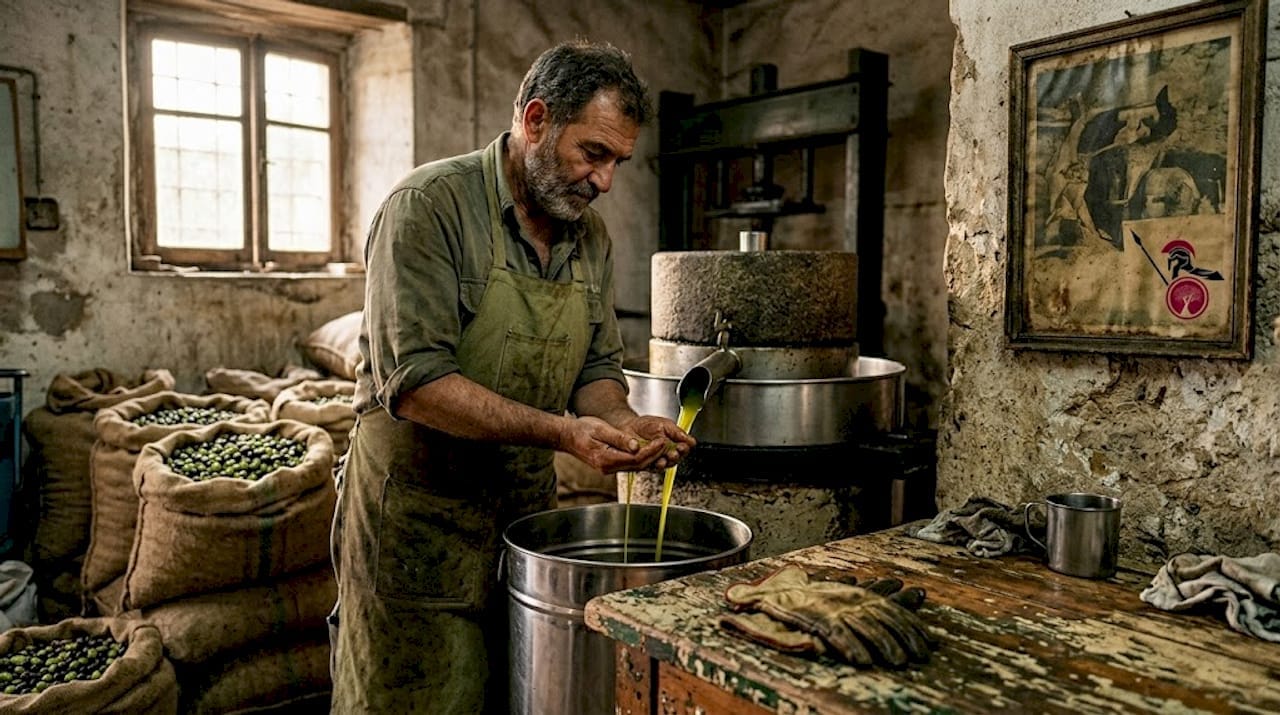
The word “artisan” gets overused in food marketing, so let’s be precise. In olive oil production, artisan means single-origin olives, hand-harvested or gently machine-picked at the optimal moment, processed in small batches at controlled low temperatures, and bottled without shortcuts. It means the farmer knows every tree. It also means the oil is never blended with cheaper oils from other regions or countries.
Industrial olive oil follows a completely different logic. The priority is volume and cost efficiency. Olives come from multiple origins, sometimes different countries. High temperatures are used to speed up extraction and increase yield. The result is an oil with drastically fewer nutrients. The importance of craftsmanship in food production is measurable here: artisan methods yield 250–800 mg/kg polyphenols, while industrial oils often fall below 100 mg/kg.
Here’s a side-by-side look at what separates the two approaches:
| Feature | Artisan production | Industrial production |
|---|---|---|
| Harvesting | Hand-picked or gentle mechanical | Machine-stripped, less selective |
| Origin | Single-origin, traceable | Multi-origin blends |
| Processing temp | Cold or low temperature | High heat for higher yield |
| Polyphenol content | 250–800 mg/kg | Often below 100 mg/kg |
| Flavor profile | Complex, bitter, pungent | Mild, flat, neutral |
| Batch size | Small, controlled | Large-scale, standardized |
What defines a truly artisan oil? Look for these characteristics:
- Single-origin sourcing with a named farm or region
- Early harvest timing for maximum antioxidant potential
- Cold or low-temperature extraction throughout processing
- Lab-verified polyphenol content on the label or available on request
- Harvest date printed (not just a best-by date)
- Unfiltered or lightly filtered to preserve natural compounds
The artisan production methods used by small producers aren’t just romantic tradition. They’re the reason the oil in your bottle either functions as a health food or just functions as a fat.
Harvesting and milling: Preserving nutrients from tree to press
The artisan process starts in the grove, and the decisions made there determine everything. Olives destined for high-polyphenol oil are picked earlier than most people expect, when the fruit is still green or just beginning to turn. At this stage, polyphenol concentration is at its peak. The tradeoff is lower oil yield per kilogram of fruit, which is exactly why most commercial producers skip this window entirely.
Here’s the sequence that separates a nutrient-dense artisan oil from an average one:
- Early green harvest (October to November for most Mediterranean regions)
- Hand-picking or gentle mechanical harvesting to avoid bruising the fruit
- Sorting and cleaning to remove leaves, stems, and damaged olives
- Rapid transport to the mill, ideally within hours
- Immediate cold milling to prevent oxidation and fermentation
- Minimal contact with air, heat, or metal surfaces throughout
Olives transported to the mill within 24 hours show significantly higher polyphenol retention than fruit left in crates overnight. Fermentation starts fast once olives are harvested. Every hour counts, and serious artisan producers treat this like a race.
Organic methods add another layer of quality assurance. Without pesticide residues, the olives are cleaner at every stage, and the oil reflects that purity. Organic certification also tends to correlate with more attentive farming practices overall, including soil health and tree stress management—both of which influence polyphenol levels.
The organic selection process behind a quality EVOO is as important as any step at the mill. Trees grown in mineral-rich, well-drained soils without synthetic inputs produce fruit with more complex chemistry. That complexity shows up in the oil’s flavor and its lab results.
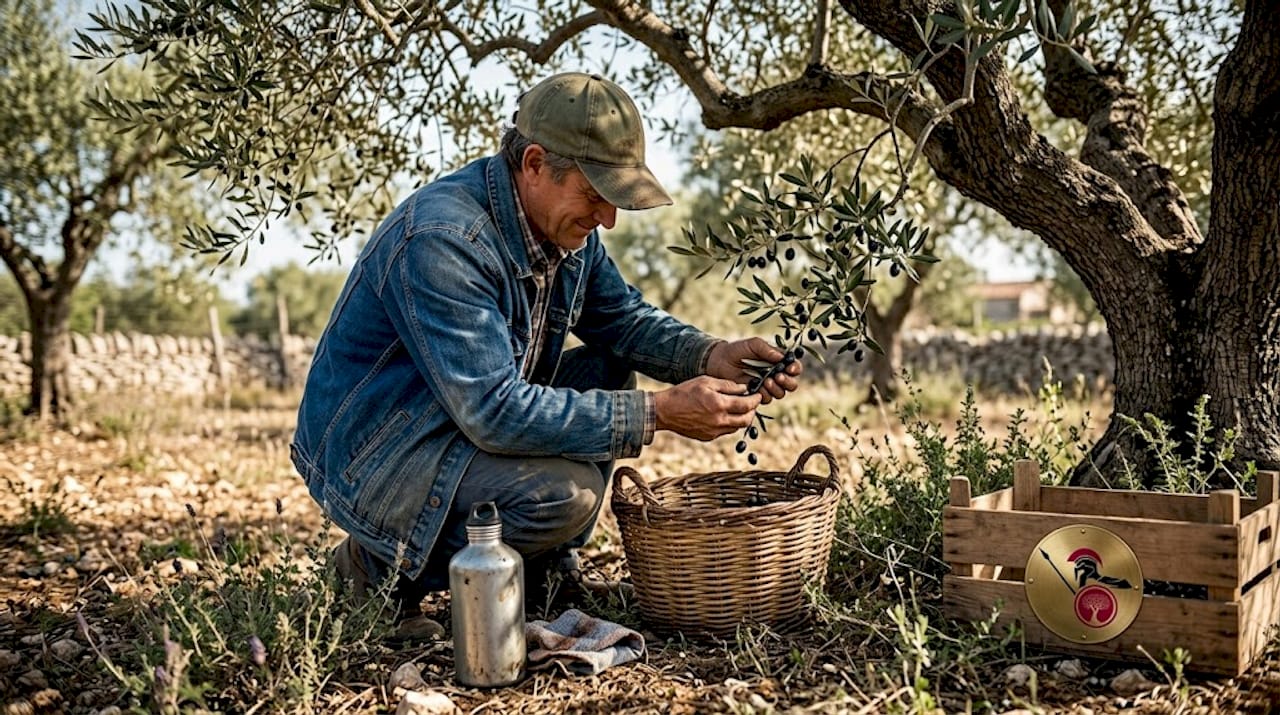
Pro Tip: When buying artisan EVOO, look for a printed harvest date rather than just an expiration date. A bottle harvested in October or November of the current season is at peak freshness and polyphenol potency. If only a best-by date appears, the producer may be hiding a production timeline you’d want to know about.
Cold press extraction: Unlocking the power of polyphenols
Once olives are milled into a paste, the extraction stage determines how many of those hard-earned polyphenols actually make it into the bottle. Heat is the enemy here. Even modest temperature increases during pressing can degrade antioxidants and volatile aromatics.
Traditional cold pressing uses hydraulic presses on fiber mats. It’s slow but effective at preserving flavor. The more modern approach, low-temperature centrifugation using a two-phase decanter, is now preferred by serious producers because it retains even higher polyphenol levels while handling larger volumes without sacrificing quality.
The data on extraction methods and their effect on final oil quality is striking:
| Extraction method | Polyphenol range (mg/kg) | Oxidation risk | Yield efficiency |
|---|---|---|---|
| Traditional hydraulic press | 150–400 | Moderate | Lower |
| Three-phase centrifugation | 80–250 | Higher (water added) | Higher |
| Two-phase centrifugation | 250–800+ | Low | Moderate |
| High-heat industrial | Below 100 | High | Highest |
High-polyphenolic EVOO reaching 250–1,000+ mg/kg polyphenols comes from a combination of early harvest, rain-fed trees, high altitude growing conditions, and two-phase extraction. Each factor compounds the others.
“Olive oil polyphenols contribute to the protection of blood lipids from oxidative stress. The beneficial effect is obtained with a daily intake of 20g of olive oil containing at least 5mg of hydroxytyrosol and its derivatives.” — European Union health claim (EU Reg. 432/2012)
This EU health claim is a concrete benchmark. An oil needs to meet that 5mg per 20g threshold to qualify. Most supermarket EVOOs don’t come close. The polyphenol health benefits tied to this standard are real and clinically recognized, not marketing language.
One important note: “cold pressed” on a label isn’t always a guarantee of quality. The term has a legal definition in the EU (below 27°C), but enforcement varies. Always look for a polyphenol count, a harvest date, and ideally third-party lab results. The role of polyphenols in distinguishing premium oils from average ones can’t be reduced to a single label claim.
Polyphenols: The science behind the health benefits
Polyphenols aren’t just a marketing term. They’re a diverse class of plant compounds with measurable effects on human health, and the research behind high-polyphenol EVOO is growing fast. The most important ones in olive oil are hydroxytyrosol, oleuropein, and oleocanthal, each with distinct mechanisms in the body.
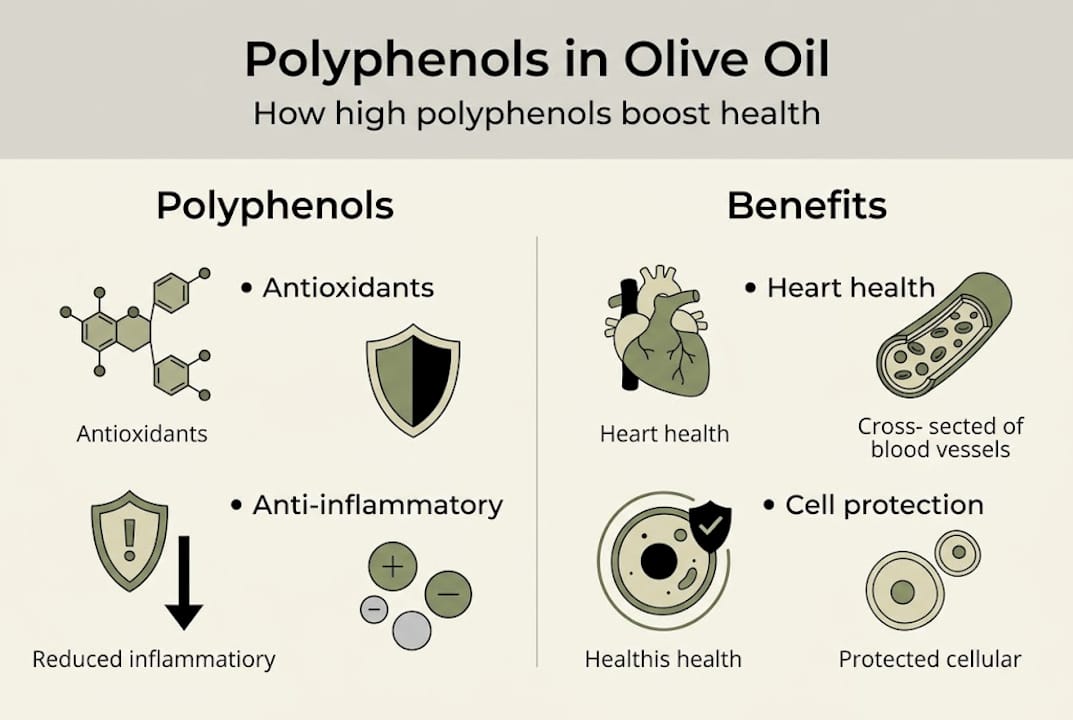
Clinical evidence shows that high-polyphenol EVOO decreases LDL-C, HbA1c, and CRP while also modulating gut microbiota in measurable ways. CRP and IL-1β are inflammation markers directly linked to chronic disease risk. Reducing them through diet is one of the most practical things a health-focused person can do. These aren’t small effects either. The research points to meaningful changes in metabolic markers with consistent consumption.
Here’s a summary of what the science supports for high-polyphenol EVOO:
- Cardiovascular protection through LDL cholesterol reduction and blood lipid oxidation prevention
- Anti-inflammatory activity measurably lowering CRP and IL-1β levels
- Gut microbiome support, including shifts toward beneficial Bacteroidota strains
- Mitochondrial protection, reducing cellular oxidative damage
- Blood sugar regulation, with observed reductions in HbA1c in clinical studies
The health benefits of high polyphenol EVOO are genuinely tied to concentration. A lower-polyphenol oil, even if technically extra virgin, may deliver far less of this effect. Organic farming and polyphenols are also linked, with organic cultivation practices often producing higher-polyphenol fruit due to natural plant stress responses.
Pro Tip: When reading a label, look for a polyphenol count of at least 250 mg/kg to see meaningful health effects. For therapeutic-level impact, 500 mg/kg and above is worth seeking. If the producer shares third-party lab results (often a Certificate of Analysis), that’s a strong sign of transparency and quality. The polyphenol benefits explained on a credible brand’s website should always be backed by actual numbers.
Why health-focused foodies undervalue true artisan olive oil
Here’s the uncomfortable reality: most health-conscious shoppers spend serious time researching supplements, reading nutrition labels, and choosing organic produce—then reach for a mid-range EVOO without a second thought. The assumption is that “extra virgin” is enough. It isn’t.
Labeling in the olive oil industry is notoriously inconsistent. “Cold pressed,” “natural,” and even “extra virgin” don’t guarantee polyphenol content. A bottle can technically meet legal definitions for EVOO and still deliver almost no functional health benefit. The gap between a 60 mg/kg oil and a 600 mg/kg oil is enormous in terms of what you’re actually consuming.
We’ve seen this pattern clearly working with high-polyphenol oils from Slovenian Istria. Customers who switch from generic EVOOs often describe the flavor difference as jarring—the bitterness, the throat-burn from oleocanthal, the complexity. These aren’t flaws. They’re signals that the polyphenols’ importance is being preserved. The investment in a true artisan oil isn’t about paying more for prestige. It’s about getting what you’re actually paying for in health terms, which most bottles quietly fail to deliver.
Experience the benefits: Choose your high-polyphenol artisan EVOO
Knowing the science is the first step. Finding an oil that actually delivers on it is where most people get stuck.
At Terra Centuria, we produce premium organic EVOO from Slovenian Istria using early harvest, hand-picked olives and two-phase cold extraction. Every batch is lab-tested for polyphenol content, and we share those results openly. If you’re ready to move beyond generic labels, our evaluation guide walks you through exactly what to look for when comparing oils. You can also explore the direct impact of extraction on antioxidant levels in our breakdown of cold pressed antioxidant benefits. The difference is measurable. You’ll taste it, and over time, you’ll feel it.
Frequently asked questions
What is the difference between artisan and industrial olive oil?
Artisan and industrial oils differ fundamentally in harvesting method, processing temperature, and polyphenol content. Artisan oils use hand-harvesting and cold extraction from a single origin, while industrial oils prioritize high-heat yield from blended multi-origin sources.
How can I check if my olive oil is high in polyphenols?
Look for a lab-verified polyphenol count on the label or from the producer directly. Seek 250 mg/kg or higher as a minimum threshold, and check for a harvest date and early-harvest designation as supporting signals.
Why does the taste of artisan olive oil differ from regular supermarket brands?
The bitterness and throat-pungency in a good artisan EVOO come directly from high polyphenol levels, especially oleocanthal. Artisan methods preserve these compounds and complex flavor characteristics that blended, heat-processed supermarket oils lose during production.
What are some proven health benefits of high-polyphenol EVOO?
Regular consumption of high-polyphenol EVOO has been shown to lower LDL cholesterol, reduce inflammation markers like CRP, and positively shift gut microbiota composition. These effects are tied directly to polyphenol concentration, not just the fat profile of the oil.