
Many shoppers assume all olive oils deliver similar health benefits and cooking performance, but the gap between extra virgin olive oil (EVOO) and regular olive oil is substantial. Understanding these differences helps you choose oils that match your culinary goals and wellness priorities. This guide clarifies the chemical, sensory, health, and cooking distinctions between EVOO and regular olive oil so you can make informed decisions.
Table of Contents
- Understanding Olive Oil Classifications And Acidity Levels
- Sensory Profiles And Health Benefits: Why EVOO Stands Out
- Cooking With EVOO Versus Regular Olive Oil: Smoke Points And Stability
- Choosing The Right Olive Oil For Your Health And Cooking Needs
- Discover Premium High Polyphenol EVOO For Health And Flavor
- Frequently Asked Questions
Key takeaways
| Point | Details |
|---|---|
| Acidity levels define quality | EVOO contains ≤0.8% free acidity while refined oils drop to ≤0.3% but lose flavor and nutrients in processing. |
| EVOO retains natural compounds | Cold pressing preserves polyphenols and antioxidants that refined oils strip away during chemical treatment. |
| Health benefits vary significantly | EVOO provides higher phenolic content linked to reduced aging effects and better metabolic health outcomes. |
| Cooking suitability differs | EVOO’s smoke point reaches 350-410°F suitable for sautéing and roasting, while oxidative stability matters more than temperature alone. |
| Sensory profiles distinguish quality | EVOO offers fruity, peppery notes while refined oils taste neutral due to processing that removes volatile compounds. |
Understanding olive oil classifications and acidity levels
Free acidity measures the percentage of free fatty acids in olive oil, serving as a primary quality indicator. Lower acidity typically signals better handling of olives from harvest through pressing. The International Olive Council sets strict standards that categorize oils by this metric.
Classification tiers based on acidity:
| Oil Type | Maximum Free Acidity | Processing Method |
|---|---|---|
| Extra Virgin | ≤0.8 g per 100 g | Mechanical extraction only |
| Virgin | ≤2.0 g per 100 g | Mechanical extraction only |
| Ordinary Virgin | ≤3.3 g per 100 g | Mechanical extraction only |
| Refined | ≤0.3 g per 100 g | Chemical refining process |
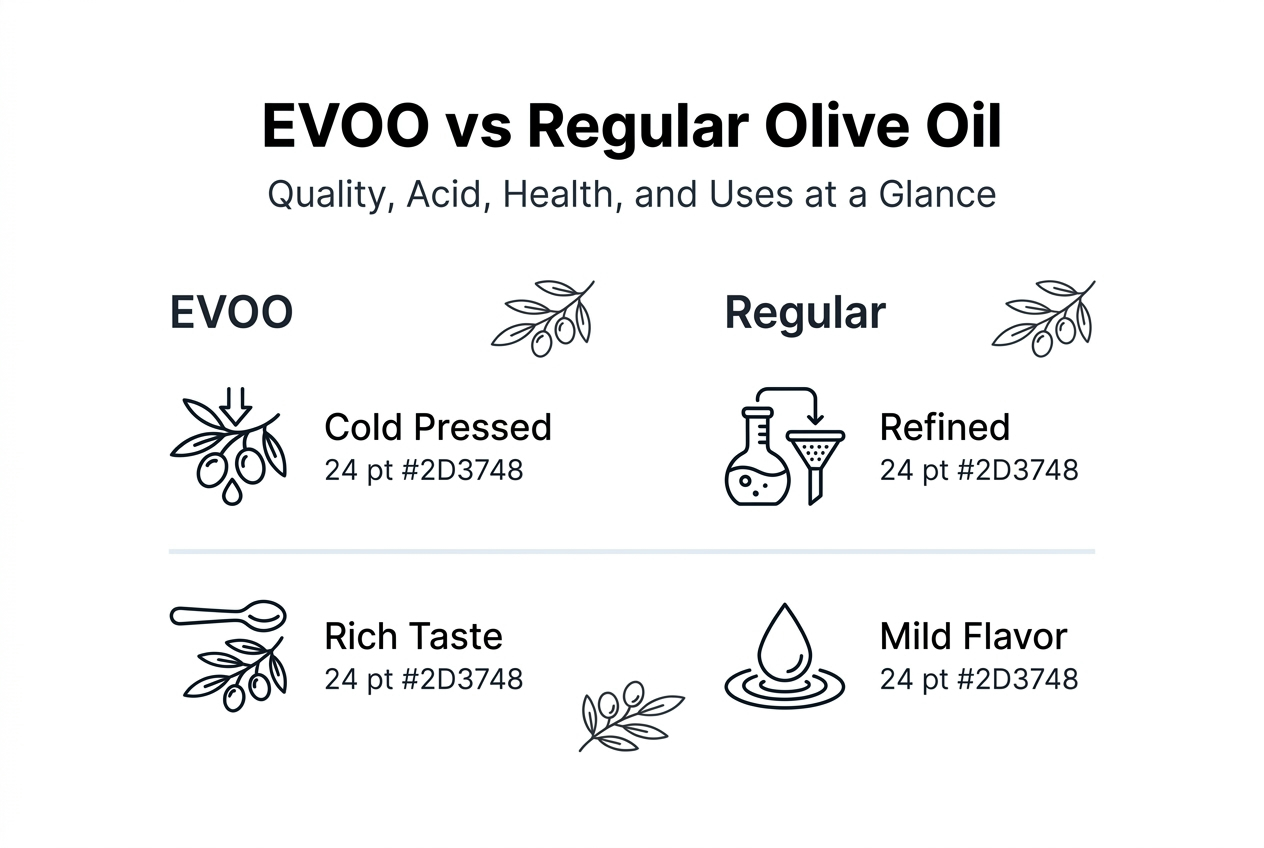
EVOO earns its classification through cold mechanical pressing without heat or chemicals. This gentle extraction protects delicate compounds responsible for flavor and health benefits. Virgin and Ordinary Virgin oils undergo similar mechanical processes but start with lower quality fruit or experience handling issues that raise acidity.

Refined olive oil follows a different path entirely. Producers take virgin oils with defects or high acidity and treat them with heat, alkali, or activated carbon to neutralize flavors and odors. Refined olive oil achieves acidity below 0.3 grams per 100 grams but sacrifices the natural compounds that make EVOO valuable. The result is a neutral-tasting product lacking the antioxidants and polyphenols found in mechanically extracted oils.
When you see “pure olive oil” or simply “olive oil” on store shelves, you’re looking at a blend of refined oil with a small percentage of virgin oil added back for minimal flavor. These products work for high-heat cooking but don’t deliver the diverse profiles and health compounds that distinguish premium EVOO.
Key indicators of quality beyond acidity:
- Peroxide value measuring oxidation levels
- UV absorbency revealing purity and refinement
- Sensory evaluation by trained tasters
- Absence of flavor defects like rancidity or fermentation
Sensory profiles and health benefits: why EVOO stands out
EVOO delivers a complex sensory experience shaped by olive varieties, growing conditions, and harvest timing. You might taste fruity notes ranging from green apple to ripe tomato, along with bitter and peppery sensations that indicate freshness. These characteristics aren’t just aesthetic. They signal the presence of valuable compounds that refined oils completely lack.
Polyphenols and other antioxidants create EVOO’s distinctive bite. Oleocanthal, the compound responsible for that peppery throat sensation, demonstrates anti-inflammatory properties similar to ibuprofen. Higher levels of oleocanthal correlate with more intense peppery sting, making that burning feeling a marker of potency rather than a flaw.
Health advantages backed by research:
- EVOO contains higher phenolic content than regular olive oil, boosting antioxidant capacity
- Regular consumption supports cardiovascular health through improved lipid profiles
- Daily intake of ≥4 tablespoons protects against age-related physical decline
- Phenolic compounds may reduce abdominal obesity risk
Pro Tip: That throat tickle when tasting fresh EVOO isn’t a sign of poor quality. It’s oleocanthal at work, indicating high antioxidant levels that benefit your health.
Refined oils can’t match these benefits because processing strips away the very compounds that provide them. Chemical treatments remove bitterness and pungency along with polyphenols, leaving a bland product suitable for cooking but offering minimal nutritional advantages beyond basic fats. EVOO must meet chemical compliance and sensory excellence standards, ensuring you get both flavor and function.
The terroir effect influences EVOO just as it does wine. Slovenian Istrian oils taste different from Spanish or Greek varieties due to soil composition, climate, and traditional cultivation methods. This regional diversity means you can explore antioxidant-rich options with distinct flavor profiles while gaining consistent health benefits from high polyphenol content.
“The presence of polyphenols in EVOO not only contributes to its stability and shelf life but also provides significant health benefits including anti-inflammatory and antioxidant effects.”
Cooking with EVOO versus regular olive oil: smoke points and stability
The smoke point debate confuses many home cooks who’ve heard conflicting advice about using EVOO for cooking. EVOO’s smoke point ranges from 350°F to 410°F, perfectly suitable for sautéing, roasting, and light frying. This temperature range covers most everyday cooking methods without reaching the point where oil breaks down and creates smoke.
Oxidative stability matters more than smoke point for most cooking applications. This measure indicates how well an oil resists chemical breakdown when exposed to heat, light, and oxygen. EVOO excels in oxidative stability, outperforming many refined oils in resistance to polar compound formation during heating. The natural antioxidants in EVOO protect it from degradation even at moderate cooking temperatures.
Comparing smoke points and cooking uses:
| Oil Type | Smoke Point Range | Best Cooking Applications |
|---|---|---|
| Extra Virgin Olive Oil | 350-410°F | Sautéing, roasting, baking, dressings |
| Refined Olive Oil | 390-470°F | High-heat frying, neutral flavor needs |
| Light/Pure Olive Oil | 390-470°F | Deep frying, high-temperature cooking |
Practical cooking guidelines for EVOO:
- Use EVOO for medium-heat stovetop cooking like pan-searing vegetables or proteins
- Drizzle raw over finished dishes to preserve maximum polyphenol content
- Roast vegetables at 375-400°F without concern for oil breakdown
- Skip EVOO for deep frying above 425°F where refined oils perform better
- Store EVOO in dark bottles away from heat to maintain quality between uses
Pro Tip: Reserve your highest quality, most expensive EVOO for raw applications like salad dressings where you’ll appreciate its full flavor. Use mid-range EVOO for everyday cooking to balance cost and health benefits.
The misconception that EVOO can’t handle heat likely stems from concerns about wasting expensive oil rather than actual chemical limitations. While you wouldn’t deep fry in premium EVOO for economic reasons, the oil itself remains stable through typical cooking processes. Refining removes the protective antioxidants along with flavor, meaning refined oils rely solely on their fatty acid composition for heat stability.
Monounsaturated fats make up roughly 75% of olive oil regardless of processing level, providing inherent heat tolerance. EVOO’s polyphenols add an extra layer of protection during cooking. When you heat olive oil properly within its temperature range, you preserve nutritional value while developing flavors in your food.
Choosing the right olive oil for your health and cooking needs
Selecting quality EVOO requires looking beyond marketing claims to concrete indicators of freshness and production standards. Harvest date matters more than best-by date because EVOO peaks in freshness within three to six months of harvest, with polyphenol levels declining over time. A bottle pressed in November 2025 offers more benefits in early 2026 than one pressed a year earlier, even if both remain within their official shelf life.
Essential quality markers when shopping:
- Harvest or production date clearly visible on the label
- Dark glass or tin containers protecting oil from light exposure
- Certification seals from recognized testing organizations
- Single origin or estate designation indicating controlled production
- Polyphenol content listed in mg/kg when available
Your intended use should guide your selection. Raw applications like salad dressings showcase EVOO’s full sensory complexity, making it worth investing in premium bottles with robust flavor profiles. For everyday cooking, a reliable mid-tier EVOO delivers health benefits and good taste without breaking your budget. Save refined or pure olive oils for recipes requiring neutral flavor or temperatures approaching 450°F.
Health-focused buyers should prioritize high polyphenol EVOOs with levels exceeding 250 mg/kg. These oils provide maximum antioxidant benefits and typically display more pronounced peppery and bitter notes. If you’re new to quality EVOO, start with a milder option and gradually explore more robust varieties as your palate adjusts.
Pro Tip: Buy EVOO in quantities you’ll use within two months of opening. Even properly stored oil gradually loses potency after exposure to air. Smaller bottles preserve quality better than large containers that sit half-full for months.
Storage directly impacts how long your EVOO maintains its beneficial properties. Keep bottles in a cool, dark cabinet away from the stove’s heat. Avoid storing oil in clear glass on countertops where light accelerates oxidation. If you purchase a large container, consider transferring portions to a smaller bottle for daily use while keeping the main supply sealed.
Organic certification indicates olives grown without synthetic pesticides, though it doesn’t automatically guarantee superior taste or higher polyphenols. The organic selection process involves evaluating multiple factors including farming practices, processing methods, and final chemical composition. Combine organic status with other quality indicators for the most informed choice.
Discover premium high polyphenol EVOO for health and flavor
After learning how EVOO’s natural compounds and careful production distinguish it from refined alternatives, you’re ready to experience truly exceptional olive oil. Terra Centuria specializes in high polyphenol organic EVOO from Slovenian Istria, where traditional cultivation methods and optimal growing conditions produce oils with remarkable antioxidant levels.
Our organic selection process evaluates each harvest for polyphenol content, sensory quality, and freshness to ensure you receive oils that deliver both culinary excellence and health benefits. Whether you’re drizzling over fresh vegetables or incorporating into your daily wellness routine, our EVOO provides the authentic flavor and functional properties discussed throughout this guide. Explore our collection and discover which type matches your specific needs.
Frequently asked questions
What is the main difference between extra virgin olive oil and regular olive oil?
Extra virgin results from mechanical pressing with no chemical treatment, maintaining acidity below 0.8% and preserving natural antioxidants. Regular olive oil undergoes refining that removes defects but also strips away polyphenols and flavor compounds, creating a neutral product suitable mainly for high-heat cooking.
Can I use extra virgin olive oil for high-heat cooking?
EVOO works well for sautéing, roasting, and baking up to 375-410°F. Its oxidative stability protects it during typical cooking methods. Reserve refined oils for deep frying above 425°F where neutral flavor and higher smoke points offer practical advantages.
Why is extra virgin olive oil considered healthier than regular olive oil?
EVOO retains polyphenols and antioxidants that refining removes, providing anti-inflammatory benefits and cardiovascular support. Studies link regular EVOO consumption to reduced age-related decline and better metabolic health. Refined oils offer basic fats without these protective compounds.
What should I look for to tell if an olive oil is truly extra virgin?
Check for harvest dates within the past year and acidity levels at or below 0.8 g/100g. Quality EVOO displays fruity, bitter, or peppery notes when tasted. Look for certification seals, dark glass bottles, and single-origin designations that indicate careful production and handling.