
Extra virgin olive oil is one of the most perishable premium foods you can store at home, yet most people treat it like a pantry staple that lasts forever. The reality is harsher: light-exposed opened EVOO can lose its extra virgin grade in just over a month. Every time you leave the bottle on a sunny countertop or forget to reseal it tightly, you are accelerating a chain of chemical reactions that strip away flavor, aroma, and the very antioxidants that make high-polyphenol EVOO worth buying. This guide walks you through a complete preservation workflow, from understanding the threats to verifying your results, so your oil stays as good on week seven as it was on day one.
Table of Contents
- Understanding what degrades olive oil
- Preparation: What you need for optimal preservation
- Step-by-step preservation workflow
- Troubleshooting and common mistakes to avoid
- Verifying preservation: Quality checks and shelf-life expectations
- Maximize your olive oil’s potential with expert-selected EVOO
- Frequently asked questions
Key Takeaways
| Point | Details |
|---|---|
| Light exposure degrades oil | EVOO stored in light loses quality up to four times faster than in the dark. |
| Proper containers matter | Airtight, opaque glass or steel bottles best preserve olive oil freshness. |
| Follow stepwise workflow | Using a clear, science-backed workflow can keep your oil fresh for weeks. |
| Watch for spoilage signs | Always check smell and taste—rancidity means it’s time to replace your oil. |
Understanding what degrades olive oil
Many producers and enthusiasts worry about olive oil going rancid too soon, but the real culprits are specific and preventable. Light, oxygen, heat, and time each attack the oil through a process called oxidation, which breaks down the delicate polyphenols and free fatty acids that define quality.
Light is the fastest-acting threat. Research shows that light increases peroxide value in EVOO by a staggering +435% over nine weeks, while dark storage limits that increase to just +80%. Peroxide value is a direct measure of oxidation, and once it crosses the legal threshold, the oil can no longer be labeled extra virgin. Understanding olive oil quality markers like peroxide value and free acidity helps you track degradation before it becomes obvious to the palate.
Oxygen is the second major enemy. Every time you open a bottle, fresh air rushes in and reacts with the oil’s unsaturated fatty acids. This is why antioxidant content in olive oil drops measurably with each opening, even if you reseal the bottle immediately.
| Degradation factor | Primary effect | Speed of impact |
|---|---|---|
| Light (UV and visible) | Peroxide value spike, color loss | Days to weeks |
| Oxygen exposure | Antioxidant loss, rancidity | Hours to weeks |
| Heat fluctuations | Accelerated oxidation, flavor loss | Days |
| Time (after opening) | Cumulative quality decline | Weeks to months |
“Even a premium, award-winning EVOO will fall below extra virgin standards if stored carelessly. The oil does not protect itself — you have to.”
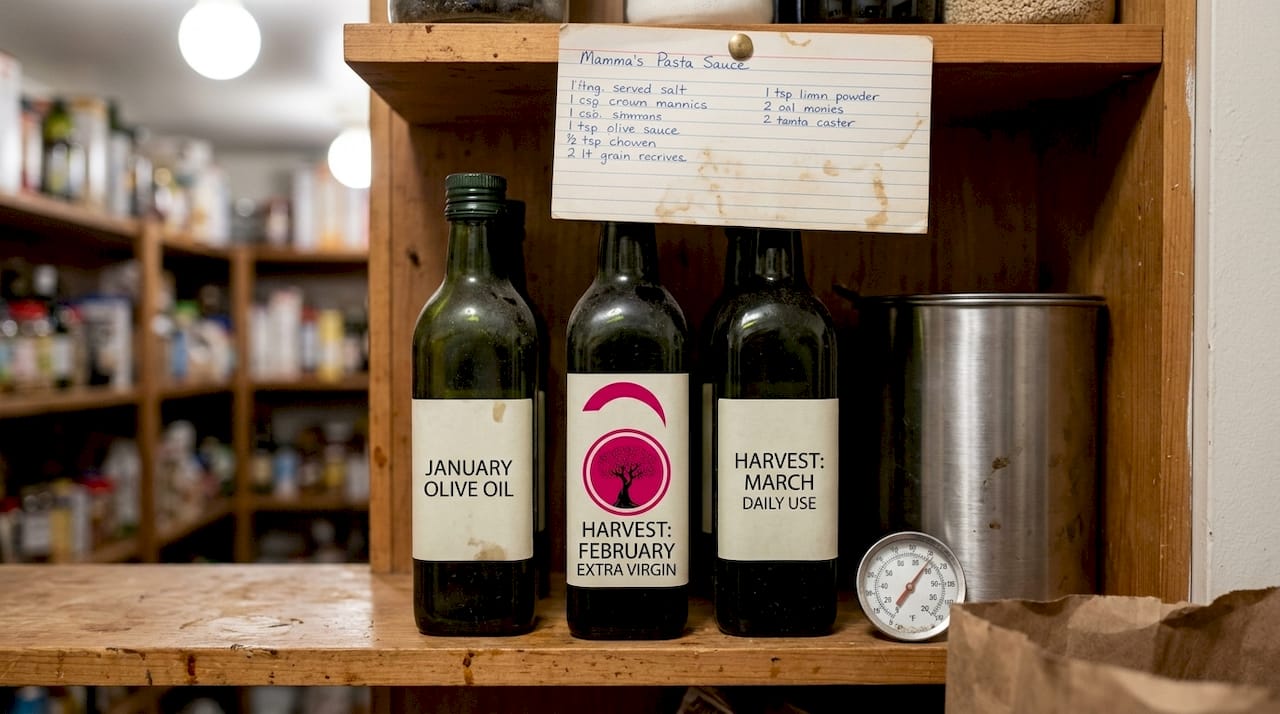
Room temperature storage between 14°C and 18°C (57°F to 64°F) is ideal. Avoid placing oil near the stove, dishwasher, or any appliance that radiates heat, because temperature swings speed up every oxidative reaction in the bottle.
Preparation: What you need for optimal preservation
Now that you know what damages EVOO, let’s get equipped with the right preservation tools and materials. The good news is that effective preservation does not require expensive equipment. It requires the right choices.
Research confirms that dark storage nearly doubles the time before EVOO loses its grade, extending it from roughly four weeks under light exposure to seven weeks in dark conditions. That single variable, container opacity, is the most impactful decision you will make.
What you need:
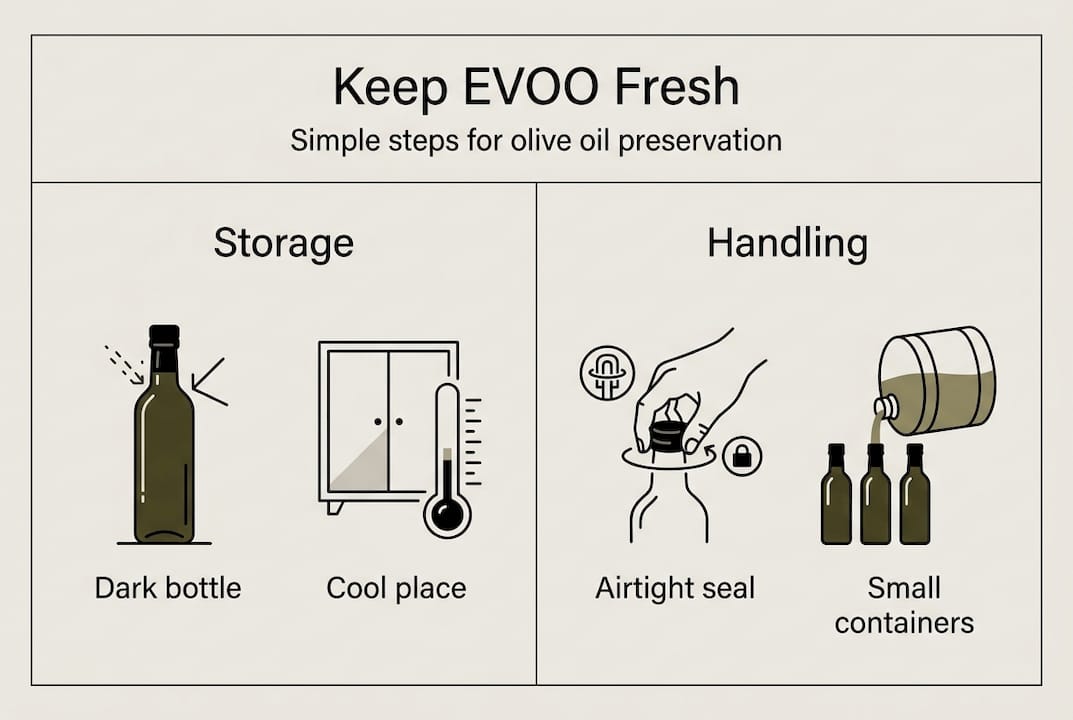
- Opaque or dark-tinted glass bottles (amber or dark green)
- Stainless steel containers for bulk storage
- Airtight pour spouts or stoppers
- A cool, dark storage location (pantry or cabinet away from heat)
- Optional: food-grade nitrogen spray to displace oxygen in partially filled containers
- Labels with opening dates so you can track freshness
| Container type | Light protection | Airtight seal | Flavor neutrality | Best use case |
|---|---|---|---|---|
| Dark glass | Excellent | Good | Excellent | Daily use, gifting |
| Stainless steel | Excellent | Excellent | Excellent | Bulk or long-term storage |
| Clear glass | Poor | Good | Excellent | Avoid for EVOO |
| Plastic | Poor to moderate | Moderate | Poor | Not recommended |
Pro Tip: If you buy EVOO in bulk, transfer it into several smaller dark glass bottles rather than one large container. Smaller volumes mean less air space above the oil each time you open a bottle, which slows oxidation significantly.
The olive oil selection process matters here too. Starting with a freshly harvested, properly packaged oil gives your preservation efforts a head start. An oil that has already been sitting in a warehouse under fluorescent lights for six months cannot be rescued by good storage at home. Pair smart storage with knowledge of artisanal production methods to understand why harvest date and packaging choices matter before the oil even reaches you.
Step-by-step preservation workflow
Once you have collected your tools, it is time to follow the preservation workflow step by step. This sequence applies whether you are managing a single bottle at home or handling larger quantities as a small producer.
- Check the harvest date. Always start with the freshest oil available. EVOO is best consumed within 18 to 24 months of harvest, and ideally within 12 months.
- Transfer to the right container. If your oil arrived in a clear bottle or a large container, move it into a dark glass or stainless steel vessel immediately.
- Minimize the air gap. Fill containers as close to the top as practical. If a container is less than half full, consider transferring to a smaller bottle.
- Seal tightly after every use. Use an airtight stopper or pour spout. Do not leave the cap loose or the bottle open while cooking.
- Store in a dark, cool location. A closed pantry shelf away from the stove is ideal. Avoid the refrigerator for daily-use oil.
- Use nitrogen if storing long-term. A quick spray of food-grade nitrogen into the bottle before sealing displaces oxygen and can meaningfully extend freshness for bulk storage.
- Label with the opening date. This is the simplest habit that most people skip. Knowing when you opened a bottle tells you exactly when to start paying closer attention to quality.
- Monitor regularly. Smell and taste a small amount every two weeks. Fresh EVOO should smell grassy, fruity, or peppery, never waxy or flat.
Research confirms that light accelerates degradation by more than fourfold compared to dark storage, which means every step that limits light exposure compounds your results. When using EVOO in cooking, pour only what you need and reseal immediately rather than leaving the bottle open on the counter. The cold pressed antioxidant benefits you paid for are only preserved if the oil is handled with the same care used to produce it.
Pro Tip: For large-scale producers, consider nitrogen-flushed stainless steel tanks with floating lids. These reduce the oxygen headspace dynamically as the tank empties, which is one of the most effective bulk preservation strategies available.
Troubleshooting and common mistakes to avoid
Even with best practices, mistakes happen. Here is how to address common issues and preserve your oil’s quality before problems become permanent.
The most frequent mistake is using clear glass bottles on a kitchen countertop. Storing oil in clear bottles or leaving containers open, even briefly, can trigger rapid quality loss that no amount of careful storage afterward can reverse.
Common preservation pitfalls:
- Storing oil next to the stove or oven where heat fluctuates constantly
- Buying large bottles when you only use small amounts weekly
- Leaving the bottle open while cooking for extended periods
- Using clear or lightly tinted bottles on a bright windowsill
- Ignoring the harvest date and buying oil that is already old
- Storing multiple oils in the same container without cleaning it first
“Rancid oil does not just taste bad — it loses the health benefits of high polyphenol EVOO that make it worth using in the first place. Once oxidized, those antioxidants are gone.”
To detect spoilage, trust your senses first. Fresh EVOO smells green, fruity, and slightly peppery. Rancid oil smells waxy, like old crayons, or has a flat, greasy odor with no brightness. If the taste is dull and leaves a coating feeling rather than a clean, peppery finish, the oil has degraded. Discard it and start fresh.
Verifying preservation: Quality checks and shelf-life expectations
With your workflow in action, it is important to confirm your oil is staying fresh and safe. Verification does not require a laboratory. Sensory evaluation combined with simple tracking gives you reliable feedback.
Dark, airtight storage can maintain EVOO grade quality for nearly two months after opening, which is a meaningful window if you use oil regularly. Compare that to light-exposed storage, where the same oil may fall below grade in under four weeks.
| Storage method | Estimated grade retention after opening |
|---|---|
| Dark, airtight container at room temp | Up to 7 to 8 weeks |
| Light-exposed, airtight container | 3 to 4 weeks |
| Clear bottle, loosely sealed | 1 to 2 weeks |
| Refrigerated, dark container | Up to 10 to 12 weeks (with texture changes) |
When to replace your oil and what to monitor:
- Replace oil if the smell shifts from fruity or grassy to waxy or flat
- Monitor color: slight darkening over time is normal, but murky or cloudy oil at room temperature signals a problem
- Track the opening date and plan to finish bottles within six to eight weeks
- Taste a small amount monthly if you use oil slowly
- Check for sediment or unusual texture changes
For a structured approach to freshness assessment, the olive oil quality checks framework covers sensory and chemical indicators in detail. If you want to go deeper into what separates a truly fresh oil from a degraded one, the guide to verifying high polyphenol EVOO explains the specific markers that matter most for health-focused consumers.
Maximize your olive oil’s potential with expert-selected EVOO
Once you have mastered preservation, the next step is making sure the oil you are protecting is worth the effort. Preservation extends quality, but it cannot create quality that was never there.
At Terra Centuria, we source High Polyphenol Organic EVOO from Slovenian Istria, where traditional cultivation and careful harvesting produce oils with exceptional antioxidant profiles right from the start. When you begin with an oil that already meets the highest standards, every preservation step you take compounds its value. Use our organic olive oil evaluation guide to assess what you are working with, and explore practical ideas to enhance health with EVOO in your daily routine. Great preservation starts with great oil.
Frequently asked questions
How long can I keep olive oil after opening?
If stored in a dark, airtight container at room temperature, extra virgin olive oil can maintain its grade for up to seven to eight weeks after opening. Light-exposed storage cuts that window roughly in half.
What is the best container to store olive oil?
Opaque glass or stainless steel containers are best because they limit both light and air exposure. Opaque or airtight containers slow the oxidation process that degrades flavor and antioxidants.
Can refrigeration extend olive oil shelf life?
Refrigeration slows oxidation but causes cloudiness and makes pouring difficult. Room temperature storage in a dark, sealed container is preferred for daily use, with refrigeration reserved for long-term bulk storage.
How do I know when olive oil has gone bad?
Rancid olive oil smells and tastes waxy, greasy, or like old crayons with no fresh, peppery finish. Discard any oil showing these signs, as the beneficial compounds are already gone.
Does plastic affect olive oil preservation?
Plastic containers can interact chemically with the oil and allow more air permeation over time. Glass or stainless steel is always preferred for preserving EVOO quality over weeks or months.